
There are many mysteries that Caleb Carr’s final work of fiction, Surrender, New York, presents to its readers. In Part One of the novel’s 10th anniversary celebration, we explored what is perhaps the most conspicuous of these: the mystery contained within its very title. Specifically, why did Caleb break with his long-established preference for geographical accuracy to create a fictional town and county in upstate New York as the novel’s setting? Although we were able to identify several potential reasons (see Part One), this question ultimately led us to appreciate the care Caleb took in creating a protective distance between the landscape of Surrender and the real region, and its inhabitants, his fictional world was inspired by—a necessary choice given the sensitive themes he was exploring.
These themes therefore lead us to our next logical question: why did Caleb decide to write Surrender, New York in the first place? As we shall discover, the novel’s clear links back to the Alienist books provide an intriguing insight into the answer, but the relationship between these works extends well beyond their shared fictional universe, encompassing several social and scientific concerns that occupied Caleb for the bulk of his career. In Part Two, we will delve into some of these recurring themes more closely to examine how they evolved between the nineteenth-century world of the Alienist novels and the contemporary setting of Surrender, and will learn what their author had to say about their personal importance to him.
N.b. The following post contains major spoilers for The Alienist. I have attempted to keep spoilers at a minimum for Surrender, New York.
A Return to Kreizler’s World
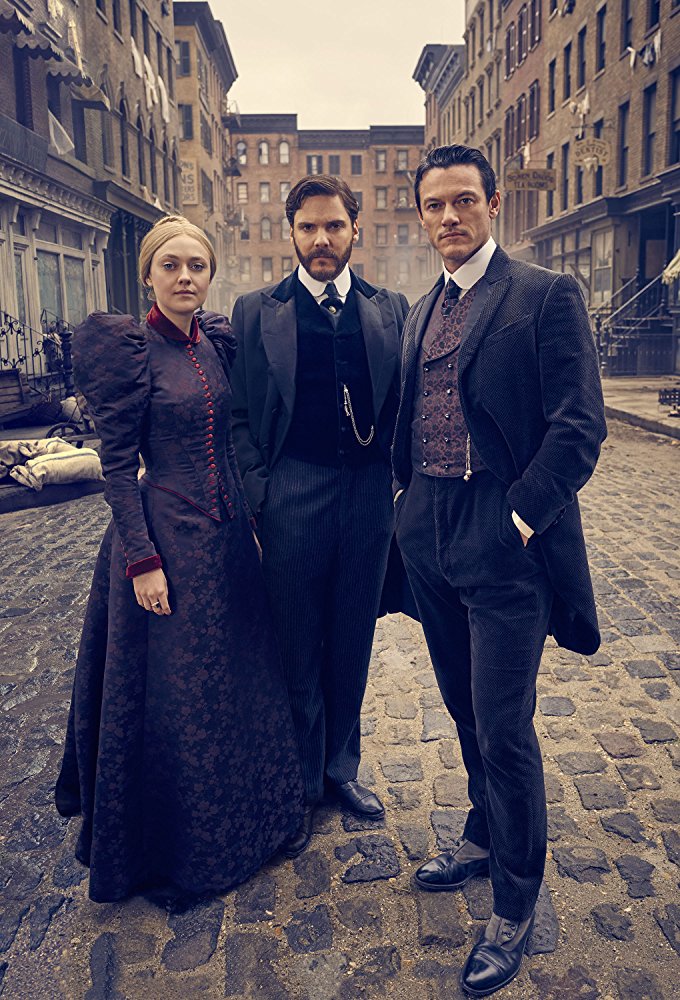
After the film rights to The Alienist were sold in 1993, Caleb spent more than two decades watching attempts to adapt his novel falter, ultimately concluding that prospects were “bleak” for it ever making it to the screen. However, this changed in 2014 when Paramount Television announced plans to develop an adaptation as part of its newly relaunched division. Although excitement for this unexpected development was initially high, especially when Caleb was brought on as a consulting producer, he once again found himself with little creative control over the direction of the project. Speaking to WAMC Radio in 2016, he explained how this proved even more difficult than the initial failed attempts to adapt the novel had been:
It’s been really hard for me. I fought for 20 years to keep a bad movie of The Alienist from being made, and they tried to make many bad movies out of it. It’s hard for me to sit back and watch these people make this TV show without any contribution from me.
It was with the TV adaptation looming that Caleb ultimately decided to find a way to reconnect with the world of his earlier novels on his own terms. But his reasons for doing so through Surrender, New York specifically were twofold, as he went on to explain:
I needed to sort of clear my head and sneak my way back into this world. That’s why we have Trajan Jones being the expert on Kreizler. It was a way to touch base with it without quite going back to it yet. And the other thing that I needed to do was figure out if I could tell a story firsthand from the psychologist’s point of view, because the next two Alienist books will be told from Kreizler’s point of view.
As we can see, the novel thus served as both catharsis during a challenging time and something of a literary experiment in preparation for Caleb’s planned return to the original historical series. However, as he explained in later interviews, his motivation went deeper than this. Beyond the novel’s connection to Kreizler’s theories, he revealed that Surrender was also “about as autobiographical as I’ll ever get.” Speaking to James Altucher, he explained:
I reached a point in my life where I wanted to write something that would give people really close insight into my life without it being blatant. I wanted to return to that idea, get a little closer than the Alienist books did.
On the surface, several of these autobiographical elements seem self-evident. Ranging from its setting at the foothills of the Taconic Mountains (see Part One)—a position close to the location Caleb himself called home—to the numerous literary and popular culture references he intentionally wove into the work (which we will discuss in Part Three), it is not difficult to see how much of his everyday life found its way into Surrender. Yet perhaps the most revealing autobiographical elements are not those immediately apparent to the reader, but the social questions the novel examines, many of which have their roots in the original Alienist novels.
The Invisible and the Inconvenient
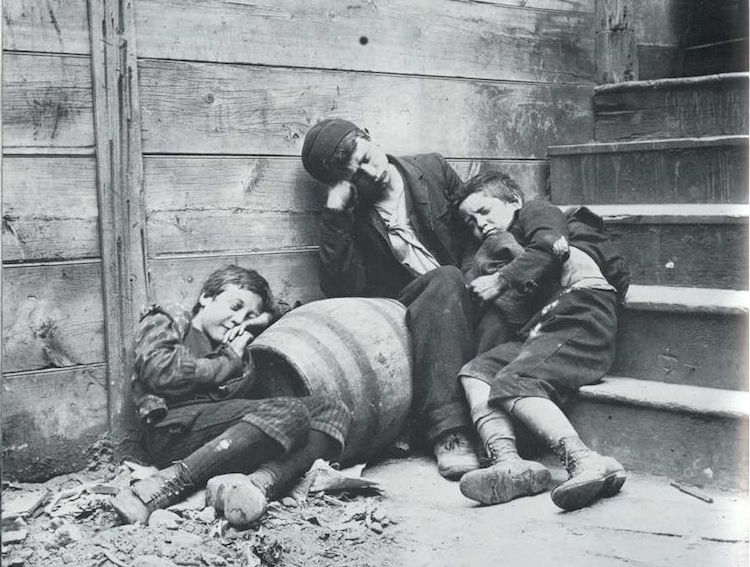
One of Caleb’s most enduring concerns was his desire to shine a light on those individuals whom society found easier to overlook than to protect. In The Alienist, this took the form of advocacy for the population the killer was targeting—boy prostitutes—and his frustration with society’s wilful blindness regarding the plight of this highly vulnerable segment of New York’s social order permeated the book. By the second half of the novel, as the investigative team searched charitable organisations to explore potential avenues the killer may have used to find his victims, narrator John Schuyler Moore becomes ever more furious at the lack of support these boys were receiving:
If I seem either hostile or cynical in recalling this particular phase of our work, perhaps it’s because of a realization that came to me as we reached the end of that second week in June: that the only group of outcasts in the city that didn’t seem to have several privately funded and nobly titled societies dedicated to its care and reform was the very one that was currently in such grave danger—child prostitutes. As this lack became more and more apparent to me, I couldn’t help but think back to Jake Riis—a man lionized in New York’s philanthropic circles—and to his blind refusal to admit or report the facts of Georgio Santorelli’s murder. Riis’s deliberate myopia was shared by every official I spoke to, a fact that caused me more irritation every time I encountered it. By the time I came lumbering into Number 808 Broadway late Monday afternoon I was so sick of the fatuous hypocrites who made up New York’s charitable community that I was spewing a steady stream of rather violent curses.
The Alienist, Chapter 38
It should come as no surprise then that the population being targeted in Surrender, New York occupies a similarly unprotected and invisible strata: throwaway children. In several interviews Caleb gave following the novel’s publication, he discussed how he came across this little acknowledged modern classification of abandoned children. For example, in his interview with James Altucher, he said:
I was going through a lot of New York State childcare records, and there kept being repeated this term: throwaway children. Now, I had seen the term “thrown-aways” [which is] a nicer way of saying kids who have been kicked out of their house by their parents. But throwaway children is this new phenomenon, a relatively new phenomenon, that’s hit with this grotesquely unequal economy where kids just wake up one day and their families have disappeared and they’re on their own. They have no idea where they’ve gone. They can’t find them. Nobody else can find them.
Not unlike the boys in The Alienist, he explained that these children also find themselves with few advocates or support options as they don’t fit systems that have been set up to help. Unable to go to school because they don’t have a family to go home to, and too young to work, their only option is the foster system, which is “the one thing that no homeless kid wants to do.” But this focus on a neglected segment of society is not the only commonality shared between the books. Given Trajan Jones’s expertise with Dr. Kreizler’s theory of context, an important theme in Surrender—first explored in the Alienist novels—was the role that trauma plays in the dysfunctional home environments that shape these children’s early experiences and perpetuate cycles of abuse and neglect across generations.
The crucial realization in The Alienist was just how vulnerable the boys were who engaged in prostitution, long before they found themselves working in disorderly houses. Joseph, the young boy John befriends during the case, refuses John’s offer to find a place for him in Dr. Kreizler’s institute, despite his intense dislike for his current occupation. Although such a refusal would have been seen by those in philanthropic circles as evidence Joseph wanted to abandon his life to vice, in reality it was the traumatic context of his early life that prevented him from accepting.
But Joseph, orphaned since age three, had already had his fill of institutes, orphanages, and foster homes (not to mention alleyways and empty railroad cars), and nothing I said about Kreizler’s place being “different” had any effect on him. The Golden Rule had been the only home he’d ever known where he hadn’t been ill fed and beaten—repulsive as she may be, Scotch Ann had an interest in keeping her boys relatively healthy and scar-free. That fact counted for more with Joseph than anything I might say about the place’s evils and dangers.
The Alienist, Chapter 18
Despite this, it was the tension between these children’s suspicion of institutional help and their deep longing to find a “real friend” who could help them escape their circumstances that ultimately made them vulnerable to predators who knew how to manipulate that trust. In The Alienist, it is once again Joseph who reveals to John that one of the killer’s victims who had been sold to Scotch Ann by his father, “had been saying for I guess about two weeks that she’d [he’d] found a saint. Not like a patron saint, in a church, not like that—just a person who was kind and was going to take her [him] away from Scotch Ann to live with him.” Caleb returned to this idea in Surrender, New York, where we find that the throwaway children come from similarly dysfunctional home environments and, upon being abandoned, are left with few alternatives. During his interview with WAMC Radio, Caleb pointed out:
The thing is the alternatives that they’re presented with too often are some kind of illegal activity. There’s foster care, like I say, on the one hand, or some kind of illegal activity. I mean, you’ve got to make a living somehow. If you’re 13, 14 years old and you’re suddenly alone on the streets and the system’s not going to take care of you and you don’t want to go into foster care, all too often you’re going to go into prostitution, drug dealing, breaking and entering.
As with the Alienist novels, Surrender takes this exploration of childhood vulnerability one step further, returning to a concept Caleb described as the “Faust Dialectic”: the transformation of victim into perpetrator. In doing so, the novel raises an unsettling question about the consequences of systemic neglect—not simply what happens to children whom society fails to protect, but what happens when those children grow up to perpetuate the very exploitation they once endured as a means of survival.
The Corruption of Power and Justice
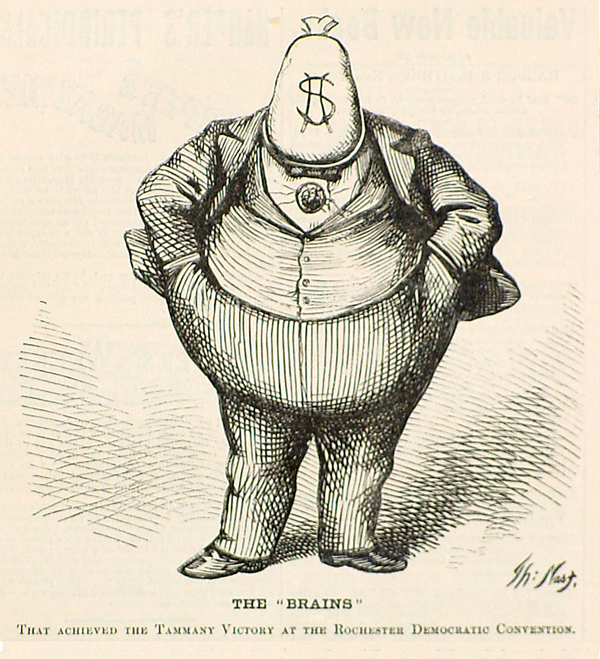
Of course, the failure of institutions to protect society’s most vulnerable was not the only recurring theme in Caleb’s work. Equally troubling was the corruption of those wielding political power or entrusted with administering justice, particularly when inconvenient truths threatened established interests. We see both at play in The Alienist when the team discovers that they have made a “wide variety of powerful enemies” through their investigation. In addition to the city’s powerbrokers, who did not want to see unrest stirred up over the murders within the immigrant population from which the killer was drawing his victims and the powerbrokers drew their workers, we eventually discover why representatives of both the Catholic and Episcopal churches, accompanied by former police officers (who were kicked off the force for corruption by reformers), were paying off the parents of the victims in exchange for their silence, as John explains to Kreizler:
“They [the priests] weren’t covering for the murderer. They were never concerned about the murderer. It was the reaction among the immigrants that had them spooked. [Archbishop] Corrigan’s afraid that they’ll get angry enough to listen to Kelly and his socialist friends—angry enough to stop showing up on Sunday and coughing up what little money they have. Basically, the man’s afraid he won’t get to finish his damned cathedral, and all the other little holy projects he’s probably got planned.”
“But what about [Bishop] Potter?” Kreizler asked. “You told me yourself that the Episcopals don’t have many adherents among the immigrants.”
“That’s right,” I said, smiling a bit. “They don’t. But they have something even more profitable, and I’m an ass for not remembering it. Perhaps Mr. Morgan would be willing to tell you”—I turned toward the big walnut desk and found Morgan staring back at me uncomfortably“—who the largest slum landlord in New York is?”
The Alienist, Chapter 30
A similar, though not identical, tension appears in Surrender, New York, withcorruption inside the foster care system and law enforcement playing an important role in the events that transpire within the book. In Caleb’s interview with James Altucher, he was particularly critical of what he regarded as the financial exploitation of vulnerable children, including so-called throwaway children, within the foster care system:
Everybody knows that the foster program now is so corrupt that it’s basically, you know, it’s a money-making scheme. There’s a few exceptions, and I don’t mean to insult the people who are exceptions, but by and large, the foster care system is a mess. Our childcare system in New York State is a mess.
As with the religious and political institutions portrayed in The Alienist, the underlying concern was not simply that systems intended to serve and protect were failing in their responsibilities, but that financial interests could actively undermine the welfare of the very people those systems were established to help. And this leads directly to the final theme Surrender shares with the Alienist novels, although Caleb’s treatment of this particular subject differs significantly between the two works, reflecting the 120 years that separate their settings.
The Illusion of Forensic Certainty

In Surrender, New York, the examination of institutional corruption is not limited to the foster care system; questions are also raised about what happens when forensic science ceases to be financially and intellectually independent of those directly responsible for investigating and prosecuting crimes. This is where the contrast with the Alienist novels, in which forensic science was in its infancy, is most apparent. In addition to early profiling, the investigative team in the original books employ a variety of forensic techniques that were only emerging in the 1890s. These included methods that would later become mainstream such as dactyloscopy (fingerprint identification) and ballistics, along with those that did not find empirical support, such as optography, which involved an attempted retrieval of the last image seen by the retina before death. An important component of the novels was the use of these various techniques to support Dr. Kreizler’s profiling efforts, even though many were not admissible in courts of law, much to the team’s frustration.
The concerns regarding forensic science raised in Surrender are therefore quite different. Over the course of the intervening century, several of the techniques used in the original books (e.g., fingerprinting) became established practices, while others, such as forensic DNA analysis, only emerged in the late twentieth century. The acceptance of forensic science in modern criminal investigations has undoubtedly represented an important advancement, with the Innocence Project documenting more than 375 DNA exonerations of wrongfully convicted individuals in the United States as of January 2020. Yet the increasing authority accorded to forensic evidence has also introduced a different problem: the tendency among the general public, and even some participants in the criminal justice system, to overlook the epistemological limitations of forensic science and place undue confidence in the reliability of its findings. This was a concern Caleb raised in his WAMC Radio interview:
When DNA came along, people said, “Well, we don’t really need to know the psychological stuff anymore. We just need to know somebody’s DNA fingerprint, and that’s going to tell us everything we need to know.” The problem is, DNA, like everything else in forensic science, depends completely on who gathers it and analyzes it. There are a lot of good people who do it. There are an awful lot of people who are not good at it, which has led to a great many scandals […]
But this was not the only reason Caleb focused so intently on the illusion of forensic certainty in Surrender. Potentially more problematic than the public’s general misunderstanding of the role that human error and cognitive biases can play in evidence collection, analytical decisions, and the interpretation of forensic evidence is the potential for conflicts of interest. Specifically, the close institutional relationships between forensic laboratories and the agencies responsible for securing convictions can create professional pressures that compromise the independence of scientific investigations, as Caleb explained to James Altucher:
They’re in the same system, so if they want to advance, they’ve got to please their superiors, and their superiors are the cops, the district attorneys […] and there’s only one thing those people are interested in, because they all want to advance, too: convictions, convictions, convictions.
One of Caleb’s core arguments in Surrender is therefore an appeal for a return to independence to safeguard the integrity of criminal investigations: “What I’d like to see is that it gets set back up as its own arm, not part of the FBI, not part of local law enforcement, not part of state law enforcement—its own agency.”
Now that we have explored the geography of Surrender and dug deeper into its themes, next month we will conclude our celebration by turning our attention to the lighter aspects of the novel, exploring some of the literary, cinematic, and musical influences woven throughout its pages. There are plenty of hidden treasures to discover, so I hope you’ll join me then for one final visit to Surrender.