Broadway World recently reported that Caleb Carr will be one of the notable figures appearing on this month’s upcoming Columbia University episode of Treasures of New York, a documentary series that explores New York City’s most important cultural landmarks and institutions. Other notable figures featured on the Columbia University episode are reported to include: “Columbia President Lee Bollinger, actress Amanda Peet, architect Renzo Piano, Nobel Prize winner Eric Kandel, Oscar-nominee and Columbia University professor Jamal Joseph, and the 5th Great Grandson of Alexander Hamilton, Doug Hamilton.”
An extended preview of the episode can currently be viewed on THIRTEEN’s website. Keep a close watch around the 37 second mark for what appears to be a glimpse of our author!
The Columbia University episode of Treasures of New York will premiere on Sunday, September 21 at 7pm EDT on WLIW21, and will re-air on Monday, September 22nd at 9pm EDT on THIRTEEN. Following the premiere, the full episode will be streamed online via THIRTEEN’s website.
Further to last month’s announcement from Paramount TV that The Alienist was slated for development into a TV drama series, a three-year production deal between Paramount TV and Anonymous Content (producer of True Detective) was confirmed this week by Amy Powell, the president of Paramount TV, and the managing partners of Anonymous Content, with the first collaboration between the companies confirmed to be the TV drama series inspired by The Alienist. Although no further details have been released regarding the development of the drama series itself, Variety reported that the three-year production deal will provide Paramount TV with “first-look rights to produce and distribute scripted programming developed by Anonymous Content.” It will also include “rights to broadcast, premium cable, cable and online distribution.”
As more information is released about the drama series development, you can be sure to see it updated here.
In several articles released today, announcements were made about a handful of new Paramount TV projects currently in development including “a drama series inspired by Caleb Carr’s best-selling novel, The Alienist, with Anonymous Content (True Detective) executive producing” (Deadline). These announcements were accompanied by Paramount TV naming its new heads of comedy and drama development, working under president Amy Powell. Talking to Variety about Paramount TV’s new developments, Powell commented, “It’s not only all the great movies we’ve released over the years but all the books and the articles and the life rights we own, and the great screenplays that never made it to the screen. To be able to walk in here with a literal clean slate and (chairman) Brad (Grey’s) directive — it’s the best of all worlds.” She went on to say that the focus at Paramount TV will be on “quality not quantity” of projects. Talking specifically about The Alienist, The Guardian reported that Powell described the book as “an incredible piece of writing — when I was looking through our library, I thought this is something we have to do.”
As more information comes to about this development, you can be sure to see it updated here.
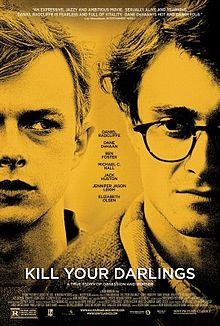
To date, I have avoided discussing the much publicised independent film Kill Your Darlings on 17th Street. Starring Daniel Radcliffe, Dane DeHann, and Michael C. Hall, the film claims to document the “true story” of the founding of the Beat Generation and focuses on “the murder that united the Beats,” 1944 murder of David Kammerer by Lucien Carr (Caleb Carr’s father). As none of the Carr family were consulted by the film’s research team and nobody from the family commented on the film following its release, I had made the decision to avoid discussing the film on the 17th Street blog, which I have always endeavored to keep strictly dedicated to Caleb Carr’s professional work and interviews. However, with the release of the film on DVD in a few weeks, Mr. Carr has recently spoken out about the film’s version of events, describing it as a “terribly inaccurate reading … based almost entirely on Allen Ginsberg’s versions of events.”
Rather than paraphrase Mr. Carr’s full statement here, I have included the first two paragraphs of the statement below and provide a link to its original source for visitors to continue reading.
You’re wholly right that “Kill Your Darlings” was a tired, ludicrous reading of the story of the murder case; and like all the other terribly inaccurate readings that have been put out there, it was based almost entirely on Allen Ginsberg’s versions of events. And Allen had an awful lot of reasons for revising the facts to suit a narrative that served his ego and his agenda far more effectively than it did the truth.
First off, the facts of the case: David Kammerer did not begin his obsession, as you have rightly suspected, when my father was an adult: it began when my father was only twelve or so, and Kammerer was his Boy Scout troop leader (and the fact that my father later killed Kammerer with his Boy Scout knife is not something that any psychologist or detective I know would ever dare to call a coincidence).
The remainder of the statement contains a powerful message about the damage produced by child abuse, the impact it has across generations, and the film’s distortion of the murder it supposedly documented. I, for one, am grateful that Mr. Carr has spoken out, and I hope that other visitors of 17th Street will feel similarly.
Cookie Consent
We use cookies to improve your experience on our site. By clicking "accept all", you consent to our use of cookies.
This website uses cookies
Websites store cookies to enhance functionality and personalise your experience. You can manage your preferences, but blocking some cookies may impact site performance and services.
Essential cookies enable basic functions and are necessary for the proper function of the website.
Name
Description
Duration
Cookie Preferences
This cookie is used to store the user's cookie consent preferences.
30 days
These cookies are needed for adding comments on this website.
Name
Description
Duration
comment_author
Used to track the user across multiple sessions.
Session
comment_author_email
Used to track the user across multiple sessions.
Session
comment_author_url
Used to track the user across multiple sessions.
Session
Statistics cookies collect information anonymously. This information helps us understand how visitors use our website.
Google Analytics is a powerful tool that tracks and analyzes website traffic for informed marketing decisions.
Used by Google Analytics to determine which links on a page are being clicked
30 seconds
_ga_
ID used to identify users
2 years
_gid
ID used to identify users for 24 hours after last activity
24 hours
_gat
Used to monitor number of Google Analytics server requests when using Google Tag Manager
1 minute
_gac_
Contains information related to marketing campaigns of the user. These are shared with Google AdWords / Google Ads when the Google Ads and Google Analytics accounts are linked together.
90 days
__utma
ID used to identify users and sessions
2 years after last activity
__utmt
Used to monitor number of Google Analytics server requests
10 minutes
__utmb
Used to distinguish new sessions and visits. This cookie is set when the GA.js javascript library is loaded and there is no existing __utmb cookie. The cookie is updated every time data is sent to the Google Analytics server.
30 minutes after last activity
__utmc
Used only with old Urchin versions of Google Analytics and not with GA.js. Was used to distinguish between new sessions and visits at the end of a session.
End of session (browser)
__utmz
Contains information about the traffic source or campaign that directed user to the website. The cookie is set when the GA.js javascript is loaded and updated when data is sent to the Google Anaytics server
6 months after last activity
__utmv
Contains custom information set by the web developer via the _setCustomVar method in Google Analytics. This cookie is updated every time new data is sent to the Google Analytics server.
2 years after last activity
__utmx
Used to determine whether a user is included in an A / B or Multivariate test.

 Broadway World recently reported that Caleb Carr will be one of the notable figures appearing on this month’s upcoming Columbia University episode of Treasures of New York, a documentary series that explores New York City’s most important cultural landmarks and institutions. Other notable figures featured on the Columbia University episode are reported to include: “Columbia President Lee Bollinger, actress Amanda Peet, architect Renzo Piano, Nobel Prize winner Eric Kandel, Oscar-nominee and Columbia University professor Jamal Joseph, and the 5th Great Grandson of Alexander Hamilton, Doug Hamilton.”