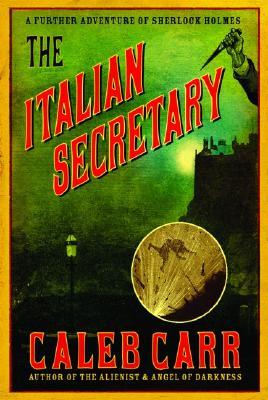
The Italian Secretary, 20 Years On – Part Three

View Part One, Part Two, and Part Three of The Italian Secretary 20th anniversary series.

On this final day of the year, it seems fitting to conclude our celebration of The Italian Secretary by harkening back to the origins of 17th Street itself. When this website was opened on December 31 of 2005, I could scarcely imagine the impact it would have on me personally and, more broadly, on Caleb Carr’s loyal readership over the years that were to follow. What started as a way to pay homage to an author and a book series that had touched the lives of so many — the Alienist novels — quickly turned into something far richer and more enduring than I ever anticipated: a space for readers to come together to reflect, imagine, and discover hidden layers in Caleb’s works that will keep them alive long into the future.
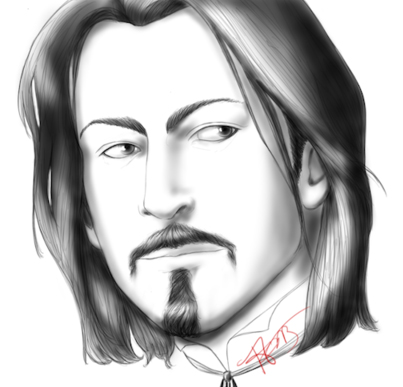
Portrait of Dr. Kreizler as provided by a visitor to the website, Tiffany.

In this spirit, I thought it would be enjoyable to close this anniversary series by bringing Caleb’s own brilliant creation, the enigmatic Dr. Laszlo Kreizler, together with Holmes to address the question posed in The Italian Secretary’s afterword: What would have happened had Caleb let the worlds of Holmes and Kreizler collide? As Charles Finch noted in his USA Today review of Surrender, New York: “…every word of fiction Carr has produced seems to have been written in either direct or indirect conversation with Sir Arthur Conan Doyle.” This is no accident, particularly as it pertains to the Alienist novels. In the essay Caleb contributed to Ghosts in Baker Street in 2006 (in lieu of the story that turned into The Italian Secretary), he explained his motivation in some depth:

“In attempting to bring to life a late nineteenth-century psychologist who becomes his own form of ‘amateur detective,’ I intended to pay homage to, and recognize the works of, all the forensic and consulting psychologists that Conan Doyle so carefully failed to mention in his own works. But at the same time, I had no desire to reinvent Sherlock Holmes, even in a veiled form, nor would mine be an attempt to demonstrate any shortcomings of the great detective’s character, or that of his creator’s. Rather (at least ideally), the two fictional creations and intellectual approaches would be complementary, not contradictory, for one can pay homage far more effectively by filling some of the available creative space around a beloved character than by trying to crowd the same territory through imitation or reinvention.”
The Sherlock Holmes Companion: An Elementary Guide

Caleb further elaborated on his decision to focus on the work of early psychologists in the interview he gave to The Sherlock Holmes Companion in 2009. Clarifying that “the idea of the Alienist was really to create a character to solve all the cases Sherlock Holmes could not solve,” he pointed out that there was “a whole category of crimes — stranger-based crimes — that have no evidence trail. If you ignore motivation and profiling, they will remain unsolved forever.” Conan Doyle avoided addressing this class of crime in the Holmes stories as he wanted to demonstrate the use of reason to solve crime purely on the basis of physical evidence; but it was these stranger-based crimes that became the foundation for the Alienist books.

By considering the respective motivations of the authors involved, we get our first clue of what might have happened had Caleb brought Holmes and Kreizler together on a case. With this in mind, let us now turn back to The Italian Secretary’s afterword to explore the ideas presented there about what such a meeting might have entailed and what its outcome might have been.

“Dr. Kreizler, Mr. Sherlock Holmes…”

“Dr. Watson, Mr. Sherlock Holmes,” said Stamford, introducing us.

“How are you?” he said cordially, gripping my hand with a strength for which I should hardly have given him credit. “You have been in Afghanistan, I perceive.”


“How on earth did you know that?” I asked in astonishment.


“Never mind,” said he, chuckling to himself.
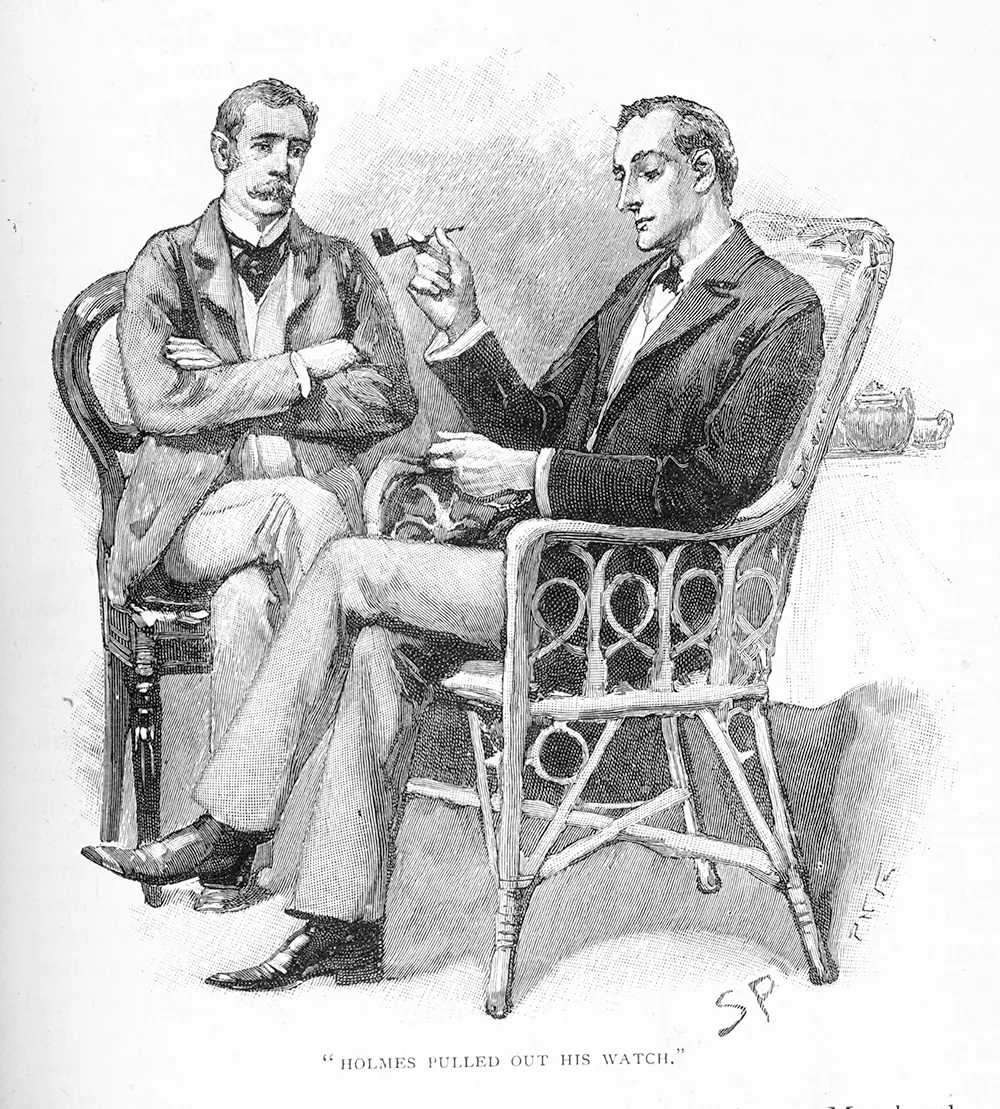
Sir Arthur Conan Doyle, A Study in Scarlet
Sherlock Holmes and John Watson

As Jon Lellenberg, the U.S. Representative to the Conan Doyle Estate, points out in the opening of The Italian Secretary’s afterword, perhaps the most famous and fated introduction in the whole of English literature occurs in A Study in Scarlet when Dr. John H. Watson meets the great consulting detective, Sherlock Holmes. Each in need of a fellow lodger to split the rent, they are introduced at the chemistry laboratory of St. Bartholomew’s Hospital by Watson’s former surgeon’s assistant, Stamford. It was a meeting that resulted in a crime-solving partnership that has never been equaled in modern detective fiction, spanning several decades, four novels, and fifty-six short stories. But what would have happened if the meeting had gone a different way?

The first alternative Lellenberg contemplates in his essay is a meeting between Dr. Watson and Dr. Kreizler; however, he ultimately concludes that the lack of tension between the two — both medical men who, despite differing specialties, agreed that the mind is shaped by biological and environmental factors — would not have resulted in a particularly effective partnership, at least as far as solving crime is concerned. Indeed, the pairing may more closely have resembled the extant relationship between Dr. Kreizler and Lucius Isaacson, who had medical training as rigorous as Watson’s, though with a far greater knowledge of forensics. While Kreizler and Lucius work well together, as a contained crime-solving duo, one could argue that they are not best placed to augment each other’s limitations, which is why a team of investigators is needed in the Alienist novels. One must turn away from Watson, then, if one is to bridge the worlds of Conan Doyle and Caleb Carr.
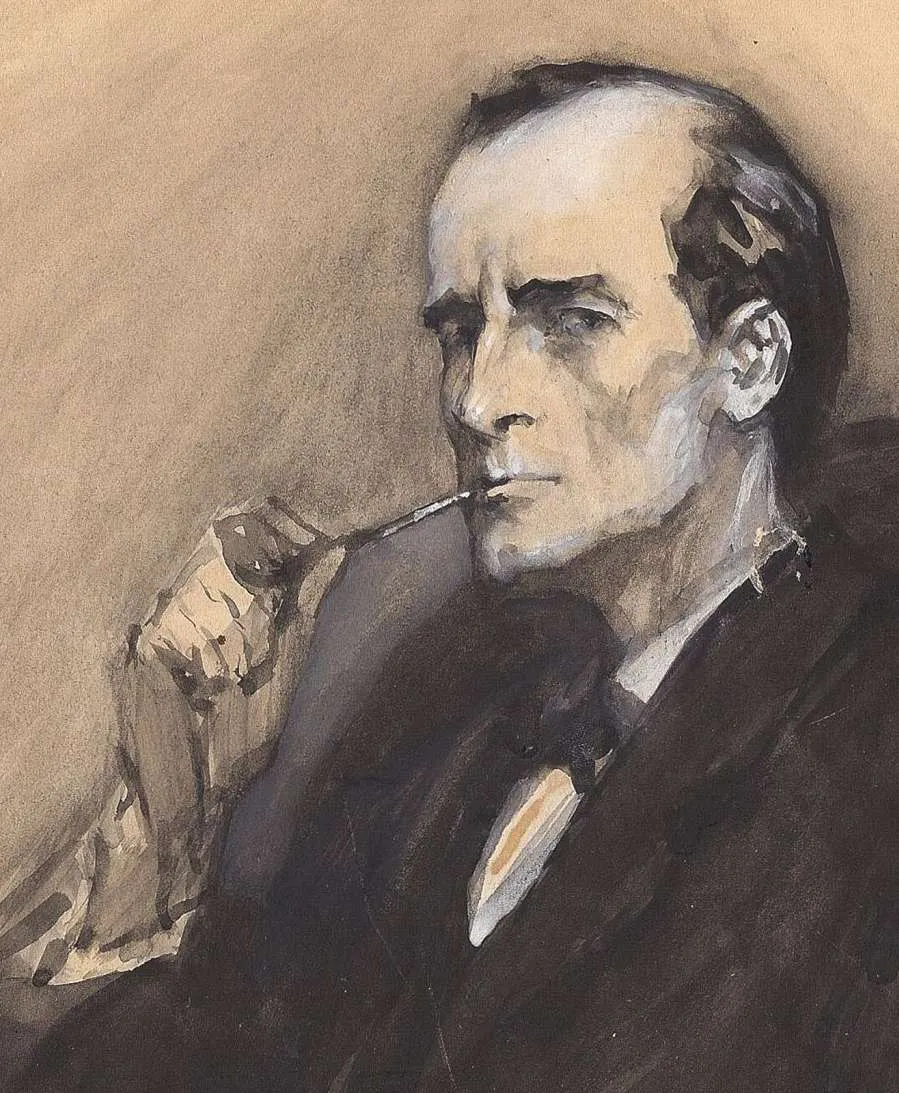
Portrait of Sherlock Holmes by Sidney Paget

The meeting Lellenberg prefers to imagine is one that would have resulted in far greater tension: that between Dr. Kreizler and Sherlock Holmes himself. From their very introduction, the pair would undoubtedly have sized each other up and come to mutually wary conclusions about the other’s method. While Kreizler, always open to eccentric characters (as Stevie noted in The Angel of Darkness), would have been intrigued by Holmes’s powers of observation and deduction, Lellenberg correctly notes that he would also have grown “impatient with its limitations.” Holmes, on the other hand, would likely have been suspicious of the doctor’s emphasis on psychological context, for, as he once warned Watson in A Scandal in Bohemia, “It is a capital mistake to theorize before one has data. Insensibly one begins to twist facts to suit theories, instead of theories to suit facts.” Yet, despite this, Lellenberg doesn’t see this tension as problematic; rather, the two men’s contrasting approaches may have been the very fuel that would have propelled an investigation forward:

…the desire to see the two approaches — Holmes’s and Kreizler’s — collide with each other cannot be gainsaid. We must be dialecticians ourselves if we are to give both approaches their just due. Whether a collaboration would be set in London or New York at the end of the nineteenth century is immaterial — both of those great metropolises offer fertile ground for a case that would challenge each of these men, and make for a partnership profoundly upsetting to both, but tremendously interesting to the reader. Sparks would fly, and it is easy to imagine Watson and Moore quietly retiring to one of their clubs every so often to get away from the scene and commiserate together. But the temptation is there. I hope Mr. Carr succumbs to it eventually.

The Italian Secretary, Afterword

Unfortunately, when Caleb was asked in an interview with The Age whether he was ever likely to succumb to the temptation, he was not enthusiastic. “That’s not my fictional style,” he explained. “I’m known for incorporating real historical characters into my books. It’s far more likely that Conan Doyle, rather than Holmes, would appear in a Kreizler tale.” Although this may have disappointed readers keen to see the first consulting detective collaborate with the first forensic psychologist, Caleb’s instinct was a perceptive one, particularly given his motivation regarding the Alienist novels themselves. After all, Kreizler was not interested in brilliant minds for their own sake; he was interested in the psychological contexts that shaped them. In this light, Conan Doyle himself — rather than his creation — may have been the most compelling subject for a Kreizler inquiry.

“Dr. Kreizler, Sir Arthur Conan Doyle…”

“Do not,” Kreizler answered slowly, trying very hard to be clear, “look for causes in this city. Nor in recent circumstances, nor in recent events. The creature you seek was created long ago. Perhaps in his infancy — certainly in childhood. And not necessarily here.”

The Alienist, Chapter 6
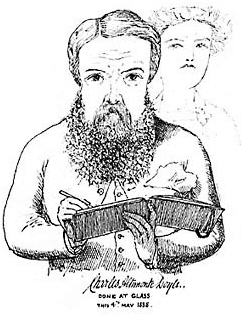
Self Portrait (1888) by Charles Altamont Doyle

The year 1893 was a momentous one for Sir Arthur Conan Doyle. On October 10, the newly famous author’s father, Charles Altamont Doyle, died suddenly at the age of 61 from what was described as “a fit during the night” while confined at the Crichton Royal Institution in Dumfries, Scotland. An illustrator and watercolorist who had once exhibited at the Royal Scottish Academy, Charles Doyle had spent much of the previous decade at Sunnyside, the Montrose Royal Lunatic Asylum, after struggling with depression and alcoholism. In later years, his dependence on alcohol was compounded by epileptic seizures and episodes of memory loss.

This alone would have been a tragic set of circumstances. However, just two months after Charles Doyle’s death, in December of the same year, his son added to them by making the unthinkable decision to kill off his most famous creation — a character who also was no stranger to addiction, as we see in the opening paragraphs of The Sign of Four, published in 1890:

Sherlock Holmes took his bottle from the corner of the mantel-piece and his hypodermic syringe from its neat morocco case. With his long, white, nervous fingers he adjusted the delicate needle, and rolled back his left shirt-cuff. For some little time his eyes rested thoughtfully upon the sinewy forearm and wrist all dotted and scarred with innumerable puncture-marks. Finally he thrust the sharp point home, pressed down the tiny piston, and sank back into the velvet-lined arm-chair with a long sigh of satisfaction.

Three times a day for many months I had witnessed this performance, but custom had not reconciled my mind to it. On the contrary, from day to day I had become more irritable at the sight, and my conscience swelled nightly within me at the thought that I had lacked the courage to protest. Again and again I had registered a vow that I should deliver my soul upon the subject, but there was that in the cool, nonchalant air of my companion which made him the last man with whom one would care to take anything approaching to a liberty. His great powers, his masterly manner, and the experience which I had had of his many extraordinary qualities, all made me diffident and backward in crossing him.

Yet upon that afternoon, whether it was the Beaune which I had taken with my lunch, or the additional exasperation produced by the extreme deliberation of his manner, I suddenly felt that I could hold out no longer.

“Which is it to-day?” I asked,—“morphine or cocaine?”

He raised his eyes languidly from the old black-letter volume which he had opened. “It is cocaine,” he said,—“a seven-per-cent. solution. Would you care to try it?”

The Sign of Four, Chapter 1

Although Conan Doyle would eventually resurrect his great detective, the events of 1893 invite a more searching question, one that Dr. Kreizler, with his insistence that “the answers one gives to life’s crucial questions are never truly spontaneous,” would surely have asked. Of course, Conan Doyle always insisted that the hyperrational Holmes — far removed in temperament from his troubled, artistic father — was largely inspired by another important figure in his life, Dr. Joseph Bell, for whom he had clerked at the Royal Infirmary of Edinburgh; but it is noteworthy that Bell himself rejected the idea, writing to his former clerk, “You are yourself Sherlock Holmes and well you know it.”
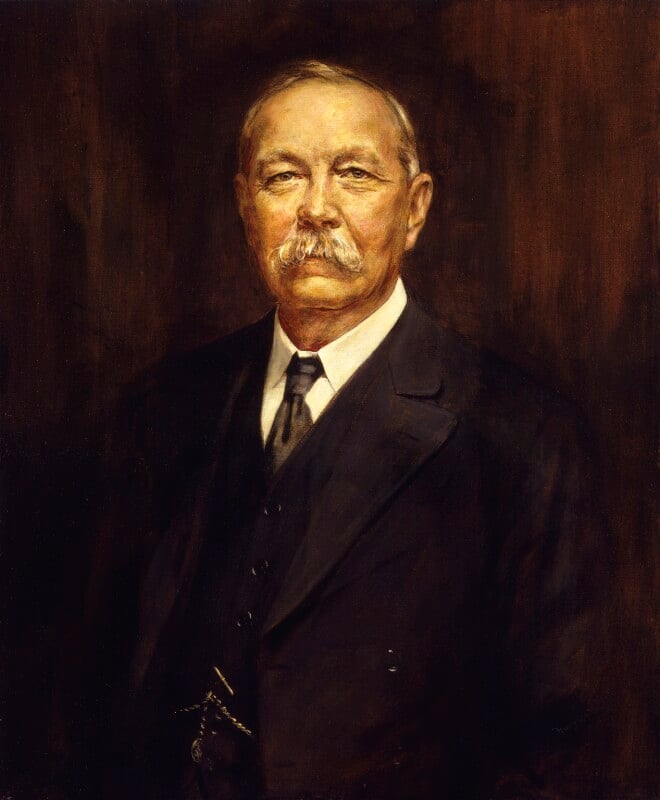
Arthur Conan Doyleby Henry L. Gatesoil on canvas, 1927NPG 4115© National Portrait Gallery, London

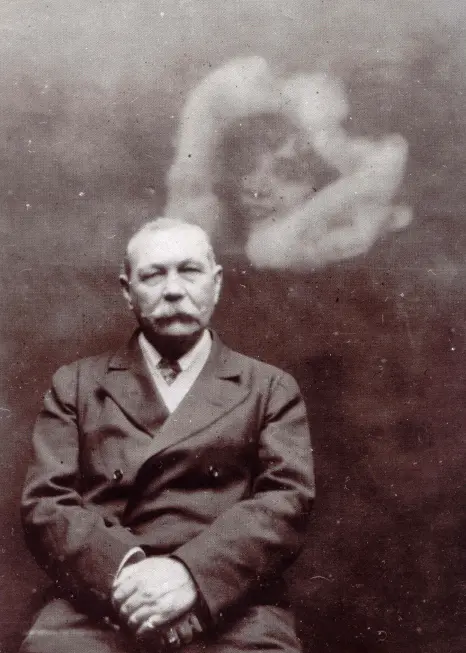
It is curious to consider what Dr. Kreizler would have made of Sir Arthur Conan Doyle. As we saw in Part One, Caleb was deeply sympathetic to the creator of Holmes, particularly in relation to the author’s struggles with grief. And perhaps it is this that would have offered the most likely opportunity to bring the author into Kreizler’s orbit, had Caleb decided to go down such a path. There were, after all, only limited opportunities for the two to have credibly crossed paths, as Conan Doyle visited New York a mere handful of times: once in 1894 — which would have required a prequel to the Alienist novels — or later, between 1922 and 1923, when he was on his speaking tour devoted to spiritualism.

I favor the latter as the more compelling opportunity for Caleb to have brought the two together. By the early 1920s, an aging Kreizler would have been facing his own reckoning with grief as Stevie’s health declined, forcing him to confront the limits of intellect and reason in the face of loss. Conan Doyle, too, arrived in New York in 1922 carrying the heavy weight of bereavement. Although he had turned to spiritualism prior to the Great War, the deaths of his son Kingsley, his brother Innes, and other close family members during this time only strengthened his commitment to his metaphysical beliefs.
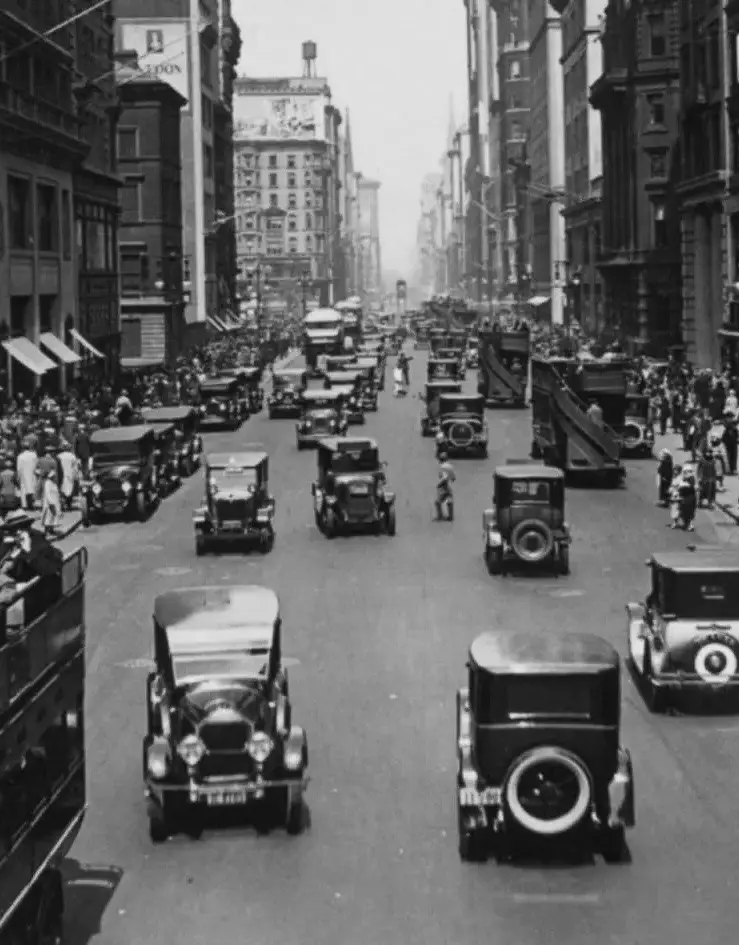
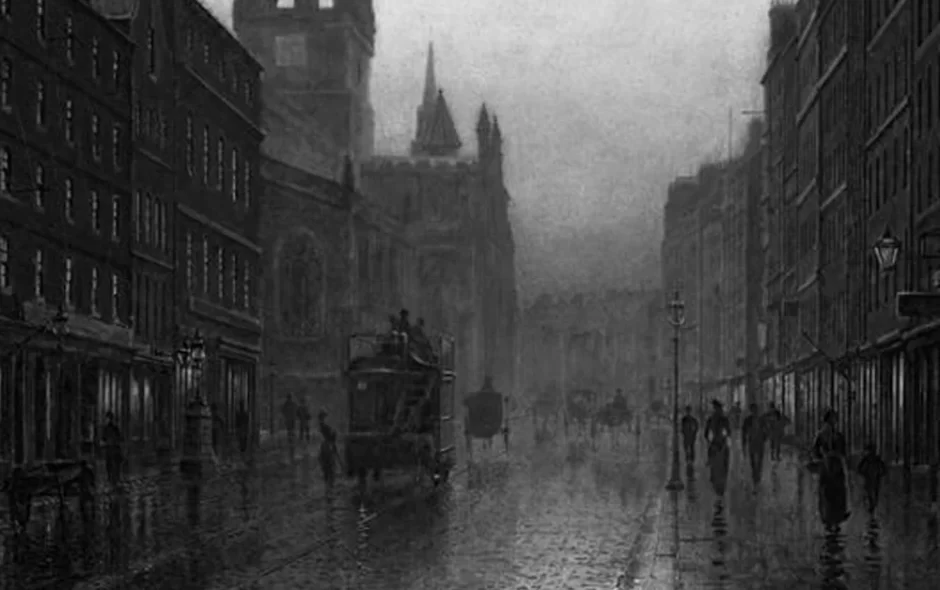
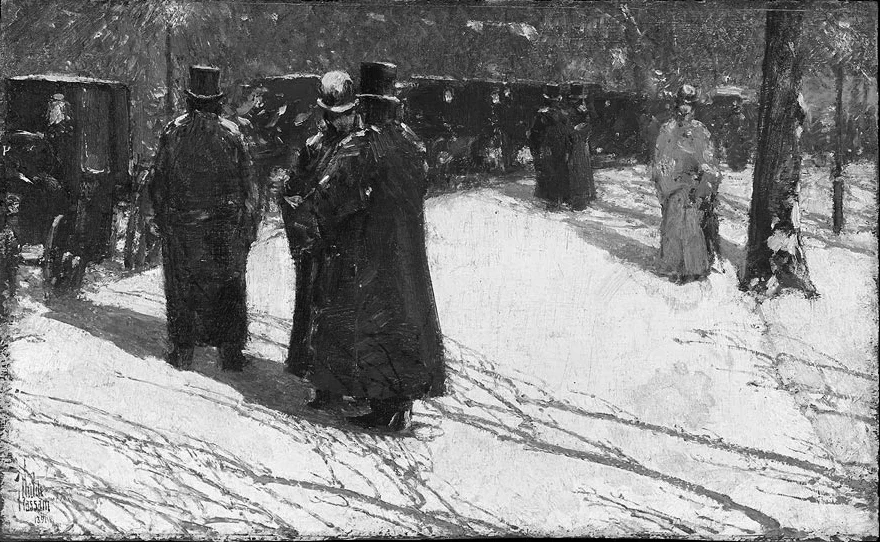
Fifth Avenue in 1925

While it is, of course, Caleb alone who could have best brought these characters together, one can nonetheless imagine a scenario in which the world-famous author might have found his way to the door of 283 East Seventeenth Street with an unsettling case only Dr. Kreizler and his team could hope to address. For my own part, I think it would have been fascinating to see how these characters — now aging, reflective, and increasingly aware of mortality — might have applied their respective approaches in the altered intellectual and social landscape of New York in the 1920s. Such a meeting, had it occurred, could have proved revealing on all sides.

Alas, we must leave such imaginings where they belong: in the realm of speculation. For whatever reason, the meeting between Kreizler and Conan Doyle was never written, but the fact that it feels so tantalizingly possible speaks to the care with which Caleb shaped his fictional worlds, all of which were deeply rooted in history, psychology, and moral inquiry. As we end The Italian Secretary’s anniversary series, and 17th Street enters its third decade, it feels appropriate to simply be thankful that we have been left with such a treasure-trove of richly imagined works that they still invite analysis and reflection this many years on.
The Italian Secretary, 20 Years On – Part Two

View Part One, Part Two, and Part Three of The Italian Secretary 20th anniversary series.

With the festive season now upon us, I invite you to pause for a moment as we continue our tribute to The Italian Secretary — Caleb Carr’s contribution to the Holmes legacy — for its 20th anniversary this year. Last month, we began this series by exploring how Conan Doyle’s interest in Spiritualism, and its subtle influence on the original Holmes canon, helped to inspire the supernatural thread that runs through the novel. Yet, as we learned in Part One, there was far more to Caleb’s choice of subject matter than this alone.

In the novel’s afterword, the U.S. Representative to the Conan Doyle Estate, Jon Lellenberg, explained that The Italian Secretary had originally been commissioned to form part of a short story collection he co-edited, Ghosts in Baker Street. Caleb, a lifelong Sherlockian, had been invited to contribute; however, the deeper he delved into the real historical crime he’d selected as inspiration, the richer (and longer!) his contribution became — so much so that the decision was made to publish it as its own novel.

In today’s post, we therefore move away from the supernatural (if only briefly) to learn what it was about the 16th-century murder of David Rizzio, the titular “Italian secretary”, that captured Caleb’s imagination. It is a story that draws us back to the Edinburgh of Mary, Queen of Scots, and a tower where a ghastly deed took place…

Northward to the Scottish Border

“Furious stabbings… bombs… Holmes, what in Heaven’s name are we entering into?”

Holmes glanced up and out of the window. “Scotland, I should say…”

The Italian Secretary, Chapter 4

To understand why Caleb chose to center his Holmes tale in Scotland, we need look no further than the novel’s dedication. Beyond his beloved feline companion at the time, Caleb credited Hilary Hale, his editor in London, as the person responsible for his visit to the location that ultimately became the setting for The Italian Secretary: the Royal Palace of Holyroodhouse. He explains how this happened in the Acknowledgments section:

“I could not have known, when she dispatched me to Scotland once on a book tour, that a chance visit to the royal palace of Holyrood would one day become this story; but I do know that without the hard work, infinite patience, and support of Hilary (and of her brilliant co-workers at Little, Brown UK), that trip would probably never have taken place.”

The tour Caleb is referring to took place several years earlier, at a pivotal moment in his career. According to The Bookseller, the unexpected success of The Alienist meant that his UK publisher had decided to give its sequel, The Angel of Darkness, considerable backing when it was released in early 1998. In addition to a first print run of 25,000 copies, it also received an international book tour. Starting in Ireland before crossing to London, Caleb gave talks at the Waterstones branches in Dublin, Manchester, Leamington Spa, and Edinburgh. It was the Edinburgh leg of the tour, which took place on March 13, 1998, that would prove fateful, as it marked Caleb’s first visit to the Palace of Holyroodhouse.

The Secrets of Holyroodhouse

“I went also to see Mary Queen of Scots’ Bedchamber (a very small one it is) from whence David Rizzio was drag’d out and stab’d in the ante room where there is some of his Blood which they can’t get wash’d out.”

Elizabeth, Baroness Percy (1760)

The Palace of Holyroodhouse (also known as Holyrood Palace) dates to the early 16th century when it was constructed by James IV. Located beside the Augustinian Holyrood Abbey that was erected several centuries earlier in 1128, it is said to be named either for a vision of the cross King David I had while hunting in the area, or for a relic of the True Cross (known as the Holy Rood) that belonged to his mother, Saint Margaret. Unlike the vast ceremonial palaces more commonly associated with the British monarchy, Holyroodhouse has always been an intimate and lived-in seat of power, with its private apartments closely interwoven with its public spaces. While the public may be more familiar with Balmoral — the current royal family’s favored private Scottish estate — Holyroodhouse has long been the official royal residence in Scotland, a tradition that continues to the present day.

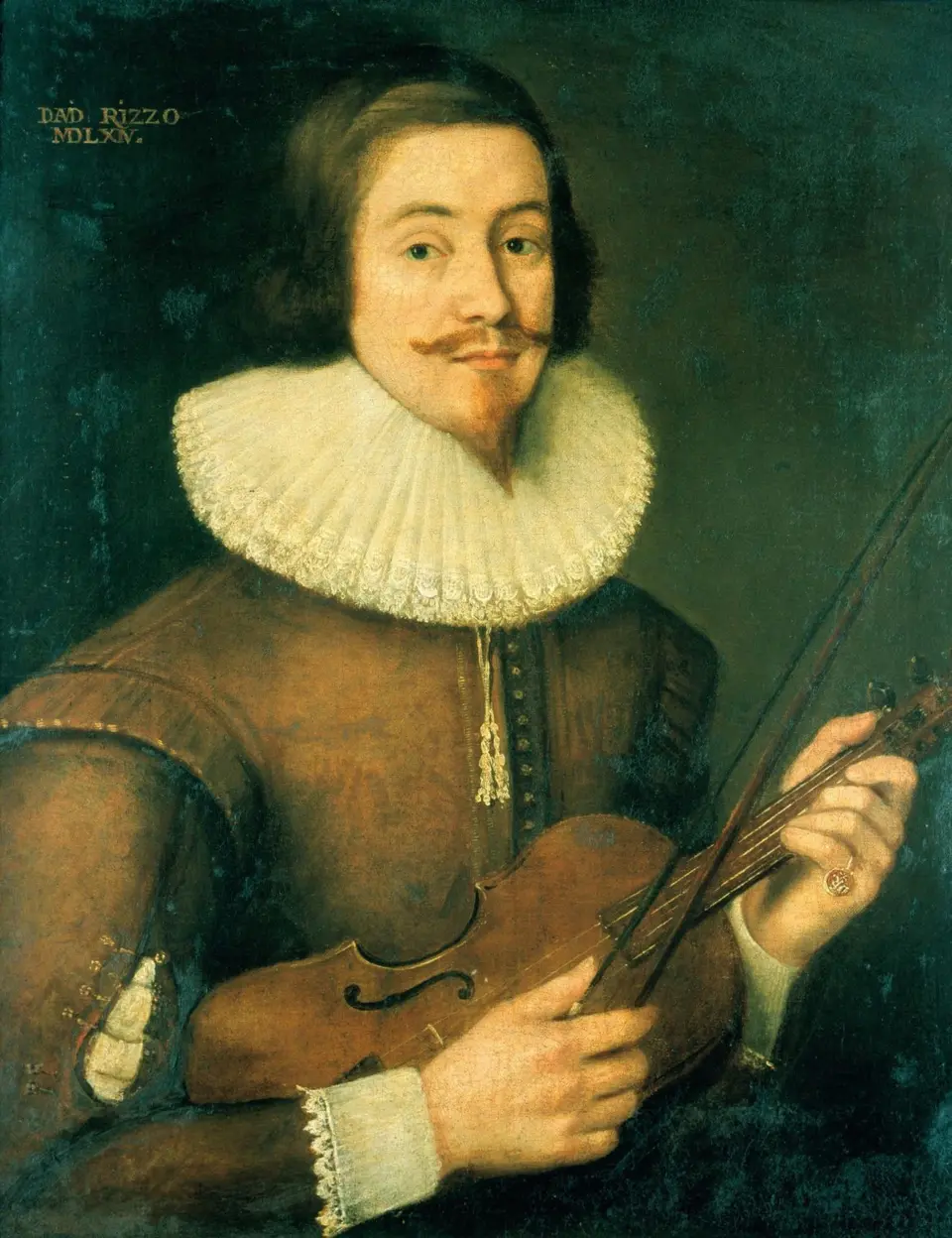
Seventeenth-century portrait traditionally said to be of Rizzio.

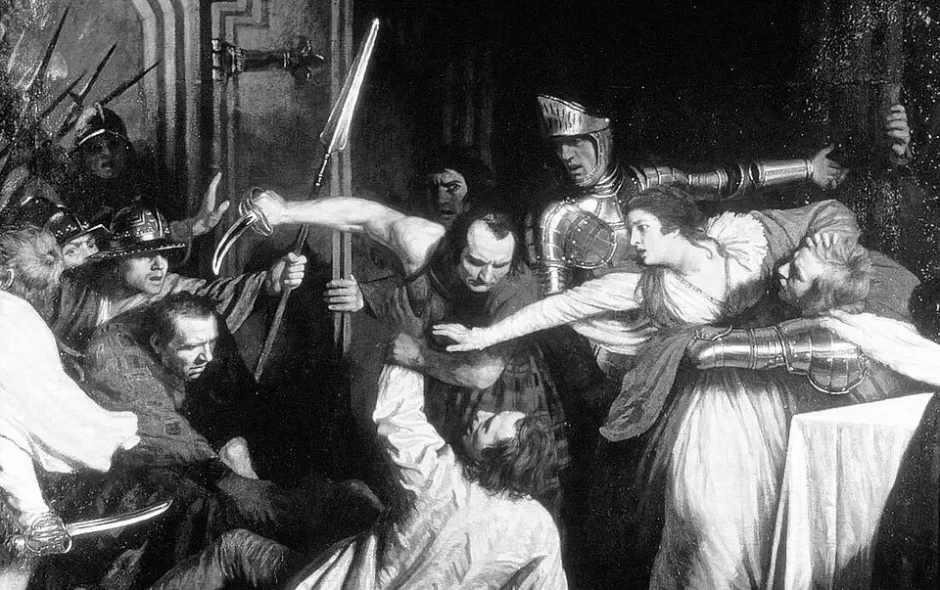
Although Caleb never publicly discussed his tour of Holyroodhouse, it seems likely he would have had an experience just as affecting as other visitors have reported for over two hundred years. According to the Royal Collection Trust, public fascination with the doomed reign of one of the palace’s most intriguing monarchs — and a central figure of The Italian Secretary — Mary, Queen of Scots, has attracted visitors since the latter half of the 18th century. From these earliest years, visitors to Mary’s former private apartments have been confronted with the gruesome sight of bloodied floorboards, the last remaining evidence of the murder of David Rizzio, her private secretary. As this murder forms the basis for The Italian Secretary, it seems plausible that this remnant from the palace’s violent past may have served as Caleb’s first direct inspiration for the story during his visit.

Given that Caleb included a vivid description of how the 1566 murder of Rizzio took place in the novel, I will avoid going into detail here in order not to ruin the book for readers who may not have familiarized themselves with the tale. However, for the sake of providing historical context and wonderful visuals of the palace itself, I strongly recommend watching the following video from the Royal Collection Trust, which opens with a brief summary of the famous assassination:

What gave the murder of David Rizzio its unusual longevity was not only its brutal nature and political significance, but the way it continued to haunt Holyroodhouse itself — quite literally. Indeed, this may be another reason Caleb decided to feature the story. Over the centuries, rumors have persisted of disturbances and apparitions at the palace tied to the murder. In addition to the bloodstained floorboards where Rizzio’s body had lain after his death (the boards have been replaced several times, with the stains said to reappear in the same location each time), a ghostly figure attributed to the secretary has been observed in the area. But Rizzio is not the only spirit tied to the killing who has been said to linger within the palace walls.

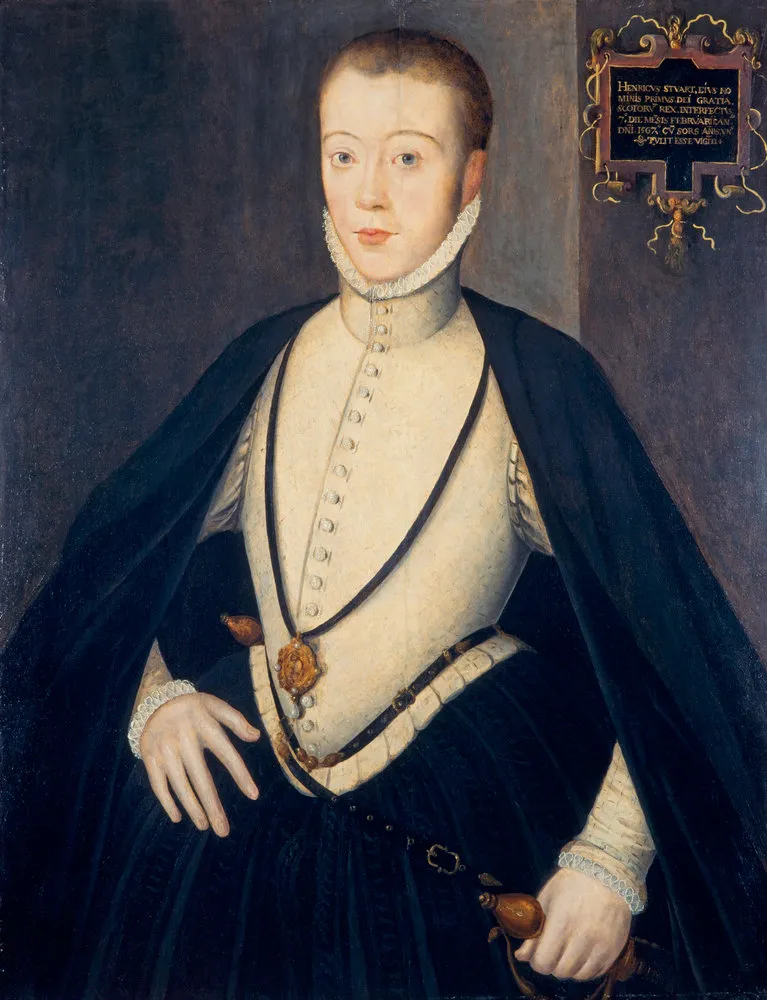
Lord Darnley in his late teens, by an unknown artist.

Not long after the secretary’s death, Lord Darnley — Mary’s husband and one of the instigators of Rizzio’s assassination — also met a violent end. Although initially believed to have died in a house explosion while recovering from illness, his body showed signs of strangulation. Suspicion for the murder fell on Mary and her future husband, the Earl of Bothwell, though it was ultimately several of the Earl’s servants and acquaintances who were found guilty and executed. Of relevance here, as with the secretary he helped to dispatch, Lord Darnley’s spirit is also said to haunt his former rooms at Holyroodhouse.

Whether one lends credence to such stories or not, they form part of the accumulated atmosphere of Holyroodhouse, a place where history, intrigue, and the unexplained overlap. For a writer like Caleb, it is easy to see how this charged setting might have suggested itself when he was invited to write a Holmes story with an other-worldly element. In this light, his decision to center The Italian Secretary on the murder of David Rizzio seems less an imaginative leap than a natural convergence: his interest in Conan Doyle’s metaphysical curiosity (see Part One), his book tour to Edinburgh, and his lifelong fascination with history all pointing in a single direction.


I hope you have enjoyed exploring some of the inspirations for The Italian Secretary. To conclude the year and our celebration of the novel’s anniversary, in Part Three we will give our imaginations room to roam as we consider what might have happened had Caleb followed Jon Lellenberg’s suggestion in the novel’s afterword and brought the worlds of Holmes and Kreizler together. I trust you will join me then, but in the meantime, happy reading!

The Italian Secretary, 20 Years On – Part One

View Part One, Part Two, and Part Three of The Italian Secretary 20th anniversary series.
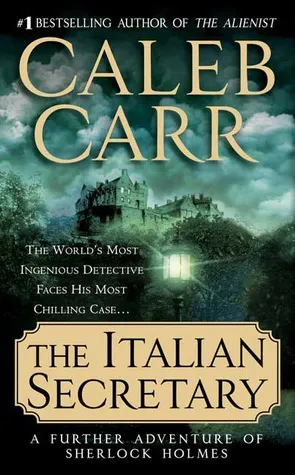
The Italian Secretary

As the year draws to a close, it brings with it two significant milestones: the 20th anniversary of The Italian Secretary, and with it, the 20th anniversary of 17th Street itself. Although I fell in love with Caleb Carr’s work several years before opening 17th Street, it was The Italian Secretary — Caleb’s homage to Sir Arthur Conan Doyle, the author who shaped his literary life — that ultimately inspired me to pay my own tribute to Caleb’s work, a tribute that has continued to grow over the past two decades. To mark this occasion, I have therefore decided to put together a short blog series to honor the book that inadvertently started it all.

In the first two parts of this series, we will explore the various facets of Caleb’s inspiration for the novel, ranging from the supernatural (Part One) to the historical (Part Two). The series will conclude in Part Three with the intriguing hypothetical raised in the novel’s afterword: What might have happened had Caleb decided to take the plunge and blend the world of The Alienist with that of Conan Doyle? The afterword framed the idea as a meeting that would delight and fascinate mystery readers (“Dr. Kreizler, Mr. Sherlock Holmes…”), but is that truly the direction Caleb would have taken?

So, if you haven’t done so already this year, I hope you’ll join me in picking up your copy of The Italian Secretary for its 20th anniversary to explore it in a way you may not have done before. Let us leave 17th Street behind then, to journey back to 221B Baker Street and the Scottish border beyond!

No Ghosts Need Apply

I attempted the most severe tone possible, given the increasingly late hour and our growing need for haste: “You might have shown more respect for her beliefs, Holmes, different though they are from your own.” At that, I hurried off to my bedroom, and began hurriedly packing some few items into a Gladstone.

Holmes’s distinctly puzzled voice drifted in: “And what makes you think they are so different, Watson?”

“All I mean to say,” I elaborated, going into a closet to fetch my rods and tackle, “is that if Mrs. Hudson entertains notions about hauntings and ghosts, why go out of your way—”

“Oh, but I entertain such notions myself, Watson.”

The Italian Secretary, Chapter 2

The notion that Caleb Carr, a lifelong Sherlockian and creator of Dr. Laszlo Kreizler, pioneer in forensic psychology, would write a Holmes tale in which the eminently rational detective entertains the possibility of a supernatural — indeed, ghostly — origin for a series of murders might, at first glance, invite surprise. It was Holmes, after all, who famously stated in The Adventure of the Sussex Vampire: “The world is big enough for us. No ghosts need apply.” The occult does not feature in the Alienist novels either. Readers might recall Dr. Kreizler’s exchange with John on the topic following the secret exhumation of Matthew Hatch in The Angel of Darkness:

“Do you think Matthew Hatch will reach out from the grave, Moore?” the Doctor needled. “To rebuke you for disturbing his eternal rest?”

“Maybe,” Mr. Moore answered. “Something like that. You don’t seem too damned troubled along those lines, Kreizler, I must say.”

“Perhaps I have a different understanding of what we’ve just done,” the Doctor answered, his voice growing more serious. “Perhaps I believe that Matthew Hatch’s soul has not yet known peace, eternal or otherwise—and that we represent his only chance of attaining it.”

The Angel of Darkness, Chapter 33

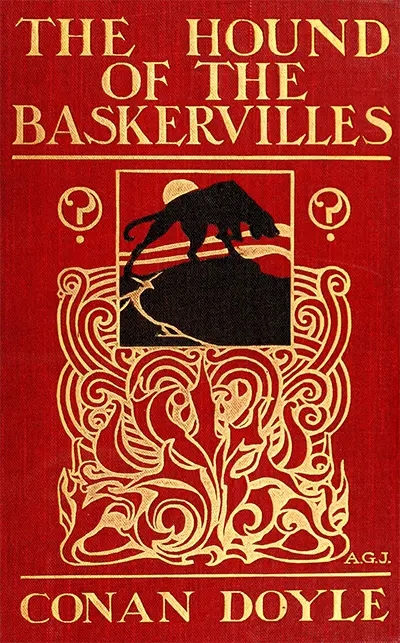
Why, then, did Caleb decide to write a tale centered on other-worldly subject matter for his contribution to the Holmes legacy? As it turns out, the idea was not his at all. In the afterword of The Italian Secretary, the U.S. representative to the Conan Doyle Estate, Jon Lellenberg, explained that he and co-editors Daniel Stashower and Martin Greenberg had decided to commission a set of short stories for a new collection, Ghosts in Baker Street, in which Holmes would be brought face-to-face with the paranormal. Lellenberg acknowledged feeling some misgiving at the decision. After all, ghosts are “non-canonical,” and he was not at all sure that Conan Doyle would approve. Nevertheless, there is no denying that the detective’s most famous adventure was about a spectral canine; and so, with The Hound of the Baskervilles providing “excuse and inspiration,” he gave permission to proceed. This, however, doesn’t explain why Caleb agreed to contribute.

The Sherlock Holmes Companion: An Elementary Guide

That Caleb would be willing to accept a commission to write a Holmes tale at all requires no explanation. From his youth, he was an avid reader of Conan Doyle. As he explained in an interview for The Sherlock Holmes Companion in 2009: “I grew up in a very crazy household and the stories’ appeal was that process of using reason to deal with people and the extreme things they do.” His love of Holmes extended to the film adaptations as well. When asked how hard it was to write in Conan Doyle’s voice in an interview with CBS in 2005, he responded that it wasn’t difficult for him: “I could speak like Basil Rathbone being Sherlock Holmes by the time I was ten.” Yet, this still doesn’t answer the beguiling question of why he chose this particular story.

It seems fair to say that Caleb’s love of Holmes, longstanding friendship with Lellenberg, and inspiration he drew from a trip to Edinburgh several years earlier (more on this in Part Two) all played important roles in his willingness to accept the Estate’s commission. Indeed, according to the novel’s afterword, it was Caleb’s fascination with the real historical crime that sits the heart of the story which resulted in it growing to such an unwieldly length that it necessitated separate publication as its own novel, rather than forming part of the original commissioned collection. But even this doesn’t explain why he decided to accept the challenge of a Holmes story with supernatural themes.

The nearest answer one can get can be found in his interview with The Sherlock Holmes Companion. When asked what challenges he faced in writing a new Holmes story, he responded in part:

The big challenge was to make it faithful. When I was asked to do it, they said I should try to be faithful but try to add something of my own. That threw me into a bit of a loop for a while. Because I wanted it to be as faithful as possible, but I knew that they didn’t just want a carbon copy. I wasn’t originally going to do anything connected to the supernatural, even though I’ve always been fascinated by that part of Conan Doyle’s life […] There are a lot of fans who really don’t think Holmes should or would be involved in any supernatural stuff. They quote the line about ‘no ghosts need apply’ but on the other hand there are lots of stories where he concedes the possibility of other dimensions in life. And that conveniently gets forgotten. So that was another reason to bring in the supernatural element. But I knew that would be hard. It had to play a crucial role but not the crucial role. The story would have to work without it. And that was a difficult line to walk.

Thus, to understand how Conan Doyle’s interest in the supernatural may have played a role in Caleb’s decision to agree to include a supernatural element in The Italian Secretary, it is necessary to explore Conan Doyle’s involvement in Spiritualism and how this influenced his own work.

Conan Doyle and the Unseen World

Perhaps the greatest of the Sherlock Holmes mysteries is this: that when we talk of him we invariably fall into the fancy of his existence. Collins, after all, is more real to his readers than Cuff; Poe is more real than Dupin; but Sir A. Conan Doyle, the eminent spiritualist of whom we read in Sunday papers, the author of a number of exciting stories which we read years ago and have forgotten, what has he to do with Holmes?

T.S. Eliot

When Sir Arthur Conan Doyle and his family arrived in New York City in 1922, he was at the height of his fame. Now 62 years of age, the creator of Sherlock had published all four Holmes novels, four collections of Holmes short stories, numerous works of historical and science fiction, volumes of military history, and even collections of poetry. Yet, this trip was not a book tour. The eminent British author had made the passage across the Atlantic to embark on a three-month-long speaking tour of the United States and Canada about his new life’s passion: Spiritualism.

Founded in 1848, the Spiritualist movement emerged in upstate New York, when the Fox sisters’ rappings (said to be produced by communication with spirits) were put on display during a series of public demonstrations across the Northeast. From these humble origins, the movement expanded into private homes, churches, and public halls across America and Britain, drawing in those who were skeptical, grieving, or simply eager for the possibility that death did not sever the bonds of affection. Spiritualists believed that human personality survived bodily death, that communication between the living and the departed was not only possible but natural, and that mediums served as intermediaries capable of bridging the two worlds. By late century, séances, trance sittings, table tilting, and automatic writing were no longer fringe spectacles but part of a widespread cultural conversation about consciousness and the limits of the material world.

If it seems strange that Conan Doyle, whose most lauded creation reveled in the rational, had become a passionate defender of this new metaphysical movement, it is worth remembering that the public of the time were no less enthusiastic. On his 1922 tour alone, he filled Carnegie Hall six times with standing-room only crowds. The following year, he filled it three times. Despite its detractors, Spiritualism had moved into the mainstream, with many of the most enlightened minds of the age, including such luminaries as psychologist William James and physicist Sir Oliver Lodge, wishing to investigate the reported phenomena. To facilitate this, the Society for Psychical Research was established in 1882 to bring scientific scrutiny to claims of apparitions, mediumship, telepathy, and other experiences that challenged traditional explanations. It was in this environment, where the scientific and the spiritual met, that Conan Doyle’s own interest deepened and eventually transformed into the lifelong passion he would champion so publicly.

Although modern readers of Sherlock may scoff at Conan Doyle’s involvement with Spiritualism, particularly when it led to him endorsing the ‘coming of fairies’ which was later exposed as a hoax, it is noteworthy for our purposes here that Caleb did not share this cynical attitude. As noted earlier, Caleb explained in his interview for The Sherlock Holmes Companion that he was “always fascinated” by this part of Conan Doyle’s life, going on to say:

I understood why he got involved with Spiritualism and the fairy hoax. There was some kind of pathos in the story that I found very humanizing. At times you could almost lose sight of him as a human because he was so larger than life and he lived by these principles that he exhorted other people to live by. When his son died in the war it was such a crushing thing for him and he got more heavily involved with that stuff, seeing mediums to try and talk to his son.

Beyond this general sympathy, Caleb was also of the view that there were Holmes stories in which the detective “concedes the possibility of other dimensions in life”. In addition to The Hound of the Baskervilles, which is the clearest example of Holmes confronting an ostensibly supernatural threat, several other stories demonstrate that Conan Doyle was open to allowing the uncanny to cast its shadow before unveiling the rational explanation behind it. The Adventure of the Sussex Vampire is the most frequently cited case, with its teasing suggestion of vampirism (even if this was the story where Holmes stated ‘no ghosts need apply’). The Adventure of the Devil’s Foot, too, places Holmes and Watson in an atmosphere that borders on the occult. In each instance, Conan Doyle ultimately reasserts reason, yet the stories themselves suggest an author comfortable letting the boundary between the natural and supernatural blur just long enough to unsettle both his characters and readers.

We can therefore see that The Italian Secretary was, in fact, exploring subject matter that was both within Conan Doyle’s own field of interest and wasn’t out of keeping with the canonical Holmes stories. However, to gain insight into why Caleb chose the specific haunting that lies at the heart of the novel, we must turn from Conan Doyle’s worldview to the real historical crime that first captured Caleb’s imagination, a story that takes us to the Royal Palace of Holyroodhouse.


I hope you’ll join me next month for Part Two as we delve into the true crime that inspired the novel, before we conclude our celebration by exploring how the worlds of Holmes and Kreizler might have come together, as suggested in The Italian Secretary’s afterword.

A Peek Behind the Scenes of The Alienist

In honor of the 30th anniversary of The Alienist last year, we spent several months tracing the novel’s publication history, along with that of its sequel, The Angel of Darkness. Today, on what would have been Caleb Carr’s 70th birthday, I feel fortunate to be able to share a previously unseen slice of his writing process, generously provided by a member of his family. Ever the meticulous researcher, Caleb revealed in interviews from the ‘90s that in the lead-up to his writing of The Alienist, his research and plot outline was so extensive that it covered the walls of his one-bedroom apartment. In a 1997 interview with Publishers Weekly, it was noted that:

…he devoted “seven to eight months” to “pure research” and plotting. Carr points to a wall of the room. “From the corner of this room all the way across the wall, The Alienist was plotted out on tiny strips of paper.” After an equal amount of time spent writing, he turned in the manuscript.

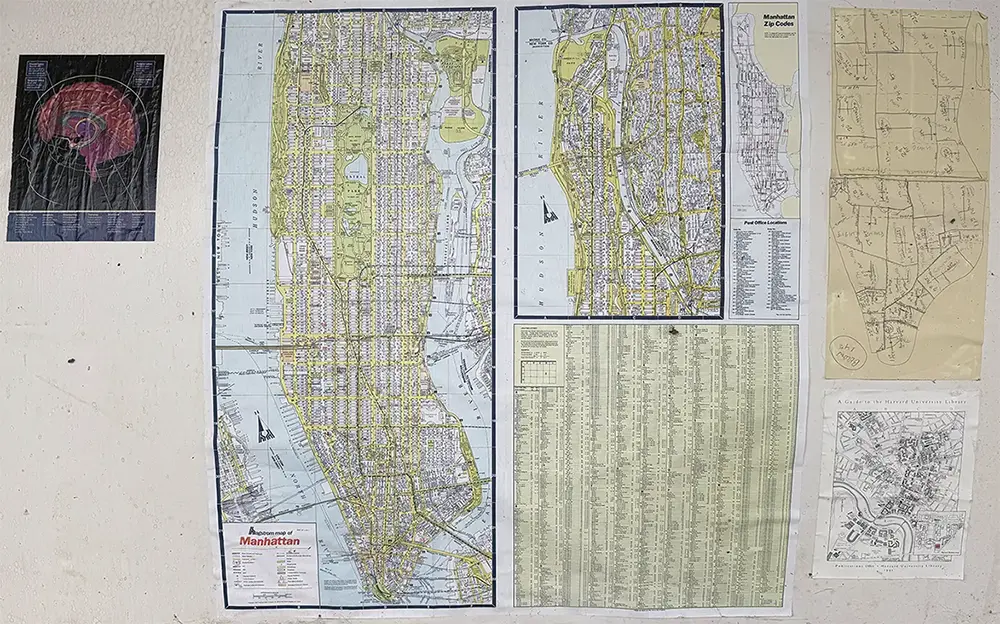
Research board created by Caleb Carr as part of his planning process for The Alienist in 1994

Although the tiny strips of paper have not been found (if they still exist), we can now glimpse a tangible remnant from that time. A large board was recently unearthed containing a poster of the brain, along with several maps directly tied to The Alienist. In today’s post, we will take a closer look at two of these maps—and in doing so, learn more about the real history that shaped Caleb’s vision for The Alienist.

Wards and Police Precincts

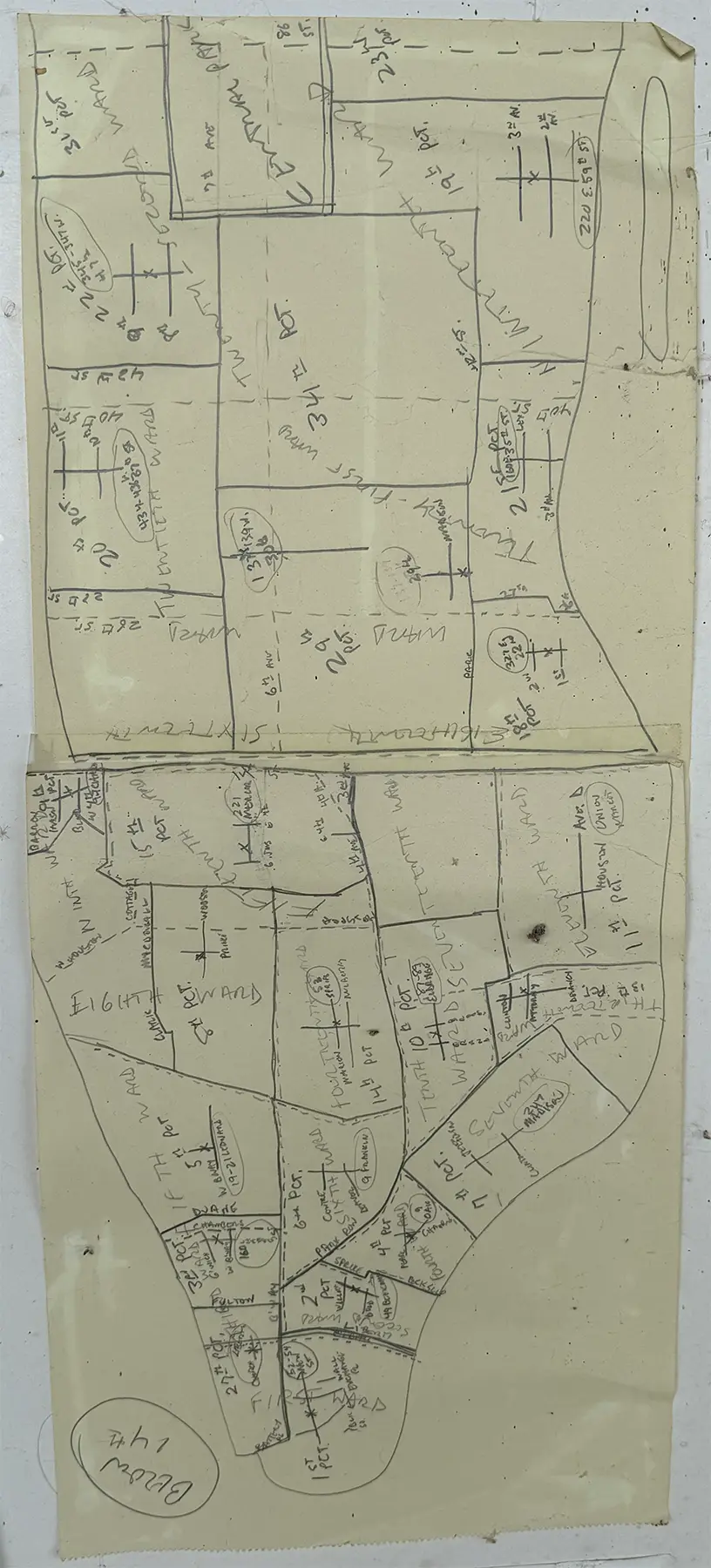
Even though a street map of contemporary Manhattan occupies the largest section of the board, it is the hand-drawn map pinned beside it that offers the greatest insight into Caleb’s research process for the book. Focused on Midtown and Lower Manhattan, the dark pencil lines on this map mark the boundaries of Manhattan’s police precincts from the 1890s. Each precinct is labelled according to its number (e.g., ‘1st Pct.’), and in the middle of each is a star with street intersections corresponding to the precinct’s station house. For example, Caleb has noted that the First Precinct’s station house was located at 52-54 New Street, which is consistent with the station house’s address noted in The Manual of the Corporation of the City of New York.

Readers of The Alienist will remember that police precincts play an important role in the novel. As early as Chapter 2 when John visits the first crime scene, the fact that police from two different precincts were in attendance provided the first clue that the murders under investigation were of a concerning variety:

Near the entrance to the watchtowers atop the anchor, standing under the flimsy light of a few electric bulbs and bearing portable lanterns, were several patrolmen whose small brass insignia marked them as coming from the Thirteenth Precinct (we had passed the station house moments before on Delancey Street). With them was a sergeant from the Fifteenth, a fact that immediately struck me as odd—in two years of covering the criminal beat for the Times, not to mention a childhood in New York, I’d learned that each of the city’s police precincts guarded its terrain jealously. (Indeed, at mid-century the various police factions had openly warred with each other.) For the Thirteenth to have summoned a man from the Fifteenth indicated that something significant was going on.

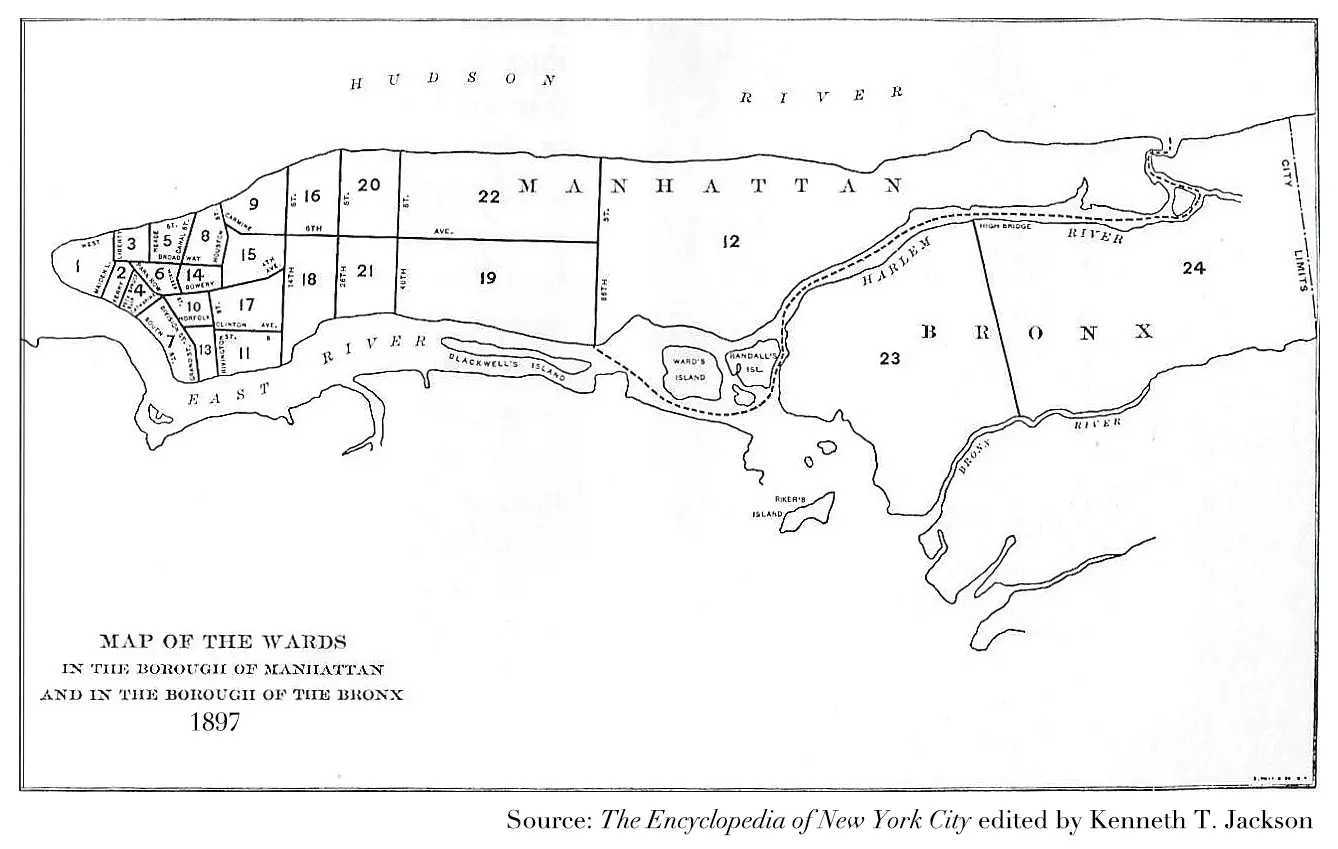
But the precincts aren’t the only focus of the map. A close inspection shows lightly dashed pencil markings atop the precinct boundaries. These markings, which don’t directly match the precincts, correspond to New York’s administrative ‘wards’. From 1686 until the mid-19th century, these subdivisions were the smallest political unit in the city and played a crucial role in local elections. Ward ‘bosses’ (often saloonkeepers) wielded considerable influence, and by the 1850s, the ward system was viewed by reformers as the city’s principal source of corruption.

Even so, this wasn’t the reason Caleb was interested in ward boundaries. By the 1890s, New York’s wards had been replaced with districts for political purposes. Indeed, at this time in the city’s history, the ward system only served two vestigial functions: the administration of public schools (this was centralized in 1896) and the conduct of state and federal censuses. It is the latter of these that caused wards to play a role in The Alienist, and an important one at that.

In Chapter 39, John Moore and Sara Howard pay a visit to Mr. Murray of the Census Bureau to determine whether Beecham, the murderer, may have worked as an enumerator during the 1890 census. While there, the following exchange takes place:

I tried another tack: “I trust he didn’t do anything untoward while he was working in the Thirteenth Ward?”

Murray grunted once. “If he had, I hardly would have promoted him from enumerator to office clerk and kept him on for another five years—” Murray caught himself and jerked his head up. “Just a minute. How did you know he was assigned to the Thirteenth Ward?”

I smiled. “It’s of no consequence. Thank you, Mr. Murray, and good evening.”

Further on in the chapter, John explains:

Enumerators had received their assignments according to congressional districts, which in New York had been subdivided according to wards. My question to Murray about Beecham in the Thirteenth Ward had, I told Sara, been a guess: I knew that Benjamin and Sofia Zweig had lived in that ward, and I was going on the theory that Beecham had met them while working in the area, perhaps even while interviewing their family for the census.

We can see clearly that it was John’s knowledge of the city’s wards and the role they played in the census that led to a breakthrough in the case. One hand-drawn map can therefore tell us much about the novel and Caleb’s process in writing it.

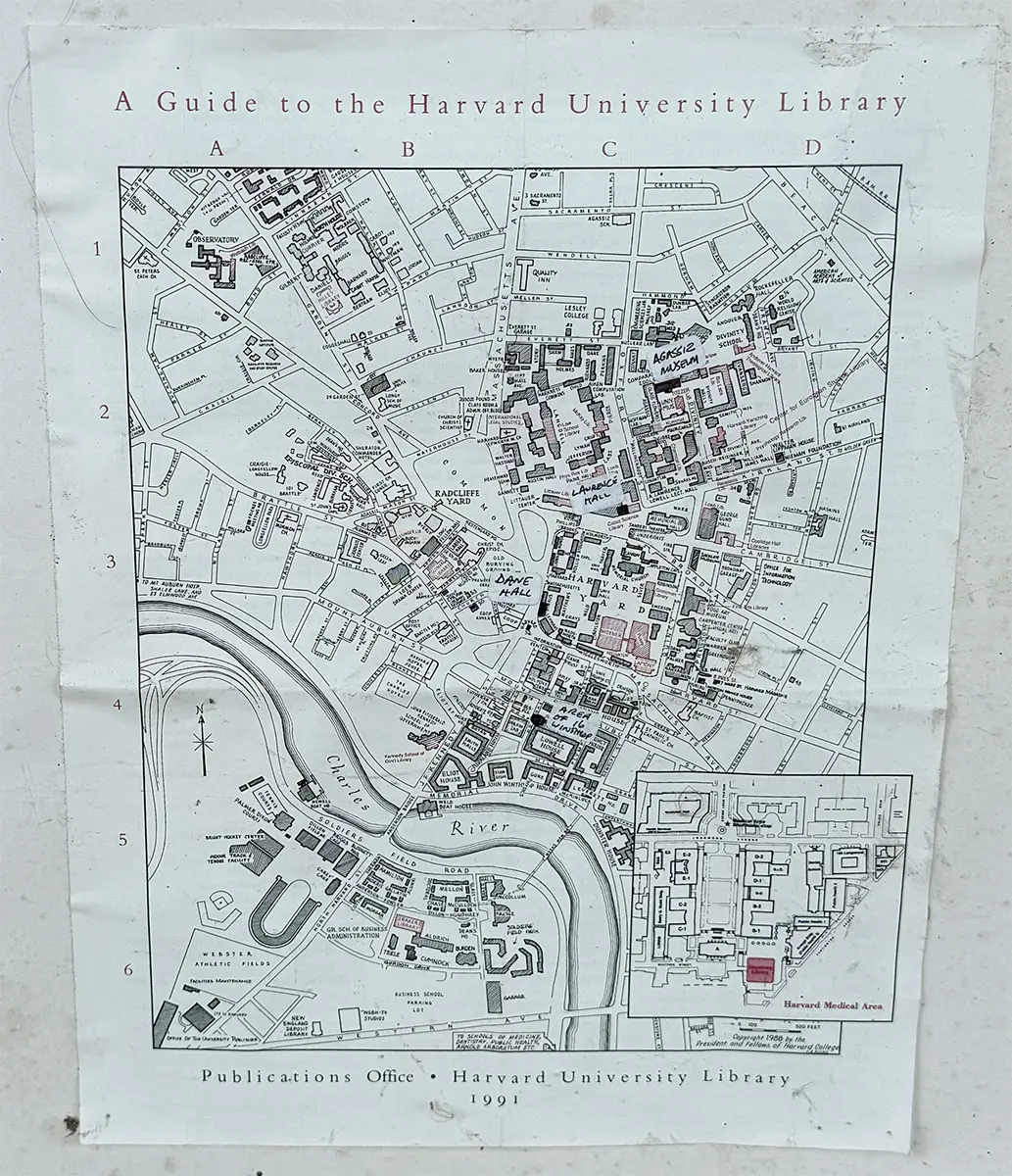
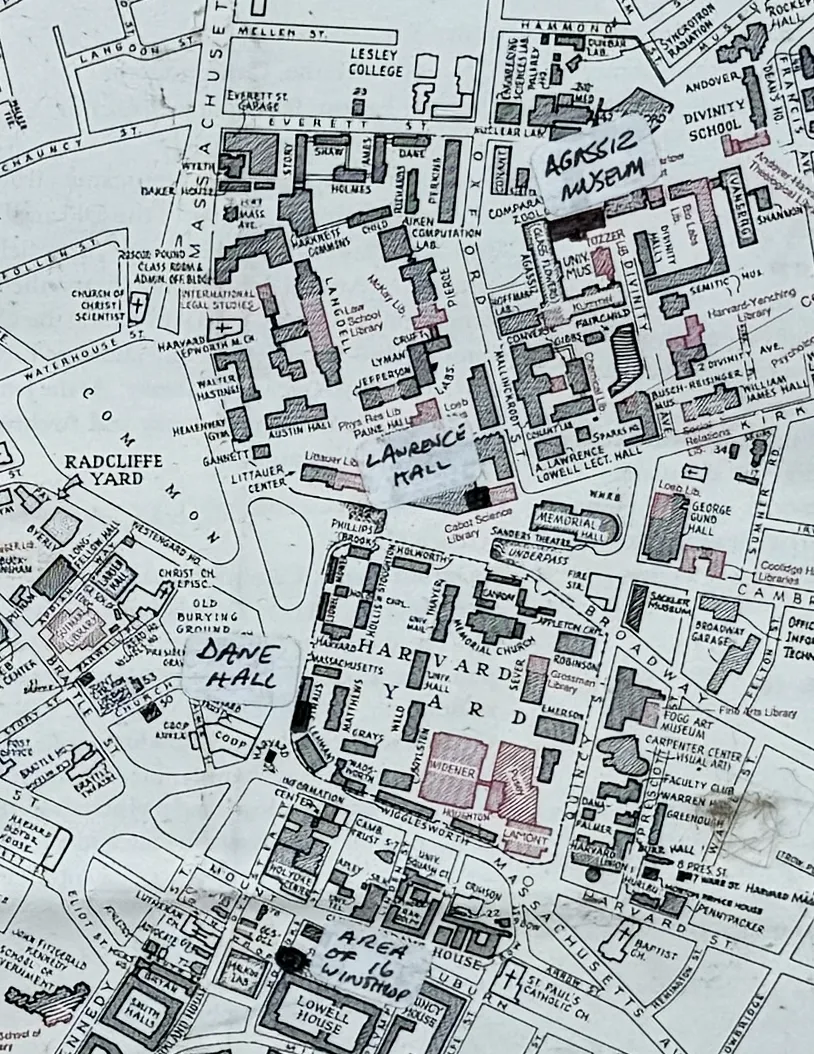
Map of the Harvard campus with annotations by Caleb Carr

Harvard Campus Map

In addition to the precinct map, the other item of interest on the board is a hand labelled map of the Harvard campus. Like the street map next to it, the document is contemporary, but the locations Caleb marked with sticky notes provide a fascinating insight into his outlining and planning process. Of note, most of the locations are not featured in the single flashback scene in The Alienist set at Harvard, so readers may wonder at their significance. To address this, we must first turn back to Chapter 5 in the novel where we learn about the fateful clash that first brought Theodore Roosevelt, Laszlo Kreizler, and John Moore together while they were studying at Harvard in the fall of 1877.

In this scene, we learn that Moore and Roosevelt had, for differing reasons, decided to take a course in comparative anatomy taught by William James, the man who would come to be viewed as the father of modern American psychology but who, at that time, was teaching philosophy and anatomy to undergraduates. At the same time, Kreizler had also been drawn to study with James, but for a different reason. The young Dr. Kreizler had recently completed his medical degree at Columbia’s College of Physicians and Surgeons and was undertaking a new graduate course in psychology offered by James.

Although the youthful Kreizler admired his professor, the two had a fundamental disagreement over a long-standing philosophical debate that still sits at the heart of psychology today, as John explains:

James had been a maudlin, unhealthy boy, and as a young man had more than once contemplated suicide; but he overcame this tendency as a result of reading the works of the French philosopher Renouvier, who taught that a man could, by force of will, overcome all psychic (and many physical) ailments. “My first act of free will shall be to believe in free will!” had been James’s early battle cry, an attitude that continued to dominate his thinking in 1877. Such a philosophy was bound to collide with Kreizler’s developing belief in what he called “context”: the theory that every man’s actions are to a very decisive extent influenced by his early experiences, and that no man’s behavior can be analyzed or affected without knowledge of those experiences.

What started as a battle between the two in the new psychology laboratory James had established in Lawrence Hall eventually led the pair to host a public debate at University Hall, with most of the student body in attendance. Somewhat predictably, the engaging professor won the debate, but this was not the end of Kreizler’s battles that night. Dining with Moore at a tavern across the Charles River, the young Roosevelt approached and engaged Kreizler in an argument that turned personal:

Kreizler laid down the challenge for an affair of honor, and Theodore delightedly took him up, suggesting a boxing match. I knew Laszlo would have preferred fencing foils—with his bad left arm he stood little chance in a ring—but he agreed, in keeping with the code duello, which gave Theodore, as the challenged party, the choice of weapons. To Roosevelt’s credit, when the two men had stripped to their waists in the Hemenway Gymnasium (entered, at that late hour, by way of a set of keys I had won from a custodian in a poker game earlier in the year) and saw Kreizler’s arm, he offered to let him choose some weapon other than fists; but Kreizler was stubborn and proud, and though he was, for the second time in the same evening, predestined for defeat, he put up a far better fight than anyone had expected. His gameness impressed all present and, predictably, won him Roosevelt’s heartfelt admiration.

This richly painted scene established the background needed to bring the three characters back together twenty years later. Yet, if we look closely, the locations featured only included Lawrence Hall, University Hall, the Hemenway Gymnasium, and the unnamed tavern across the Charles River. Of these, only Lawrence Hall is marked on Caleb’s map. What are the other locations, then?

The answer can be found in biographies of Theodore Roosevelt. In the youthful Roosevelt’s freshman year at college, he lived in Mrs. Richardson’s boarding house at 16 Winthrop Street, one of the locations marked on the map. Similarly, the Agassiz Museum, otherwise known as the Museum of Comparative Zoology, was one the young man’s haunts in his junior and senior years. The significance of Dane Hall is a little more difficult to establish, but perhaps the solution lies in the fact that it was only a short distance from the Hemenway Gymnasium where the fateful boxing match in the novel takes place.

Although we can never know for certain, it appears as though this map was annotated before the scene at Harvard was plotted. And it seems likely from the locations marked that Caleb worked backwards from Roosevelt’s time at the college to plan the scene. Perhaps his original ideas included 16 Winthrop Street or the Agassiz Museum, or perhaps he was merely working out relative distances.

In any case, like the precinct map, it provides an intriguing insight into his process. I hope readers found this sneak peek behind the scenes of The Alienist as interesting as I did researching it. Happy Birthday, Caleb. You are missed.