Celebrating 30 Years of The Alienist – Part Three

View Part One, Part Two, Part Three, Part Four, and Part Five of The Alienist 30th anniversary series.

To honor Caleb Carr’s birthday today, I am pleased to release the third post in our series commemorating the 30th anniversary of The Alienist’s publication. Having discussed the novel’s origins in Part One and its critical reception in Part Two, in this installment we return to Caleb’s first love — the screen — and a major source of buzz in the lead up to The Alienist’s publication: the promise of a movie adaptation. “You won’t find many writers who love movies as much as I do,” Caleb explained in an interview from 1997. “Movies formed much of the imagery that I use in my books.”

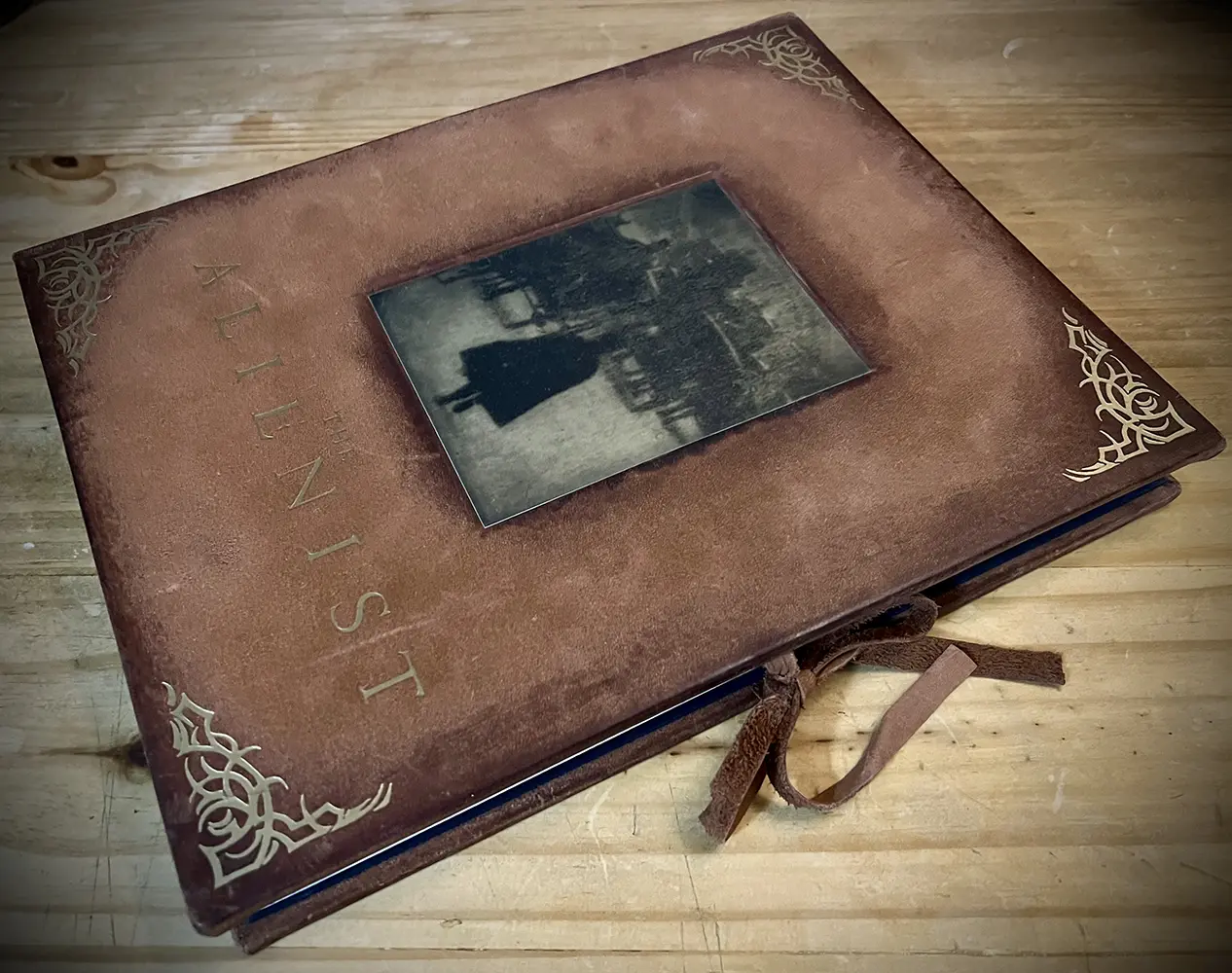
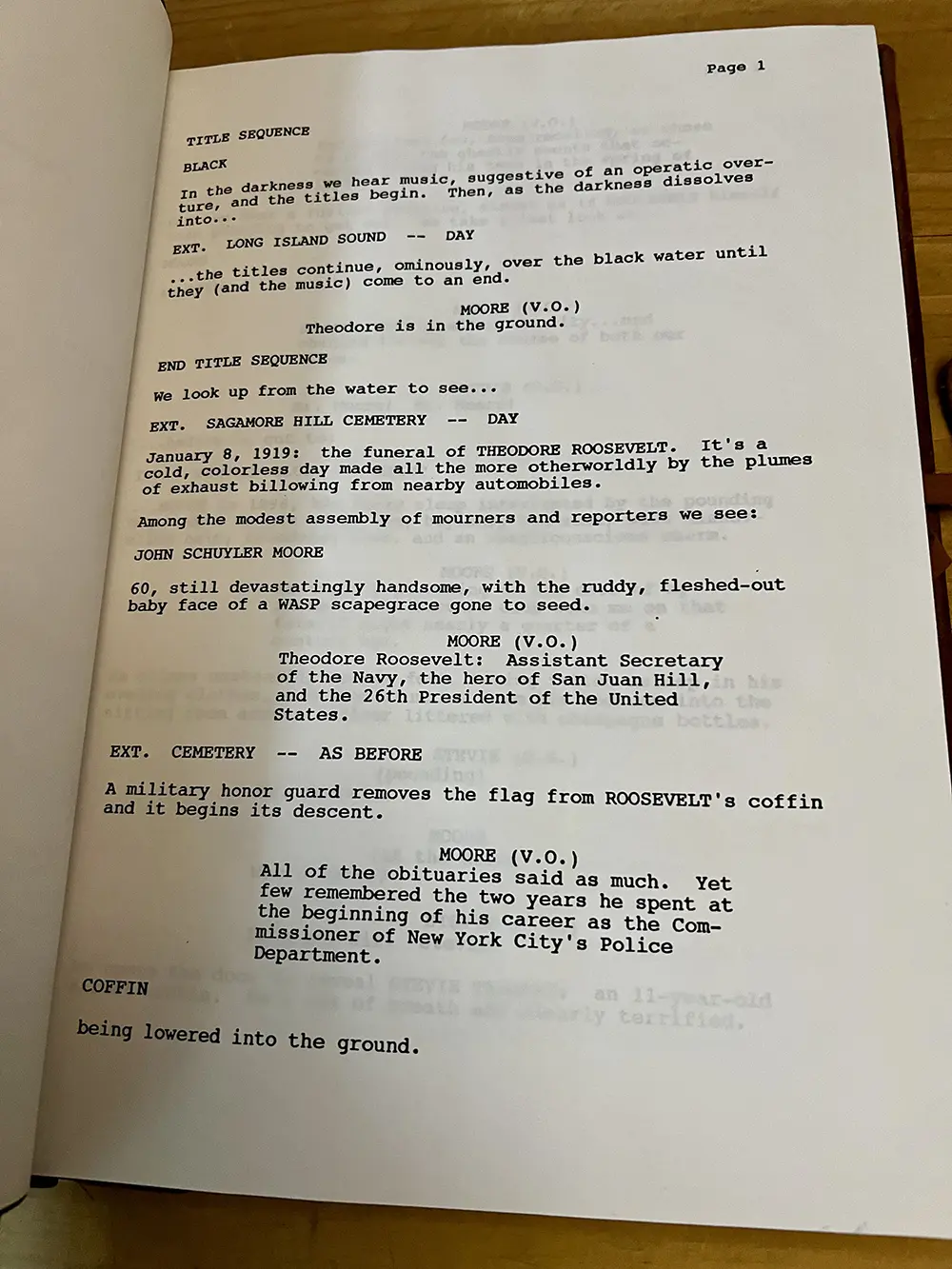
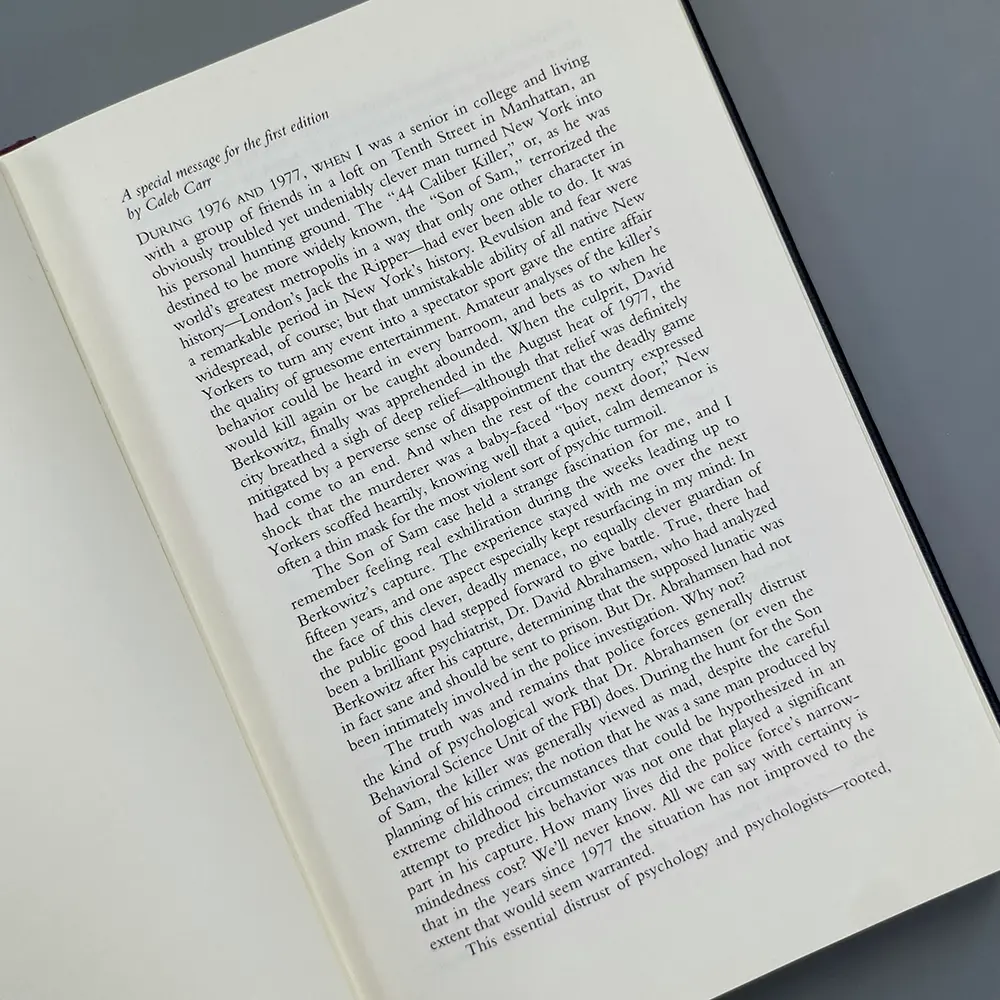
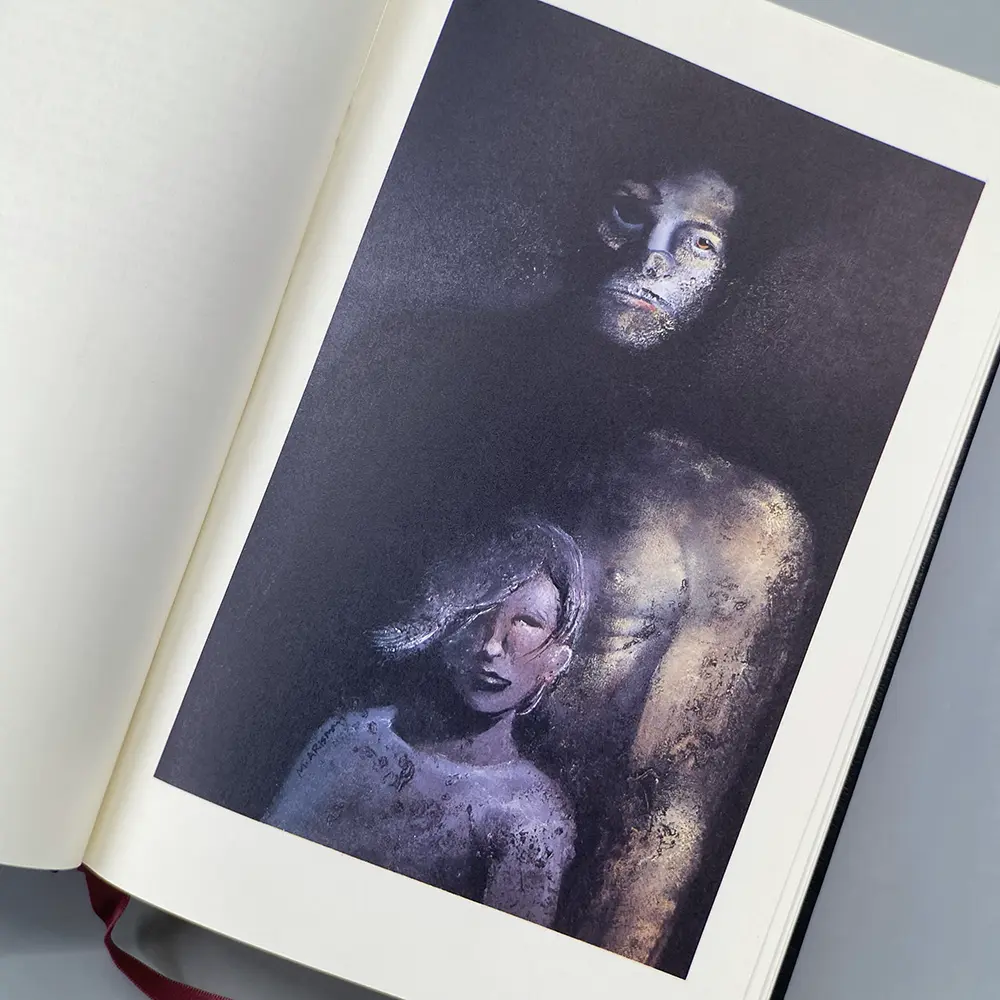
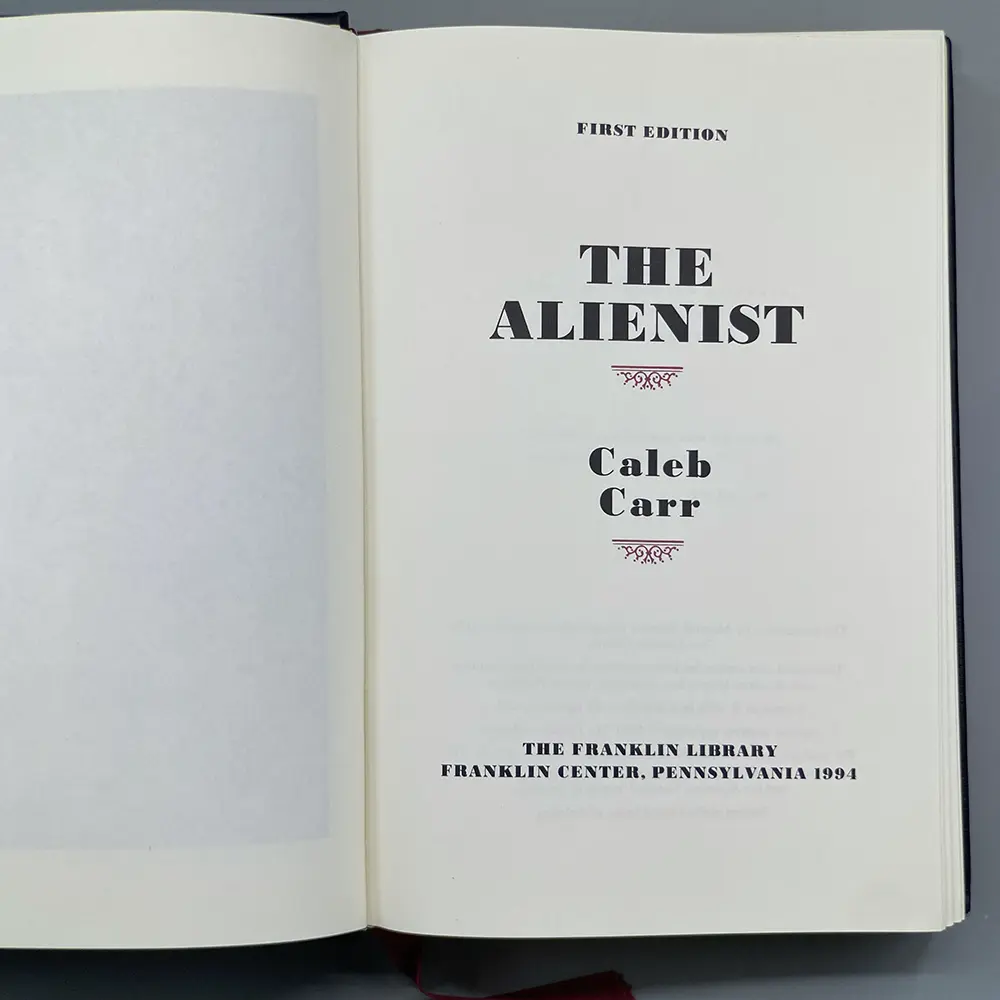
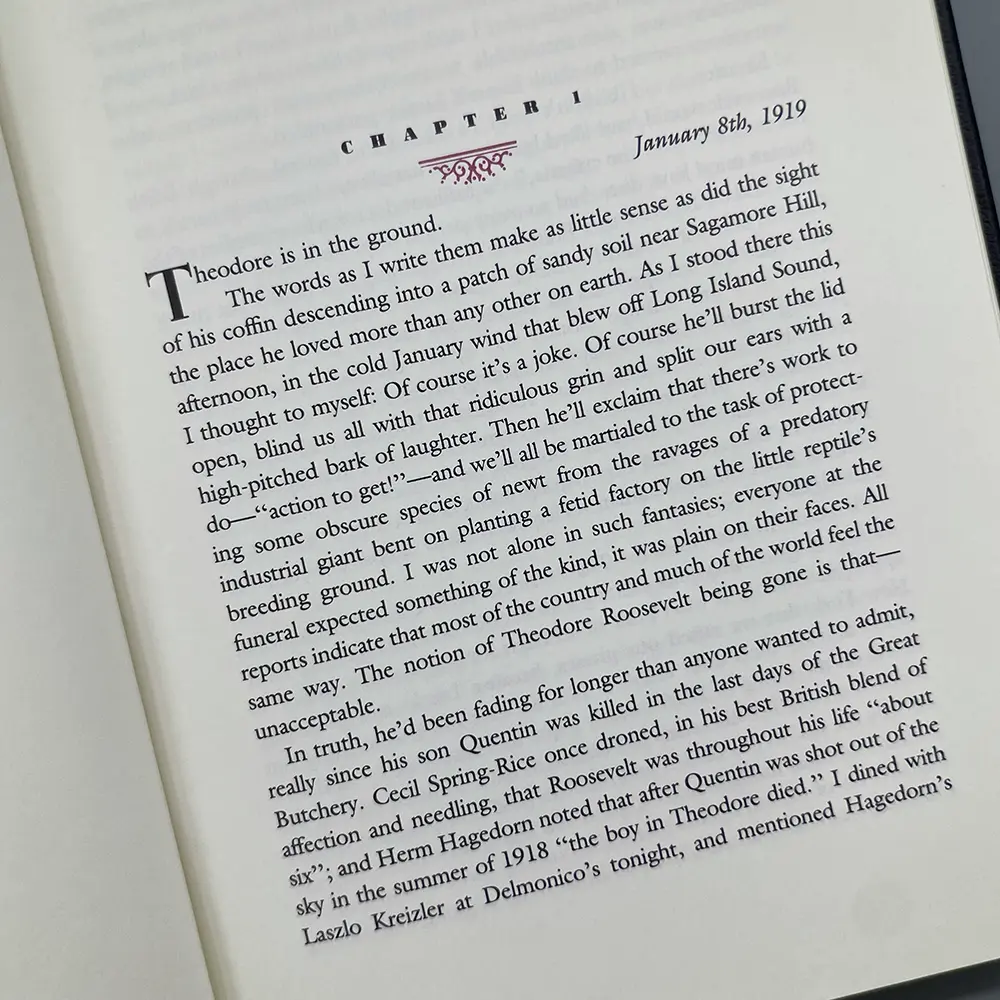
Thanks to a generous visitor to the website, in today’s post we glimpse a rare leather-bound copy of one of the first scripts developed for the book and learn about the challenges it faced making the leap to the screen.

Taking the story from page to screen
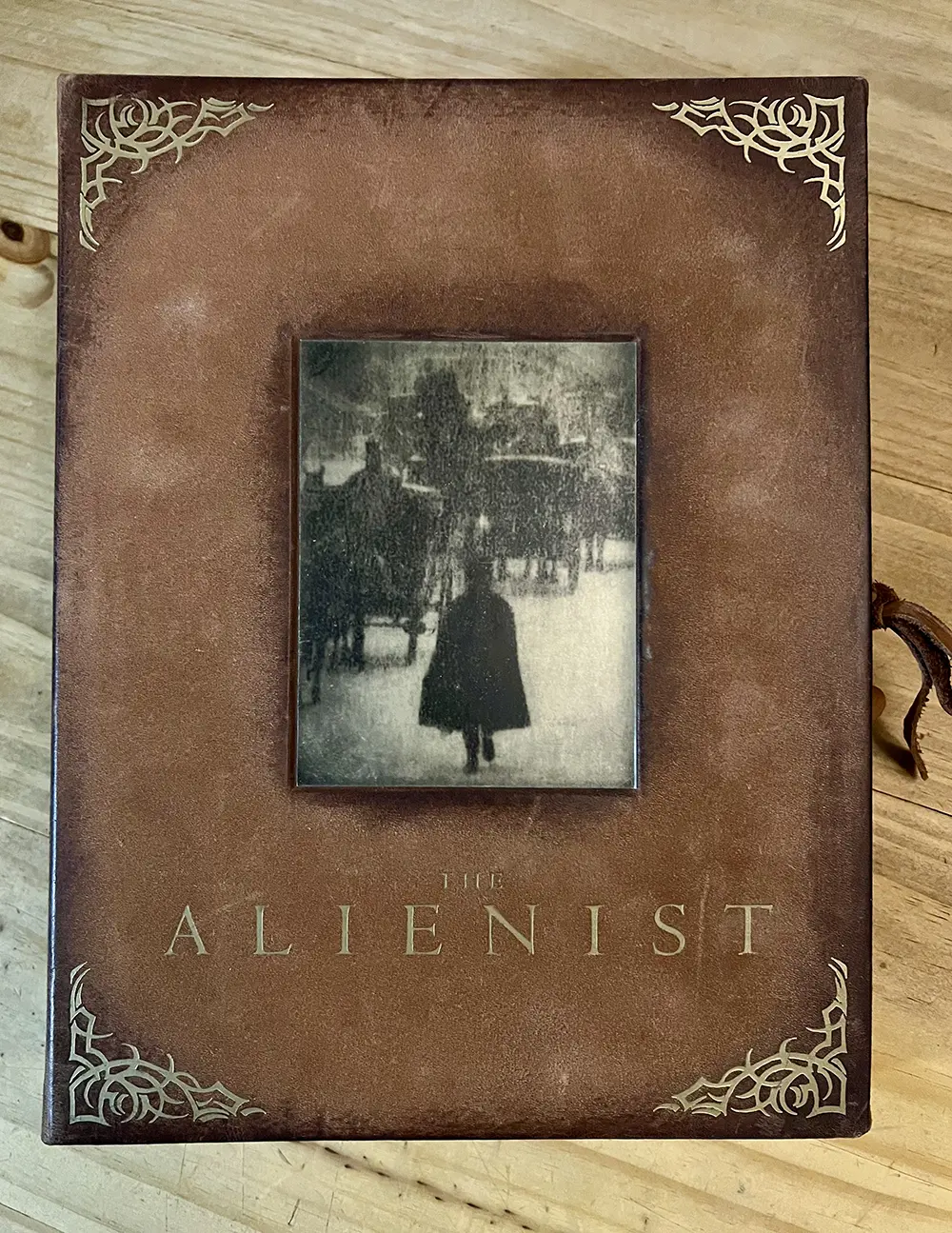
The Alienist script

As described in Part One, The Alienist was the talk of Hollywood even before its publication. Soon after the manuscript was turned in to Random House in 1993, interest in purchasing the film rights was high, with names like Mike Nichols and Kathleen Kennedy looking at the project; however, it was Scott Rudin who made the winning bid of $500,000. Unfortunately, the excitement that followed was short lived. Caleb revealed in a 2013 New York Times book club chat that he ultimately came to wish he hadn’t listened to his agents’ advice on proceeding with the sale:

“What originally happened was that Mike Nichols had wanted to buy the book; but he was outbid, for reasons of professional competitiveness, by producer Scott Rudin, and how I wish I hadn’t listened to my agents. Rudin promised me I could write the script, then immediately reneged on that pledge and told me that there was “no movie in the Alienist.” He spent many years and millions of dollars on writers and directors who turned in one lousy script after another, which I was fortunate enough to be able to stop, incurring Rudin’s well-known wrath. He has now repeatedly said that there will never be a film of the movie, and although that decision is the studio’s, not his, he spent so much money on development that no one can afford the turnaround.”

The saga of the scripts

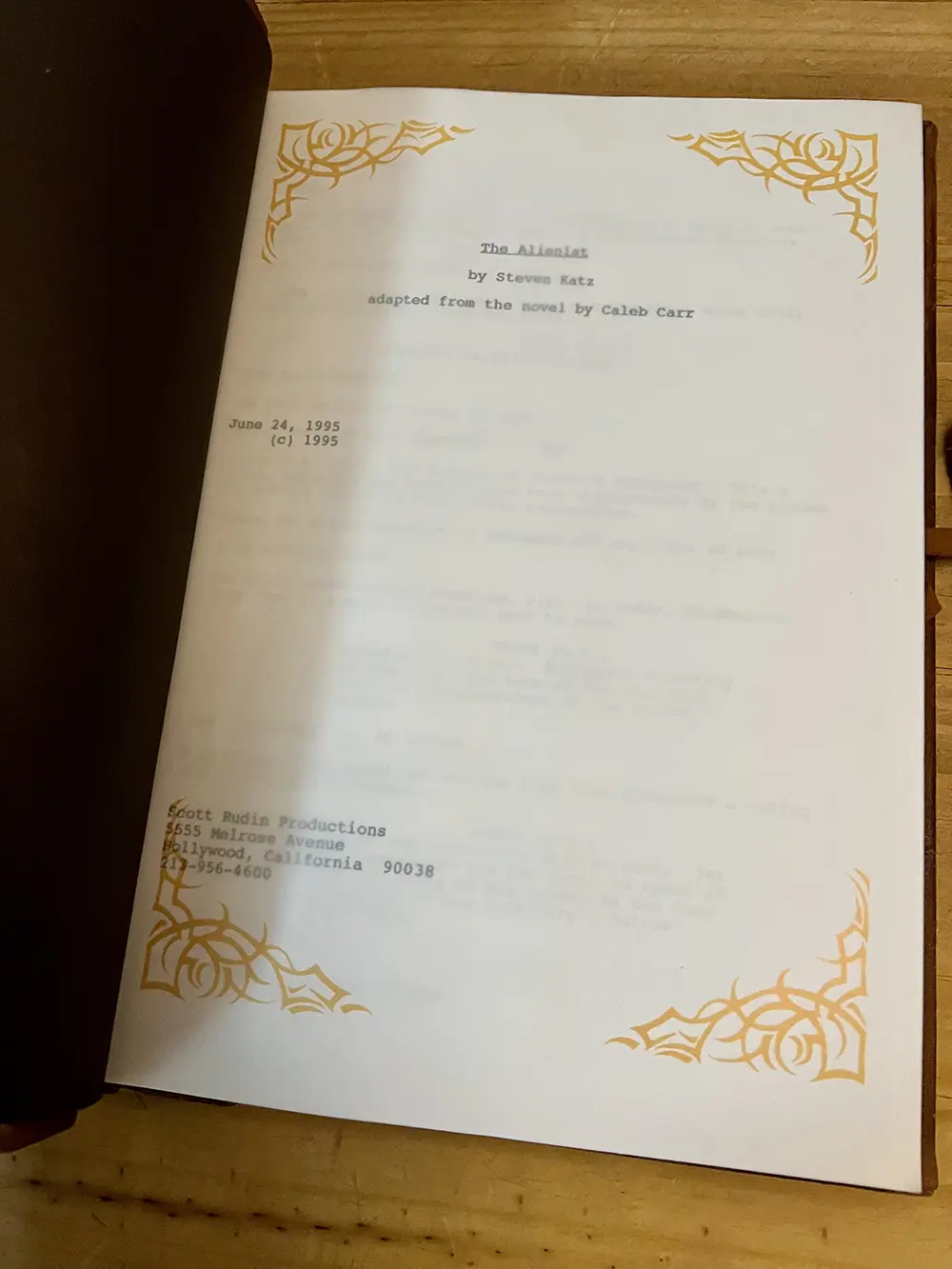
The script problems Caleb referenced go back to the very beginning. According to an article in the Los Angeles Times from 1995, the first of the scripts to be rejected was written by Tony-award winning playwright David Henry Hwang, who turned in a draft that “diverged too radically from the novel, focusing on a minor female character.” A second script, this time written by Steven Katz (Shadow of the Vampire, The Knick, and uncredited for work on Interview with the Vampire), was “considered too slavish to the original source material.” Even so, it appears this was a version Rudin had hopes for.

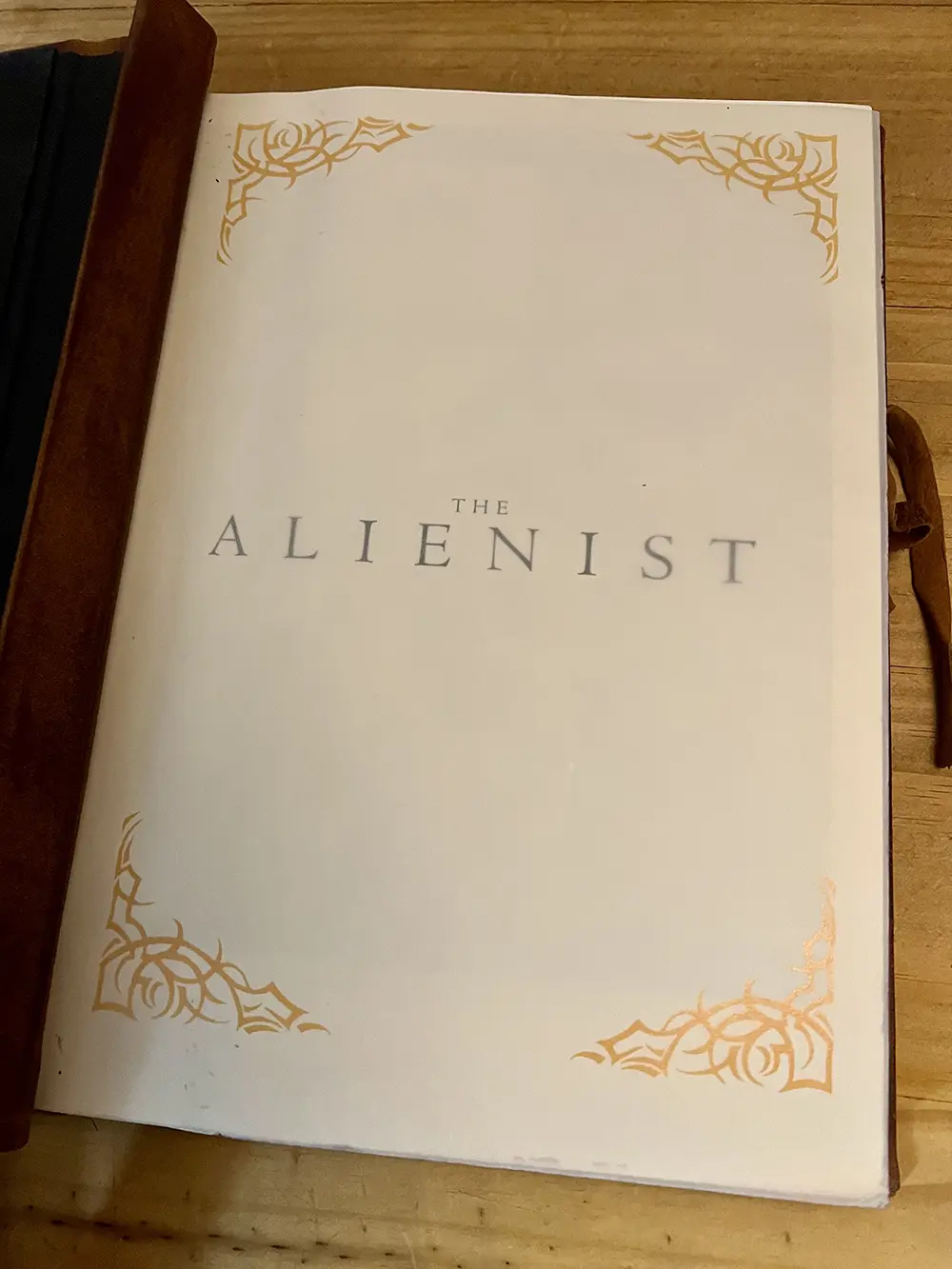
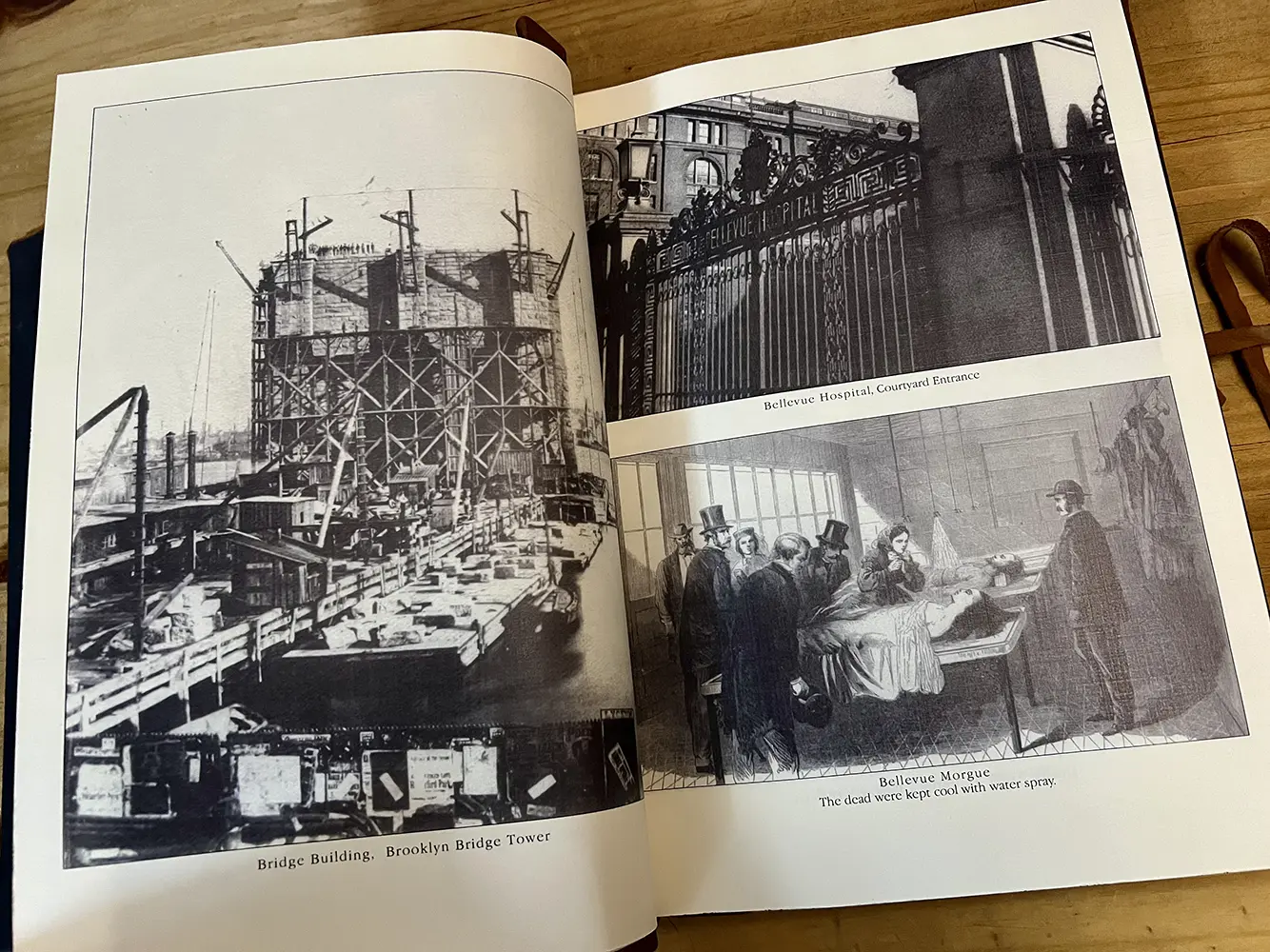
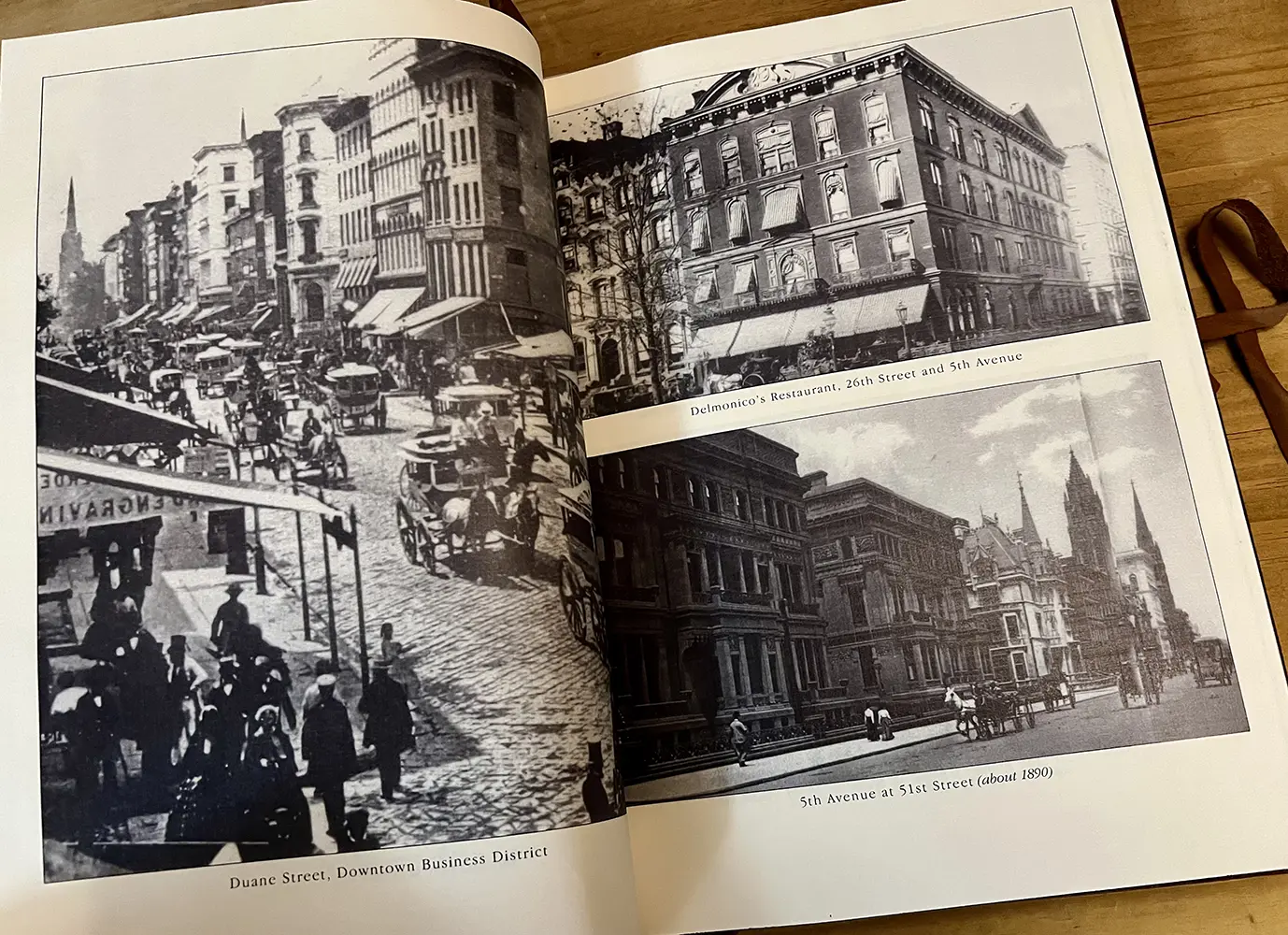
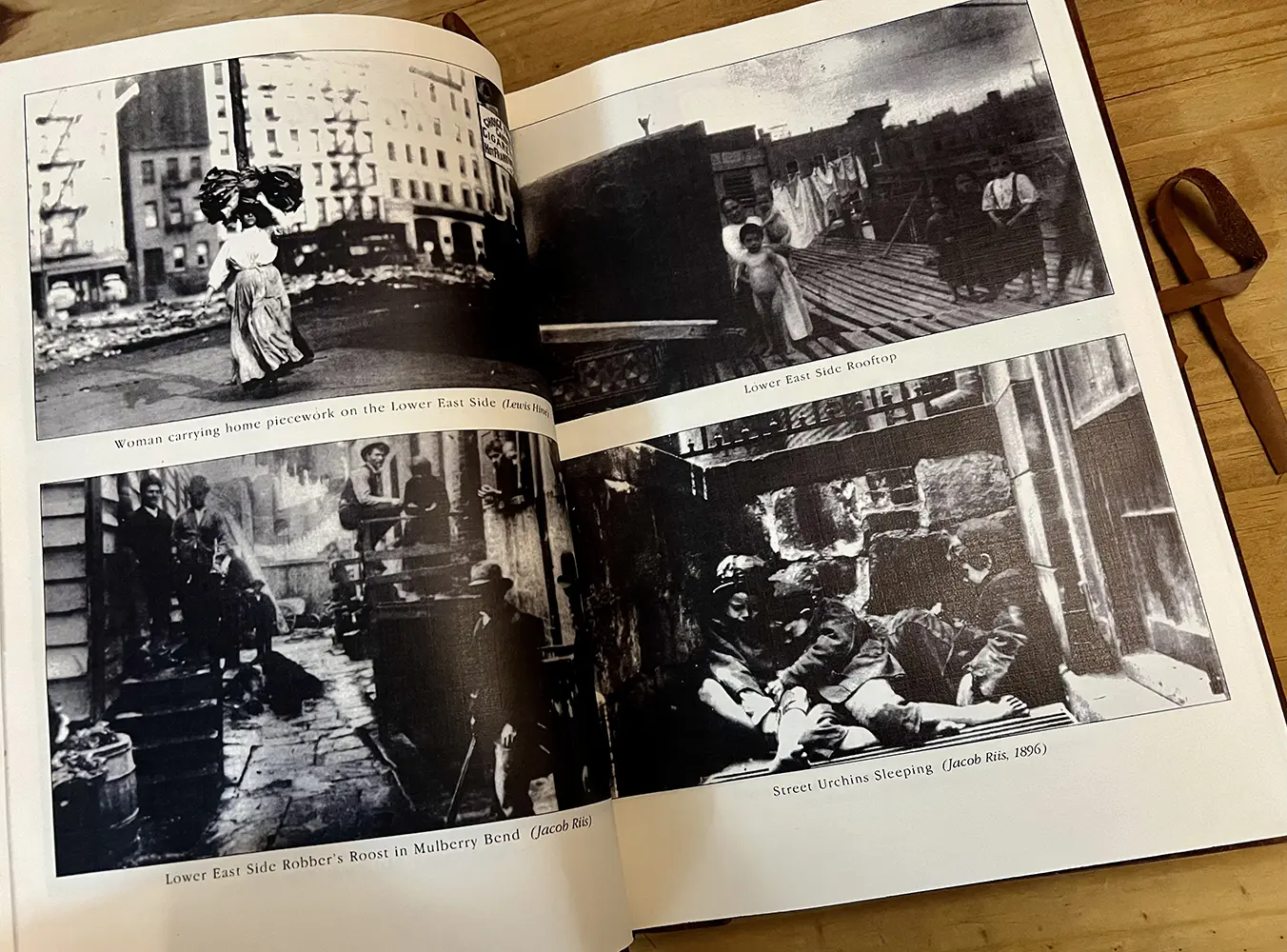
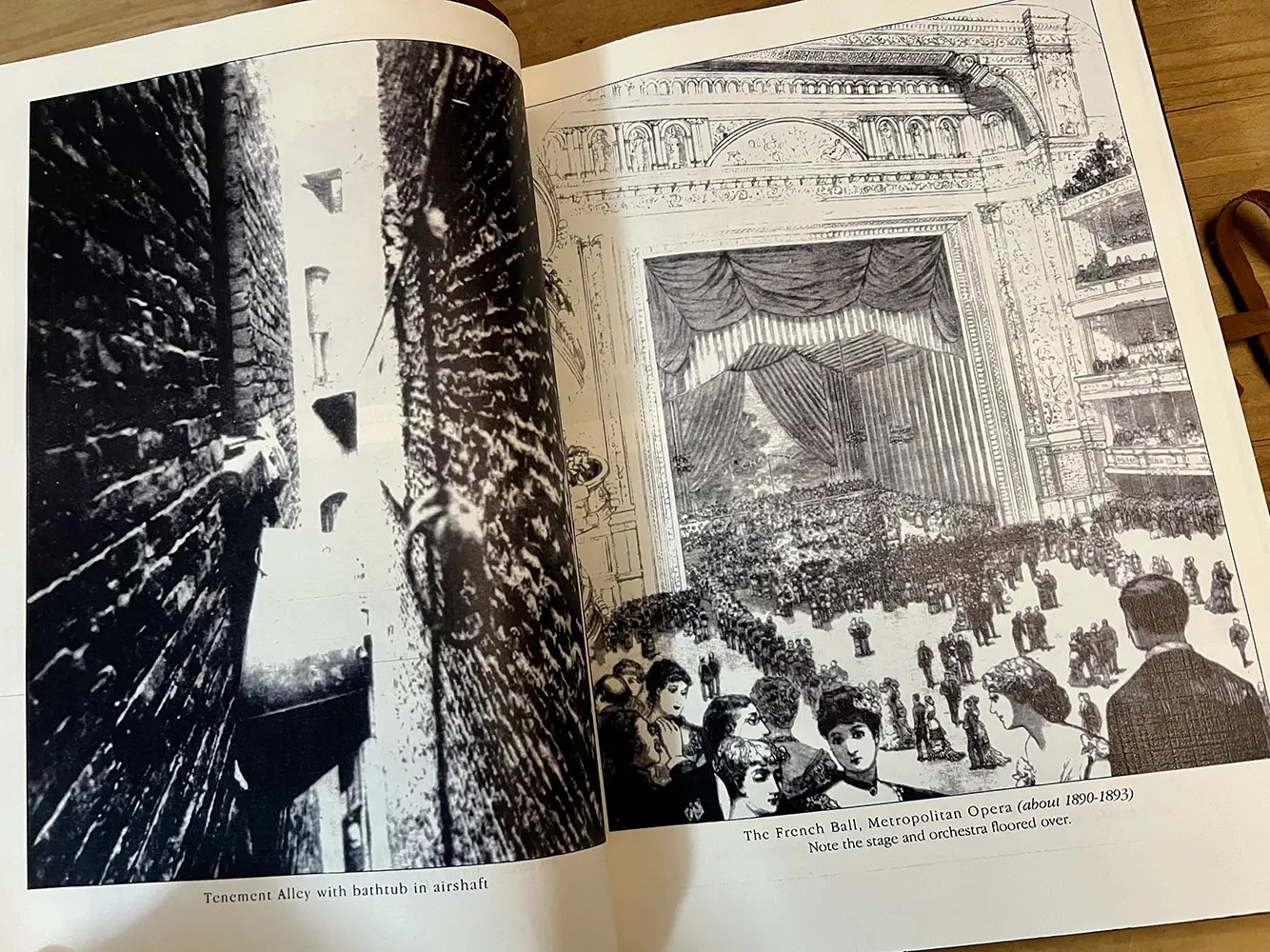
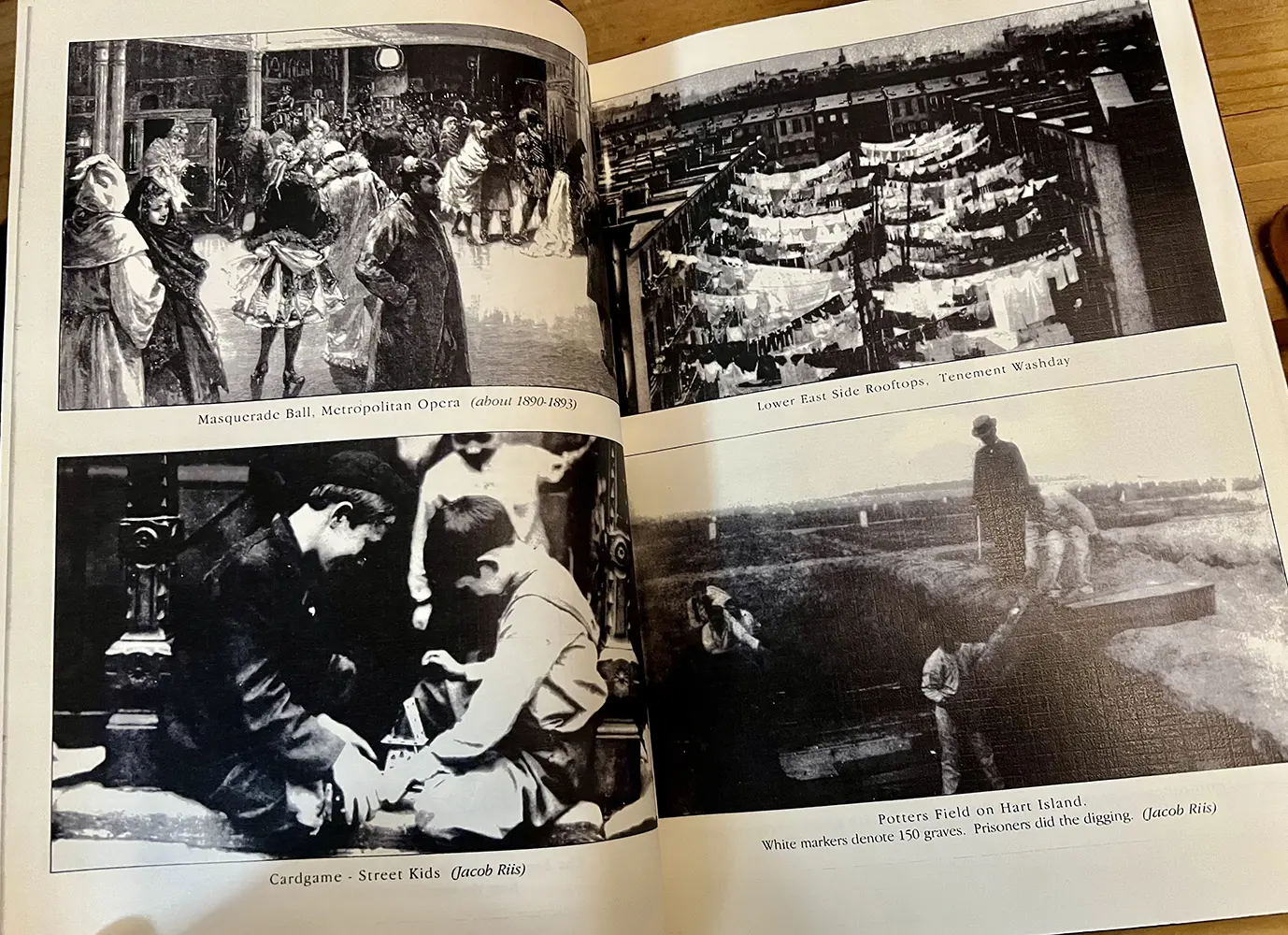
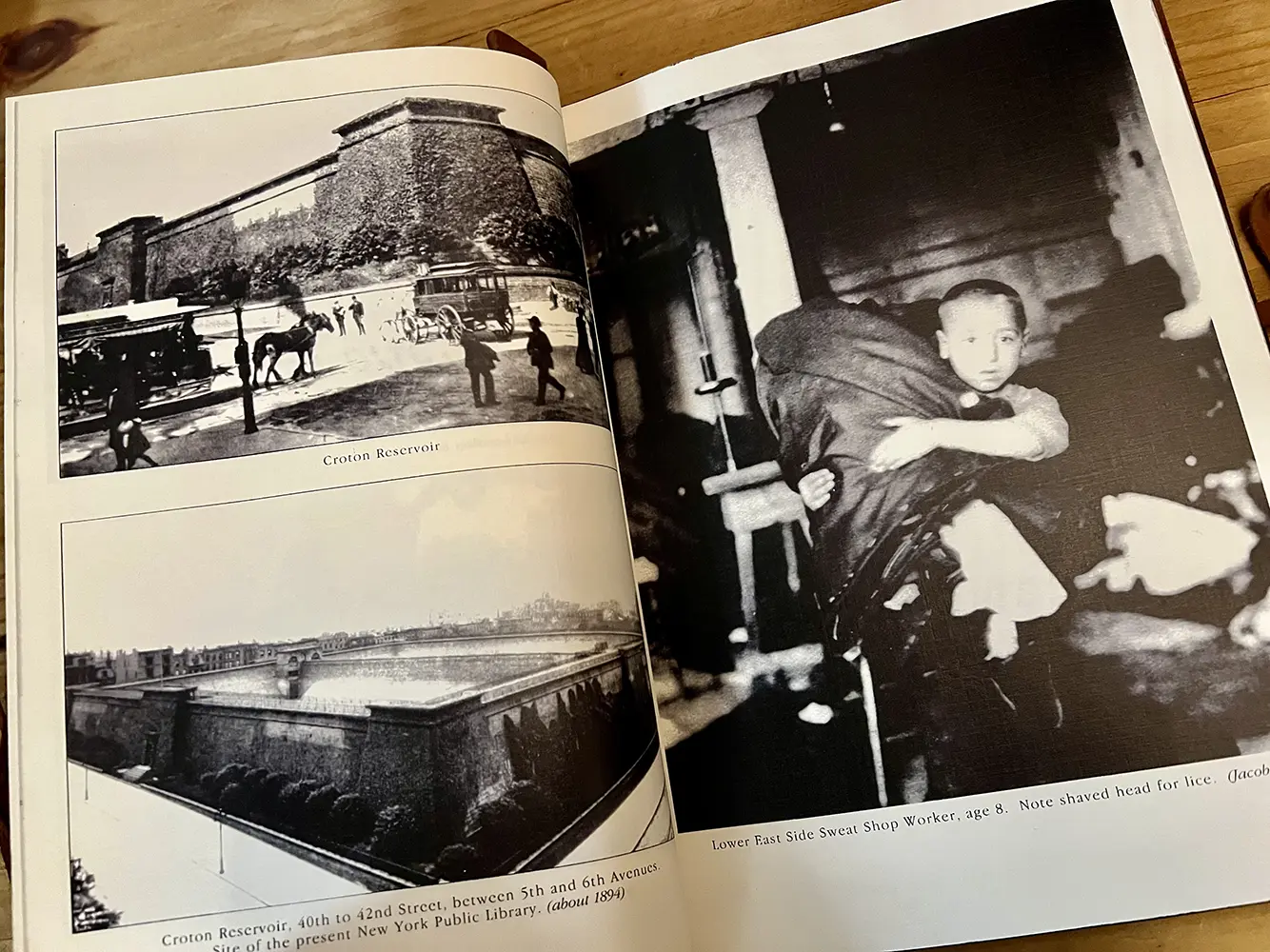
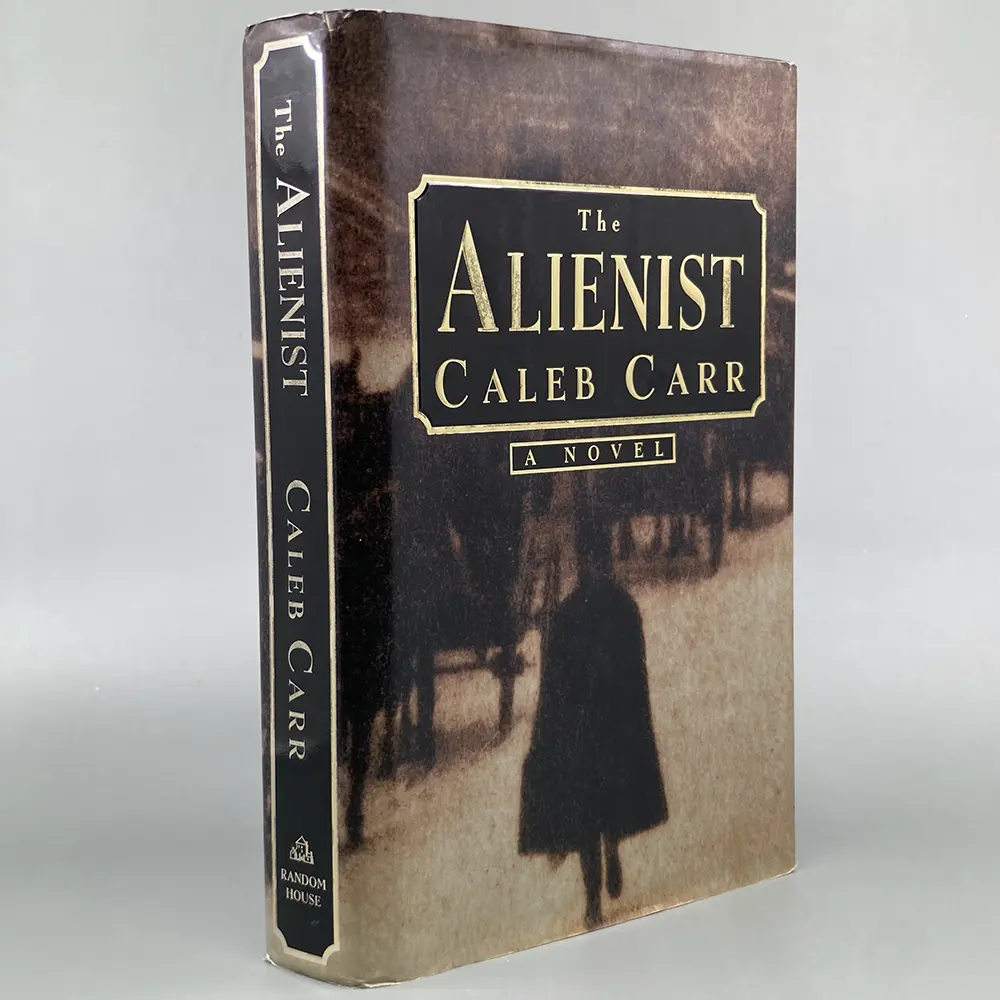
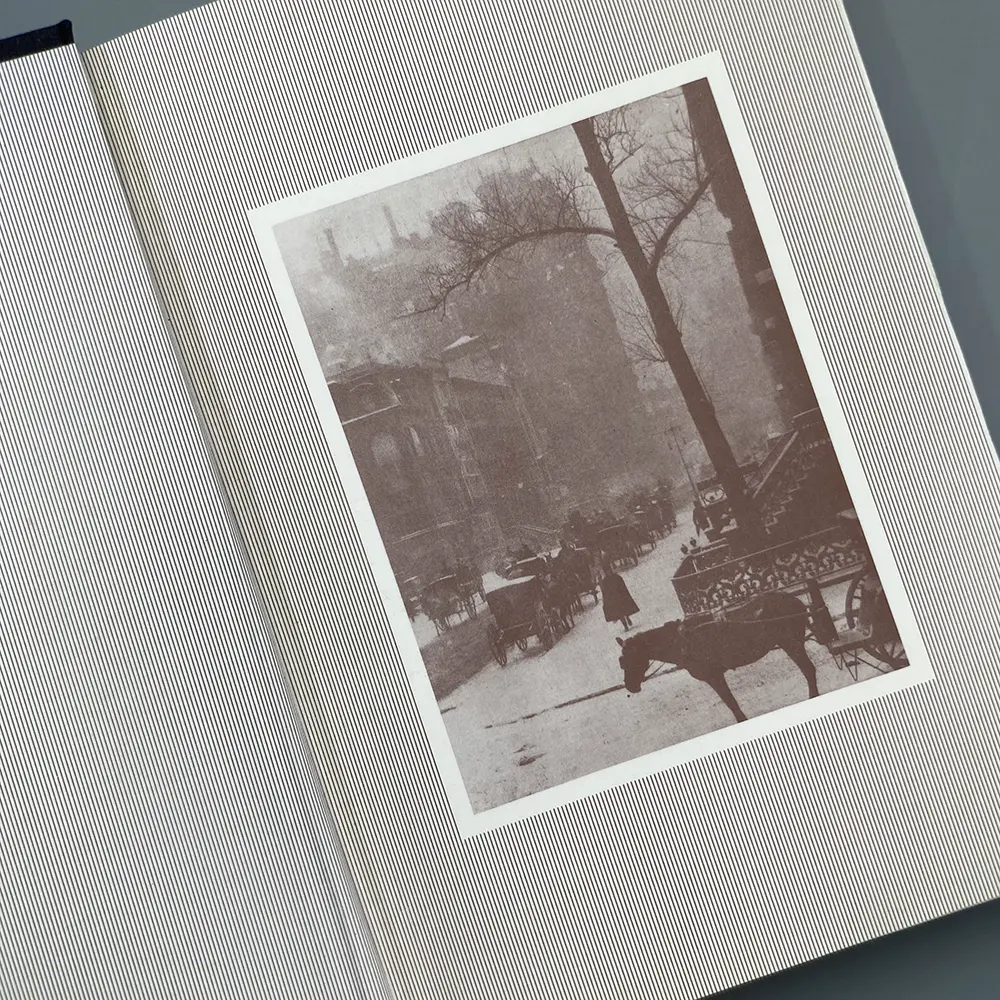
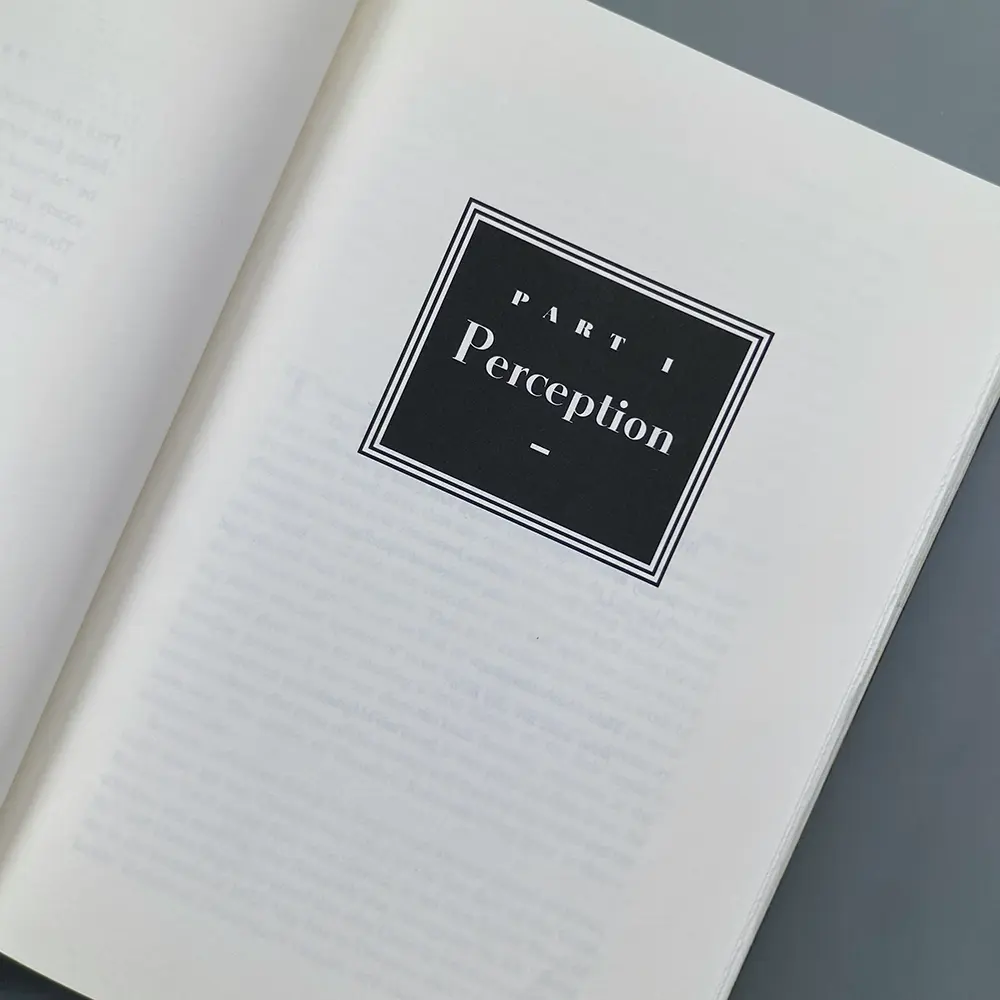
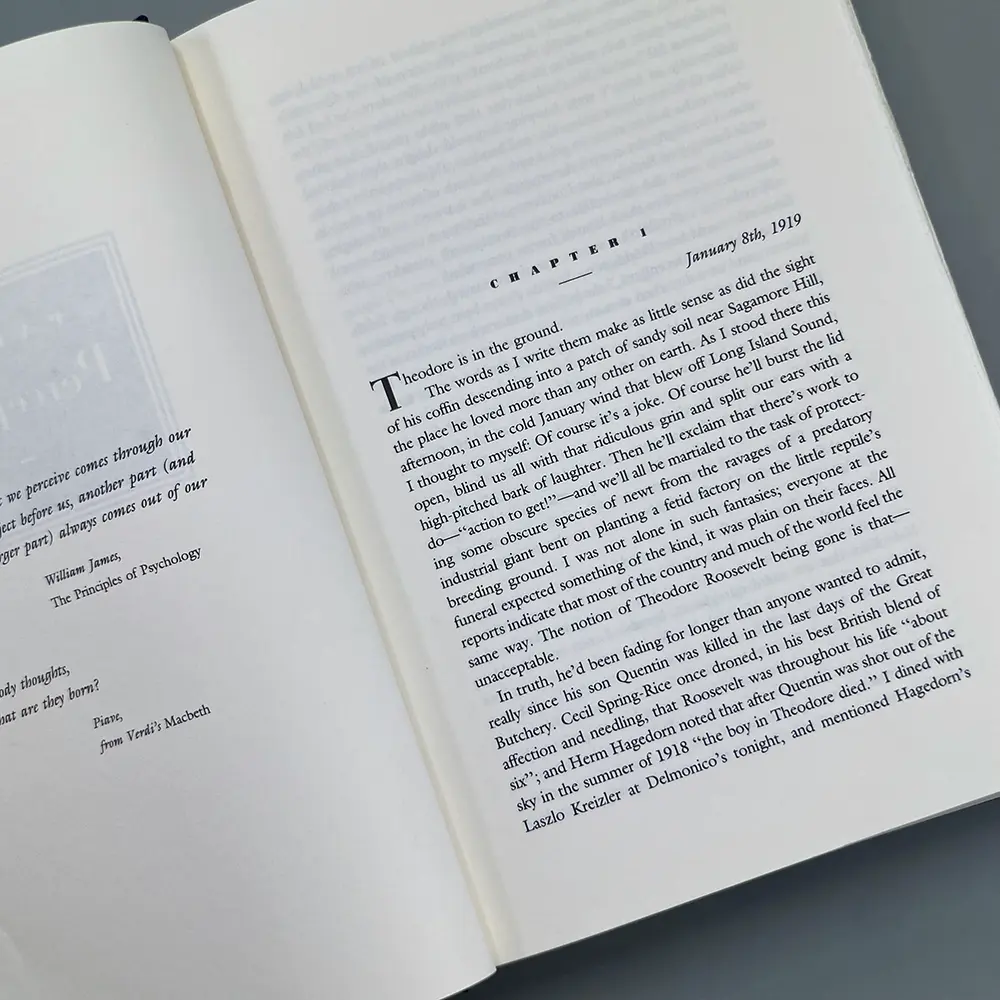
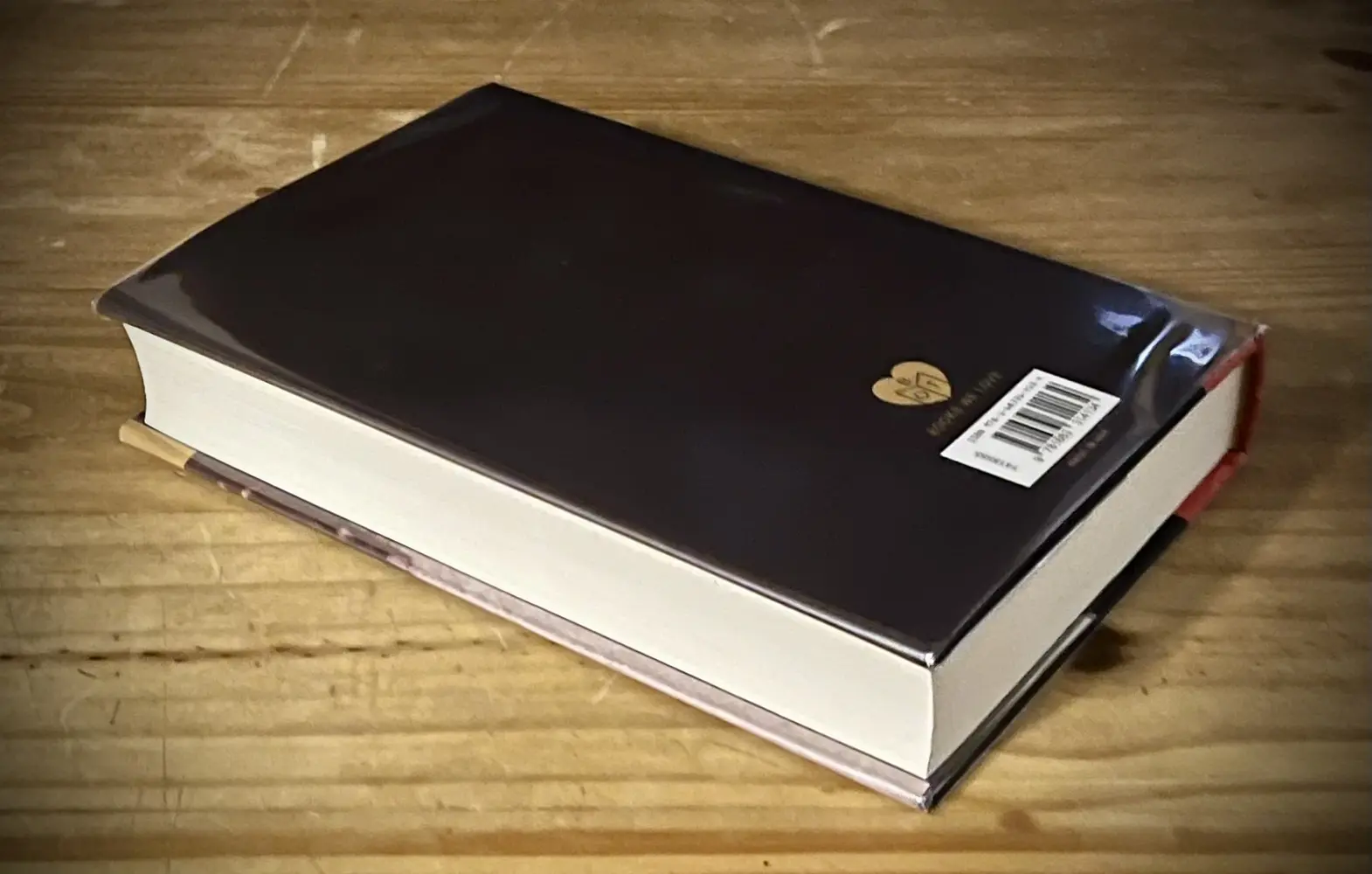
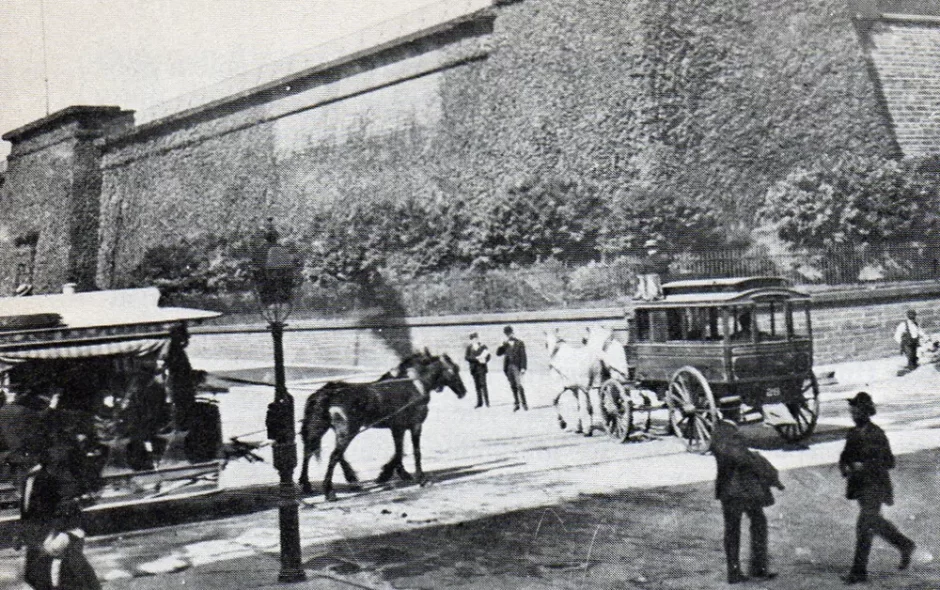
To entice studio executives into paying attention to the project, it was revealed in July of 1995 that Rudin made the unusual decision to arrange for copies of the script to bound in a special leather volume. Illustrated with period photographs and artwork of late 19th century New York, these copies were truly beautiful, as you can see below.
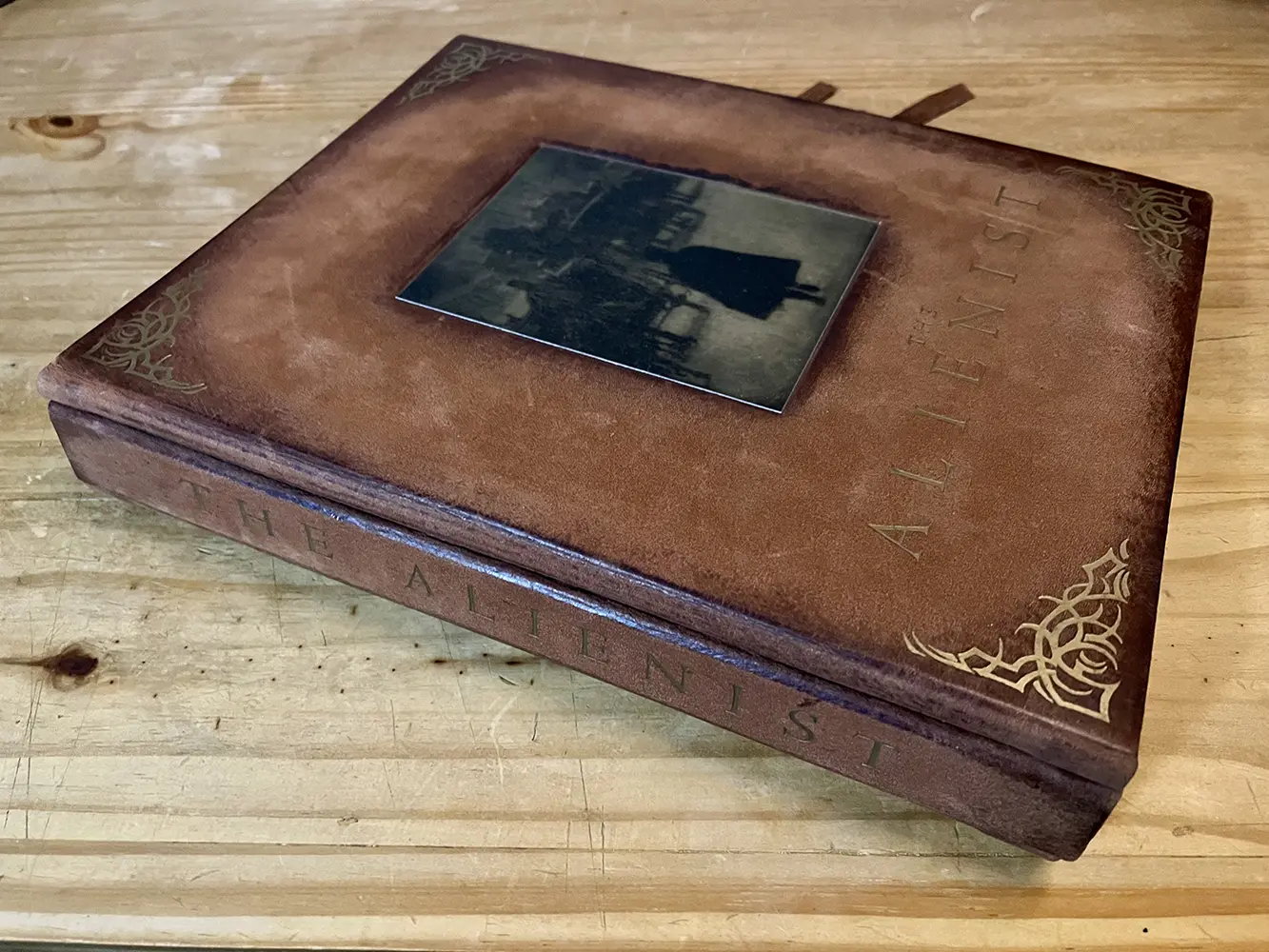
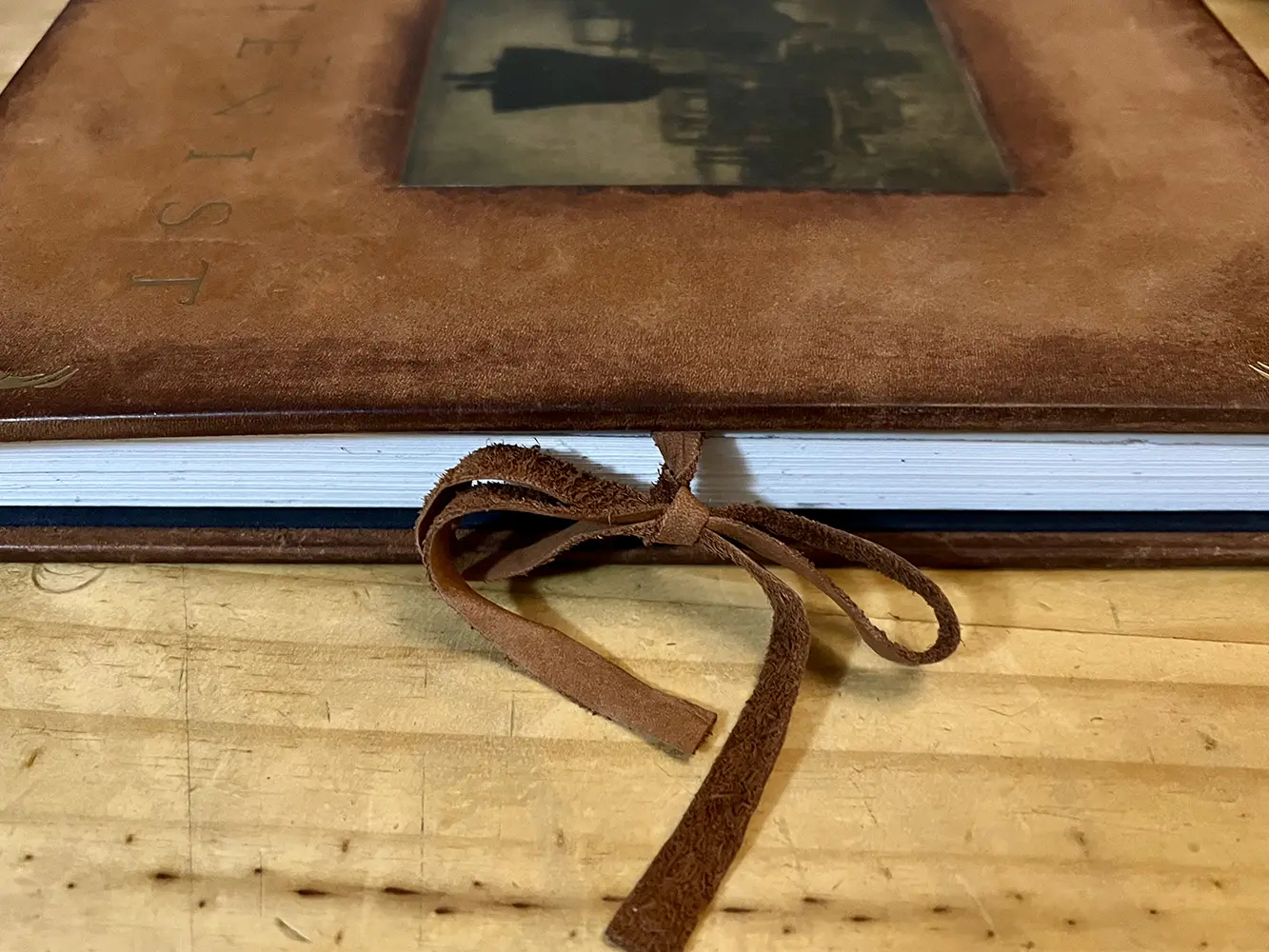
We were lucky to have photographs of one of these volumes provided by a kind visitor to the site, Steve Rogers, who described it in the following terms: “The pictures do not do justice to the book in your hands. The quality is excellent, the translucent gilded paper over title pages, soft leather, the ties, binding, the period pictures to give a feel of what life was like during that era, so much more.”
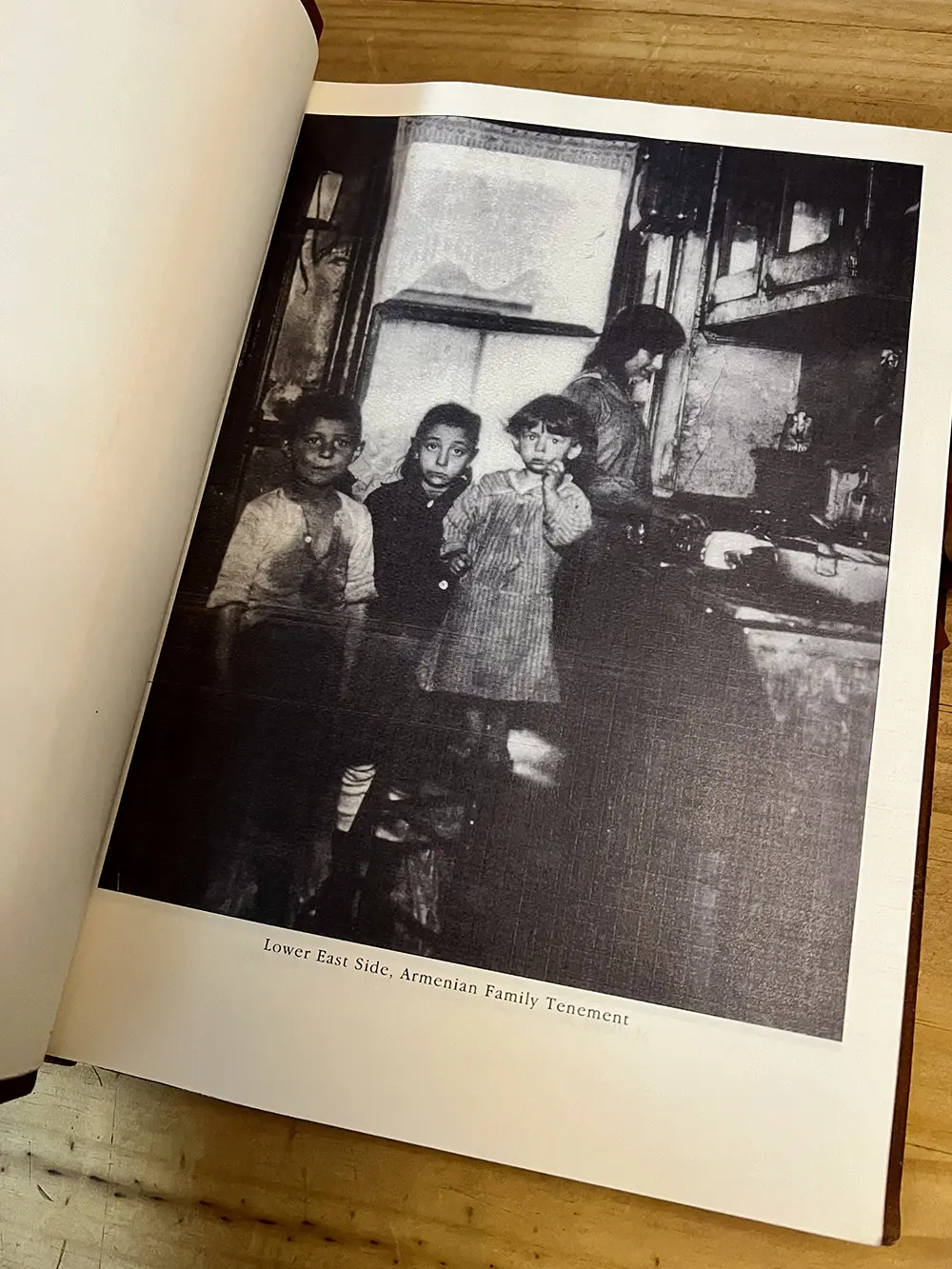
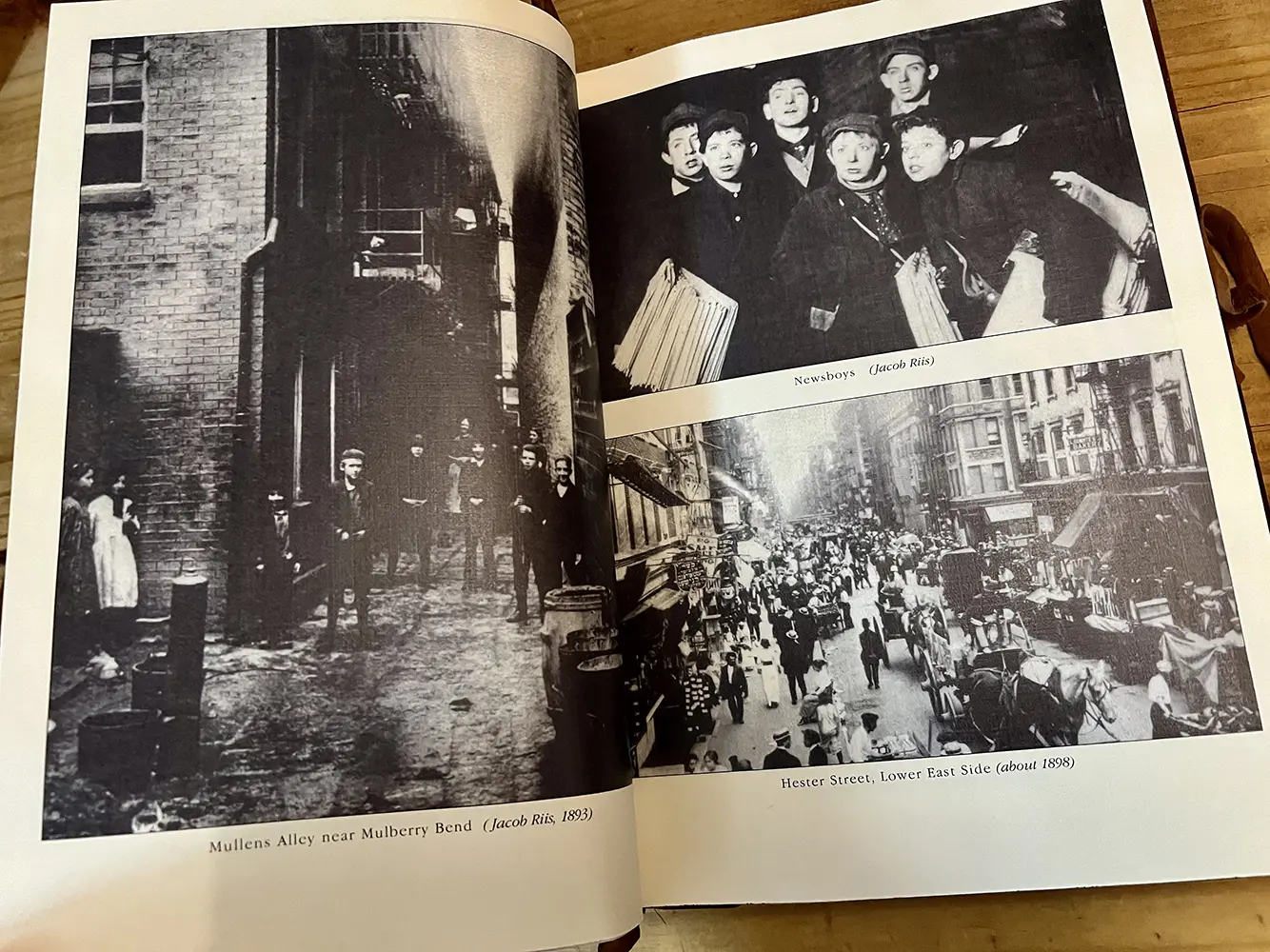
Beautiful binding or not, this script was also destined to go the way of Hwang’s, though the reasons why are not clear other than the reference to it being “too slavish” to the book. At the time, Variety reported that “[a] handful of Paramount execs received the delicate volume” and it “caught the attention of several directors including Peter Weir (The Last Wave) and Philip Kaufman (Rising Sun)”. In the end, the latter did come on board, with the Los Angeles Times explaining that, after moving on from Katz’s script, Rudin hired Kaufman to attempt a third version, but it did not get off the ground either.

By the time the novel’s sequel, The Angel of Darkness, was published in 1997, Caleb revealed to the Los Angeles Times that Rudin “has had three writers and at least six drafts — none of them done by me. He never fulfilled his pledge to bring me in.” In addition, significant budgetary concerns held the project up. Variety reported that Curtis Hanson, originally attached to direct, departed over budget disagreements, while Paramount objected to the proposed $50 million budget when Kaufman joined. To explain his position on these various points of contention, Caleb told Salon in 1997:

“I don’t know that they really understood what book they were buying in a certain sense. It’s a period piece, yes, but that’s not hard. Period pieces are coming out all the time now. It doesn’t have to be that expensive, either. But it’s an ensemble piece that doesn’t happen to involve a love story. And that’s where they’re really tripping. They’re trying to make it a star vehicle with a love story. Well, that’s not the book they bought.”

Ultimately, the project stalled in pre-production and was shelved until 2014 when the president of Paramount Television made a surprise announcement that the newly relaunched television division of Paramount had several projects in development including “a drama series inspired by Caleb Carr’s best-selling novel, The Alienist, with Anonymous Content (True Detective) executive producing.” This, of course, would go on to become the TV series starring Daniel Brühl and Luke Evans — a series that has a long and complex production history of its own.


I hope you enjoyed this rare glimpse of the special volume of Katz’s script. In the next installment of this 30th anniversary series will return to the books themselves and dive into the publication history of The Alienist’s sequel. You can continue reading here. And if any visitors have further information about the script or the early history of attempts to take The Alienist to the screen that you would like to share, please do feel free to get in touch.
Celebrating 30 Years of The Alienist – Part Two

View Part One, Part Two, Part Three, Part Four, and Part Five of The Alienist 30th anniversary series.

Today we continue our celebration of the 30th anniversary of The Alienist’s publication in 1994. This is the second in a series of posts to be released throughout 2024 honoring the novel’s enduring impact, and we do so with an even greater sense of purpose given the immensely sad news of the loss of its much treasured author last month. It was Caleb Carr’s vision that brought us the world of Dr. Kreizler and his team, and in this series we hope to pay tribute to his legacy. In this post, we turn to the novel’s publication, discussing its critical reception and early editions, before going on to examine some later special editions that are worth any serious collector’s attention.

A bestseller is born

The Alienist

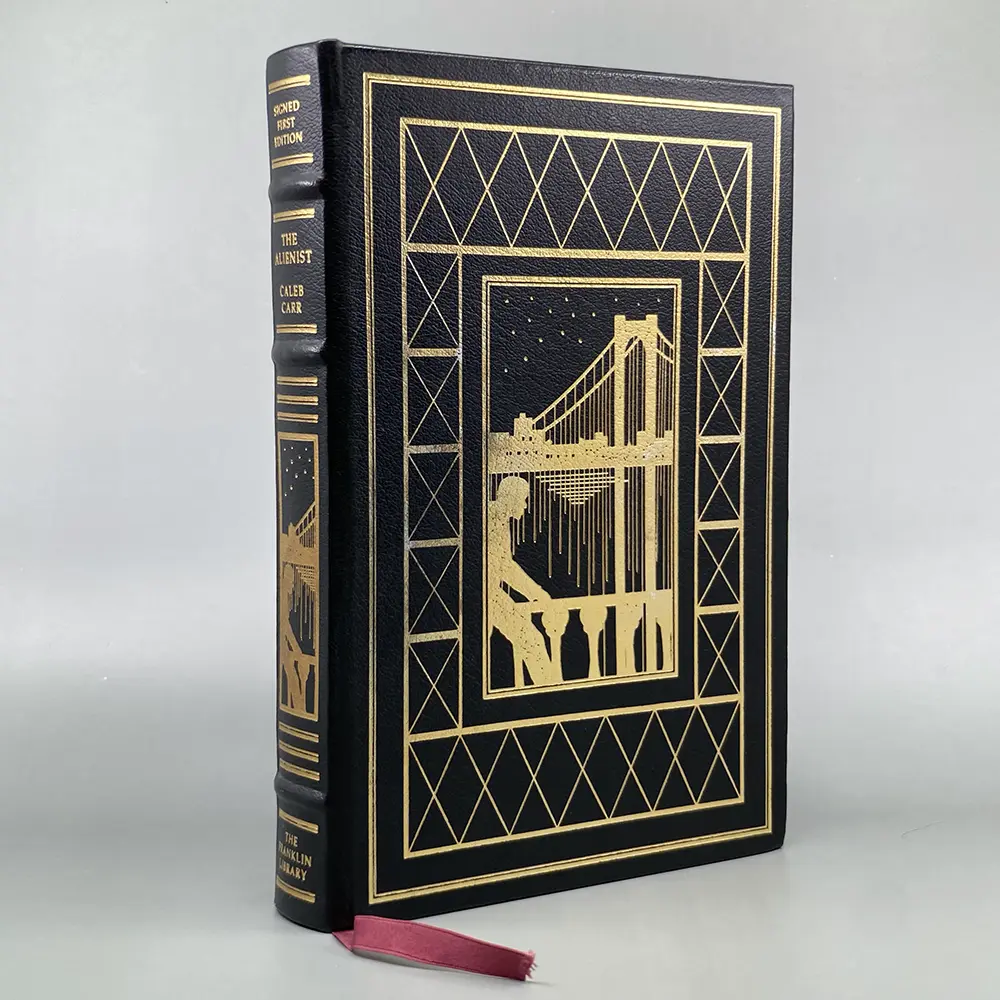
Following a huge amount of buzz in the lead up to its publication (see Part One), The Alienist made its debut in March of 1994. Although its publisher, Random House, released the hardback first edition most readers would come to recognize, the novel’s true first edition was the Franklin Library Signed First Edition.

An affiliate of the Franklin Mint, the Franklin Library was operational from 1973 to 2000 and had several series of fine leather-bound (and some imitation and quarter-bound) books produced under their name. These included, among others, their 100 Greatest Books of All Time series, Signed First Edition series, and Signed Limited Edition series. Of note, the works they selected for their Signed First Edition series were those they believed had the potential to become the classics of the future—so the fact that they chose a debut novelist for a place on the list was highly unusual (for, although Caleb had one novel, Casing the Promised Land, to his name, it was little known and The Alienist was treated by most in the industry as a debut).

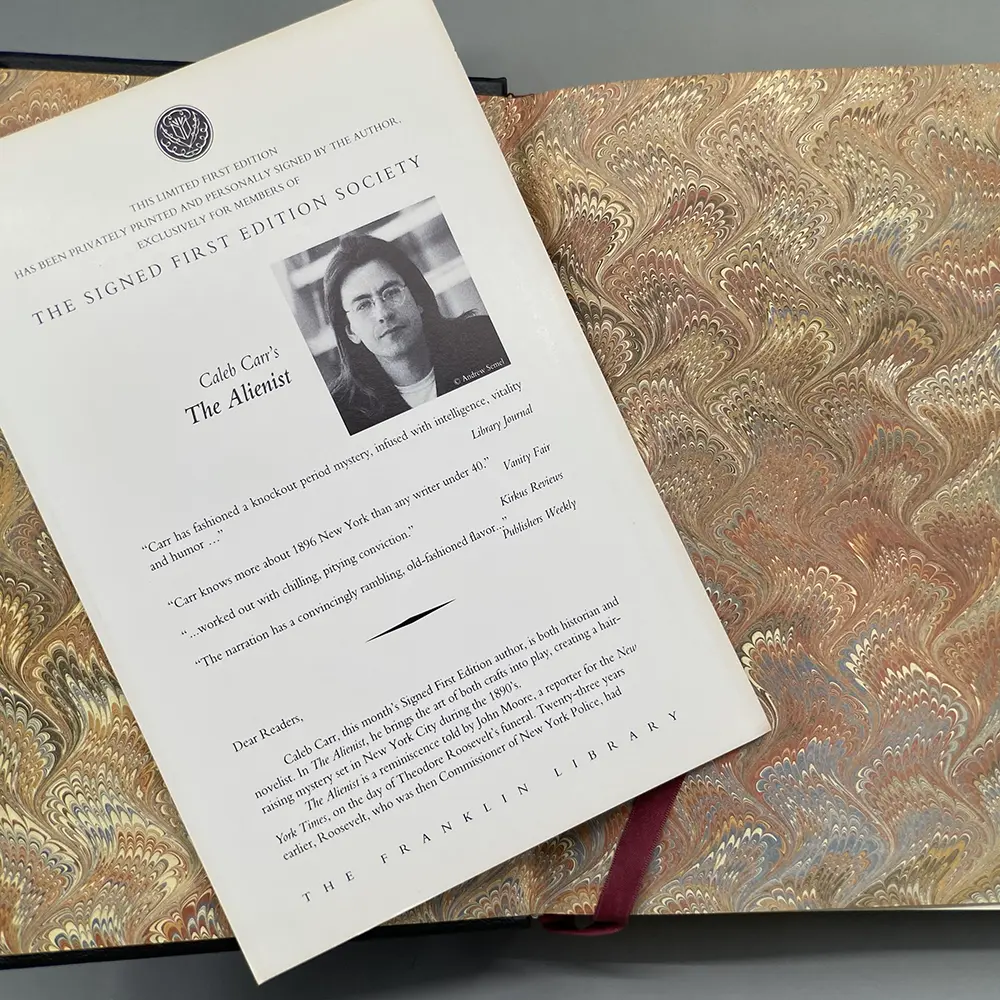
Nonetheless, the anticipation surrounding the novel (see Part One) resulted in the work receiving the honor of being included in the series, and Caleb also wrote a foreword that was exclusive to this edition. Like all other Franklin Library Signed First Editions, this edition was fully leather-bound with 22 karat gold ornamentation. It also included a custom illustration and was printed on acid-free paper with gilt edging. Although the precise number of copies was not made public by Franklin Library, the sequel which was also published by Franklin Library (see Part Four) was limited to 1,500 copies worldwide. As you can see below, it is a truly beautiful edition.

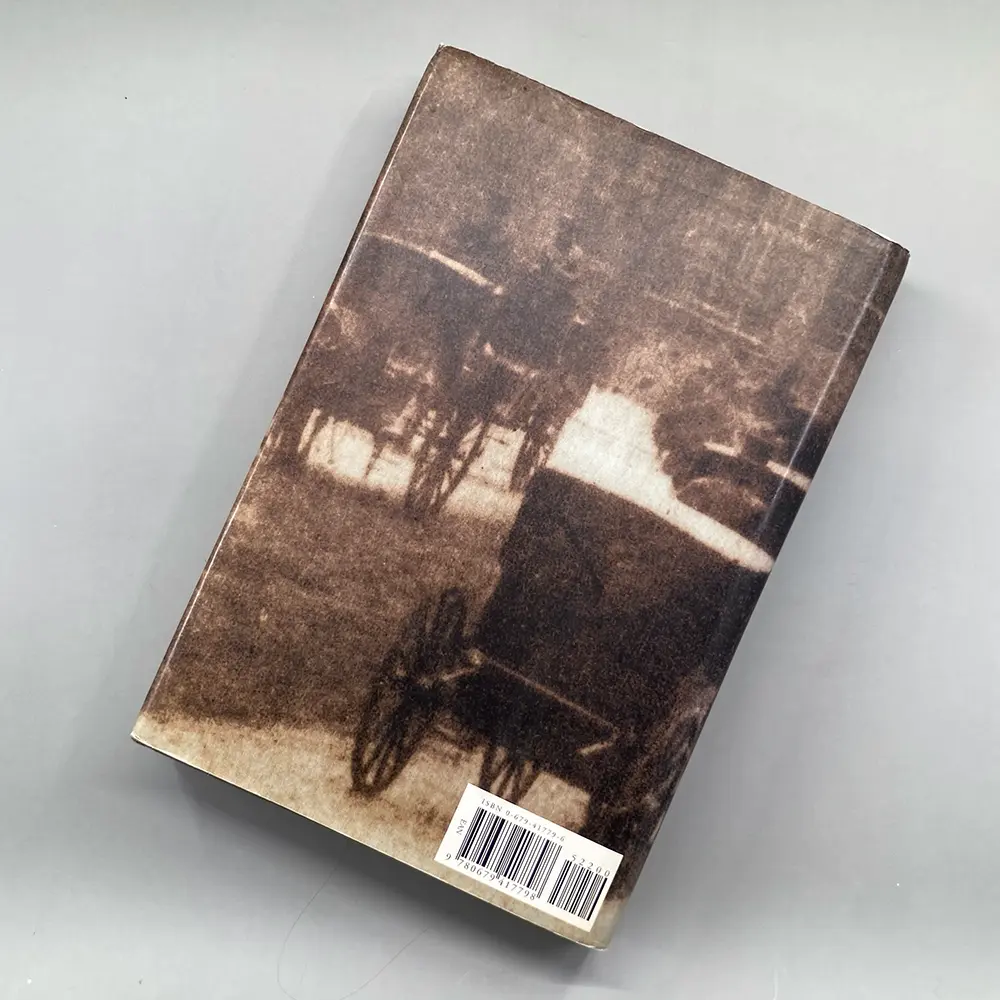
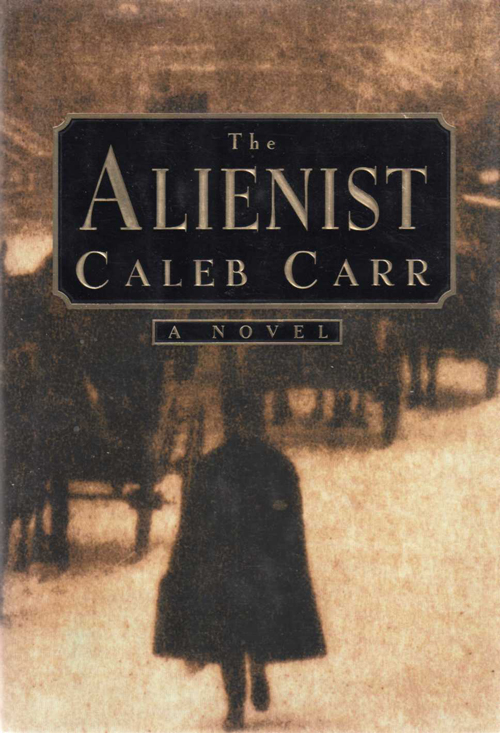
Of course, for most readers, it was Random House’s first edition they would see on bookstore shelves. Featuring a sepia-toned photograph called The Street by Alfred Stieglitz from Camera Work (July 1903), Caleb revealed in an interview with Publishers Weekly in 1997 that he helped to design the now iconic cover. For collectors, the first printing of the first edition can be identified by the printer’s key “9 8 7 6 5 4 3 2” and “First Edition” on the copyright page.

When the 493-page novel was released, it met all the expectations that its pre-publication buzz had anticipated. In an interview from 2005, Caleb said, “It was just supposed to be a little cottage industry that would give me a stipend to live off while I was doing the work that I had always done and which I was trained to do.” Instead, The Alienist made the hardcover bestseller lists of Publishers Weekly and The New York Times in the month following its release, going on to spend the next six months hovering between number nos. 4 and 7 on the latter’s list.

Interestingly, in the Publishers Weekly interview from 1997, Caleb stated that the book “did not get heavy promo until it started to sell. Random House will sometimes deny that, but the fact is the book started to sell for two reasons: the cover and word of mouth.” Reviewers, meanwhile, praised the novel as “breathtaking,” “remarkable,” and “absorbing,” with The New York Times acknowledging that he had “lovingly evoked not only a physical sense of old New York but the spirit of the time as well.” Perhaps the review that put it best was Patricia Ann Jones’ in Tulsa World, who wrote that The Alienist “breaks new ground on several fronts. As a historical novel it paints an unrivaled picture of New York. As a thriller it sets a new pace. But as a psychological study it stands completely on its own. The writing is quite simply, superb.”

The foreign rights are sold

Of course, the novel went on to be a major success abroad as well. Although I haven’t been able to find a publicly available source for what the UK rights sold to Little, Brown and Company for, the amounts are known for two other European countries. Specifically, the German rights sold for $105,000, while the Italian sold for $30,000. But it goes without saying that these are only a few of the numerous foreign editions that exist for the novel.

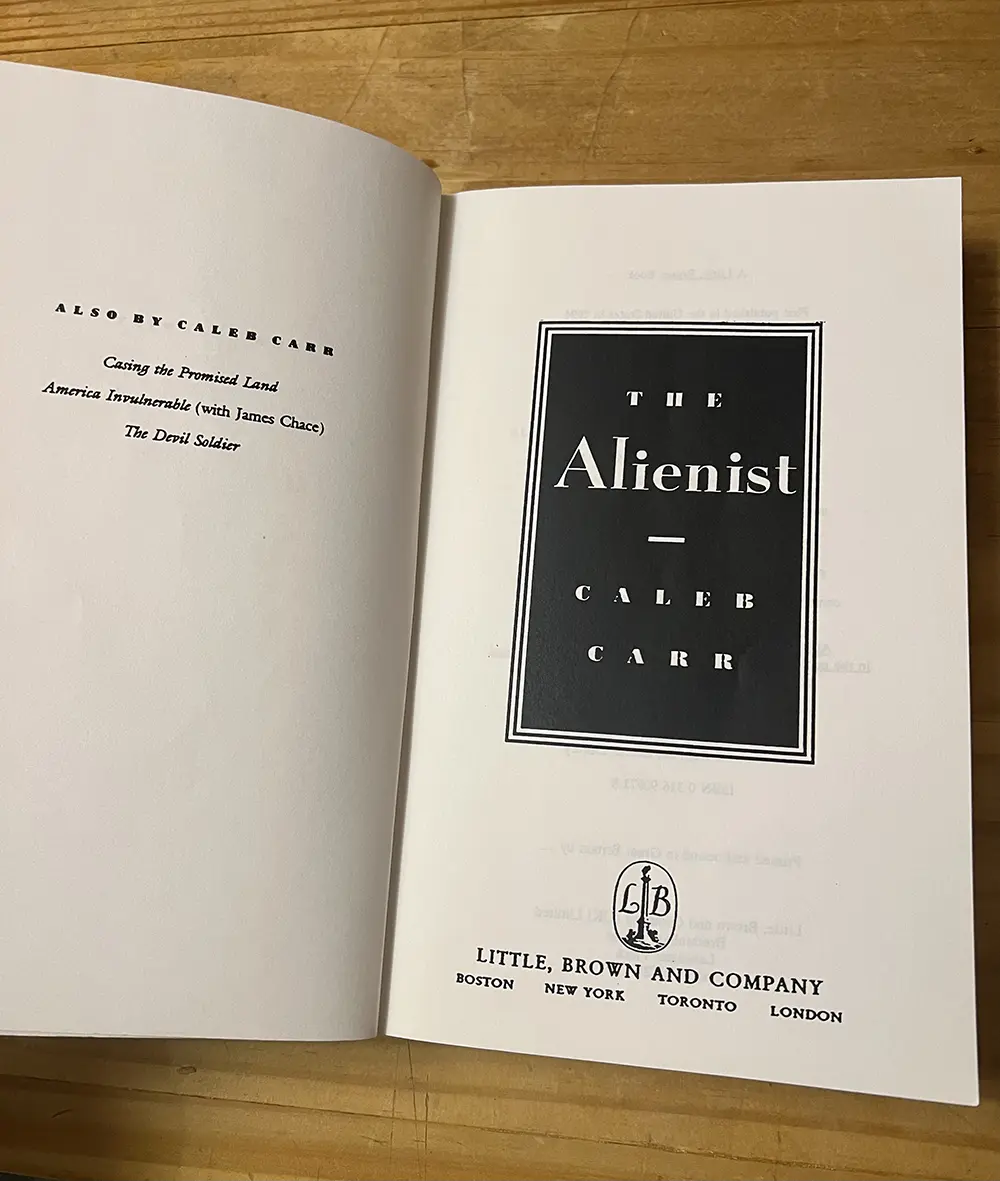
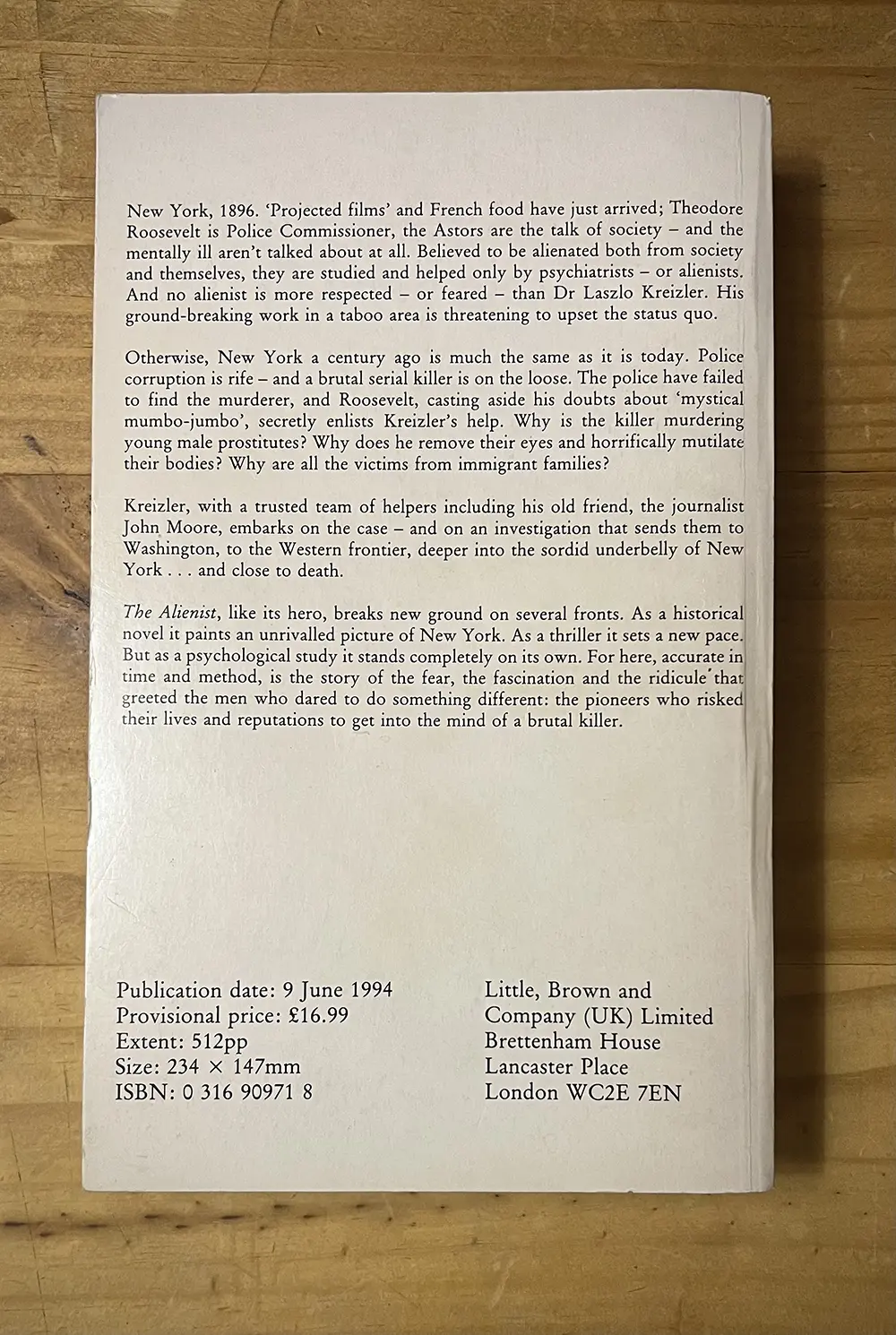
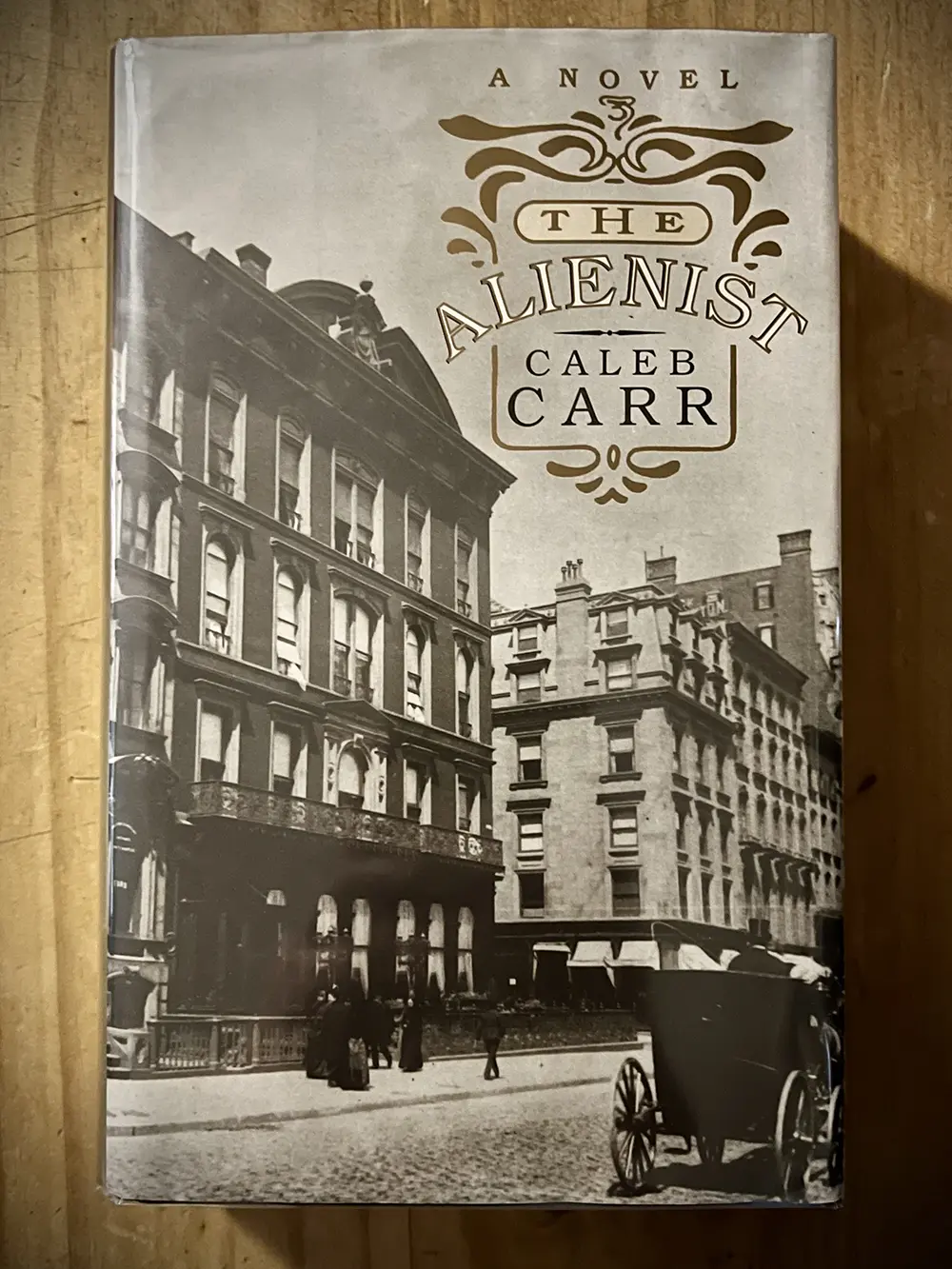
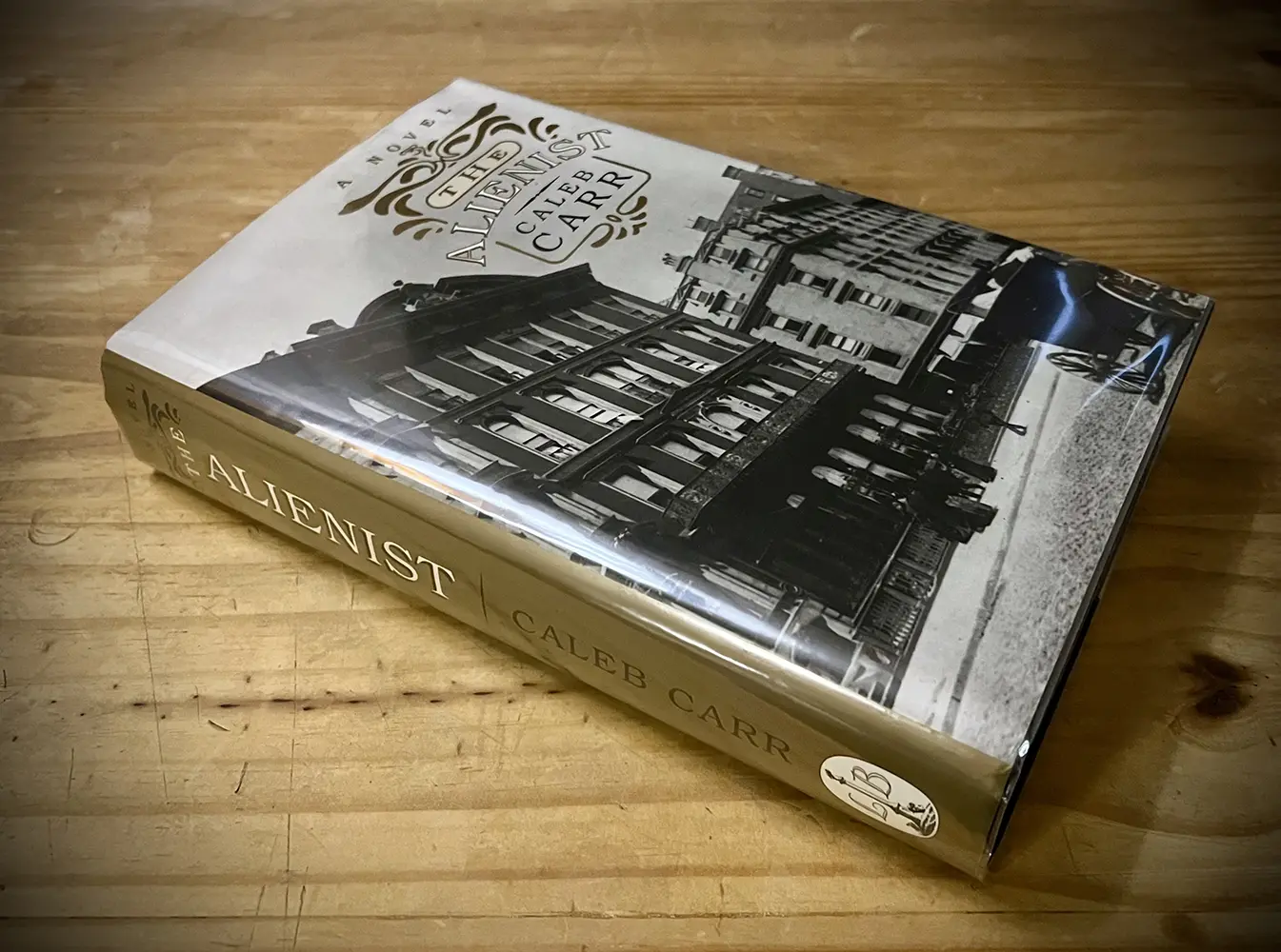
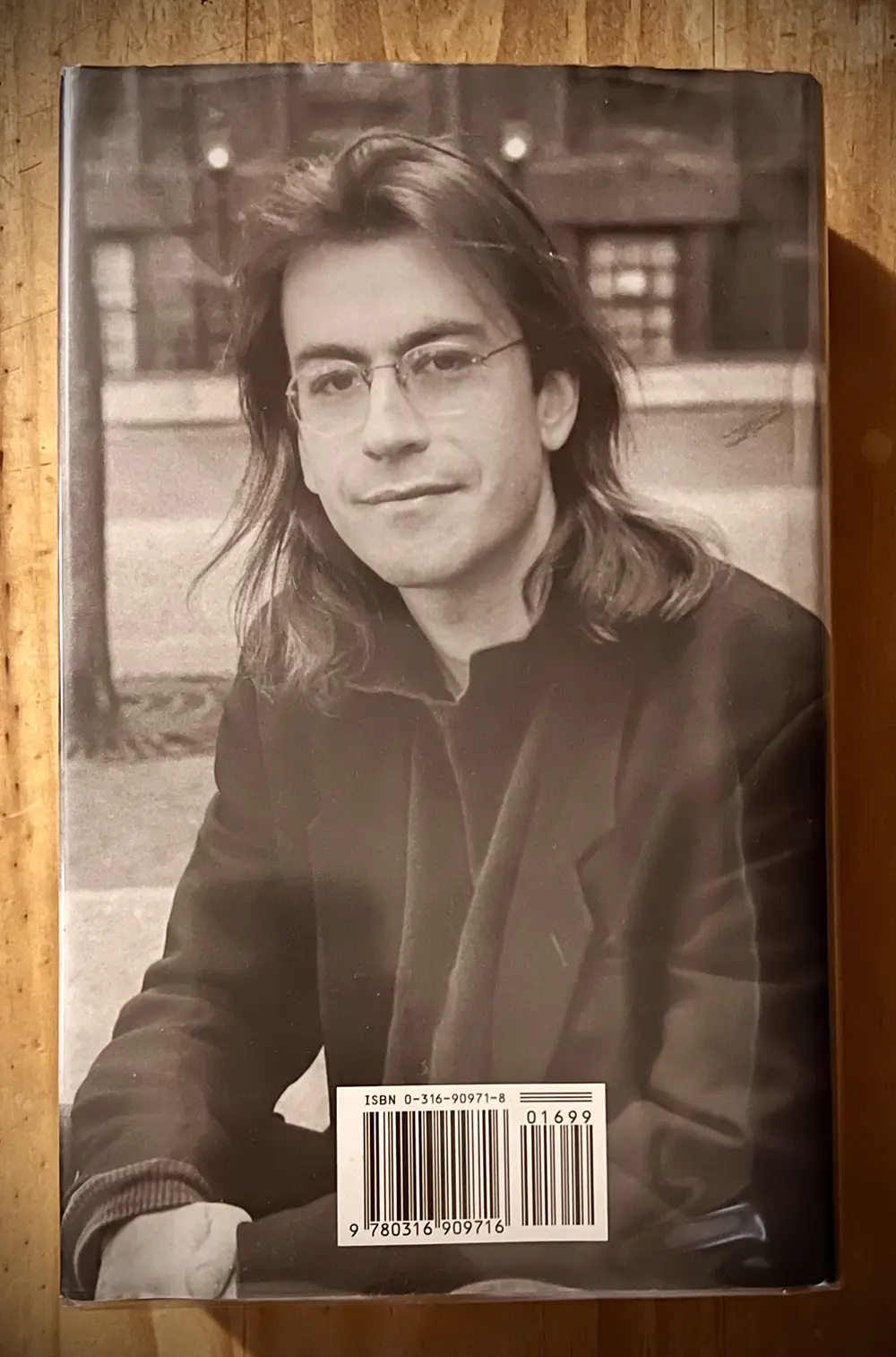
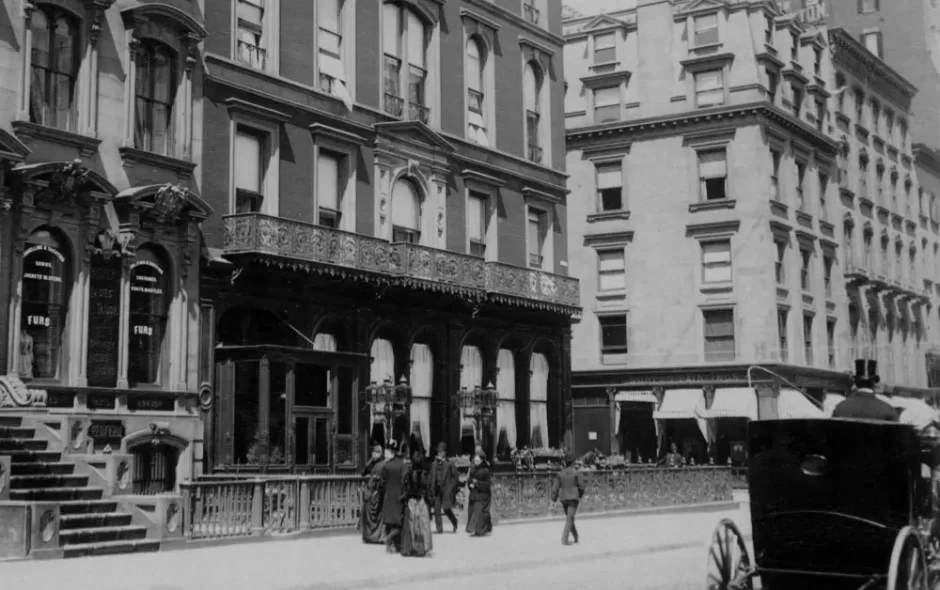
When published in the UK by Little, Brown and Company, the first edition received a new cover design. As seen in the following images (kindly provided by Steve Rogers), the new UK design featured a black and white image of Delmonico’s West 26th Street location sourced from The New York Historical Society, and a large author photograph on the back cover. The first row of photos below shows the UK uncorrected proof, while the second row of photos shows the first edition hardback.

The novel’s enduring appeal

In mid-1994, The Alienist’s success in hardback netted it a very healthy paperback rights sale at auction for $1,001,000 to Bantam, and several different paperback editions have been released in the years since, including mass market and trade paperbacks. Perhaps the most noteworthy, however, was a Random House trade paperback released in 2006.

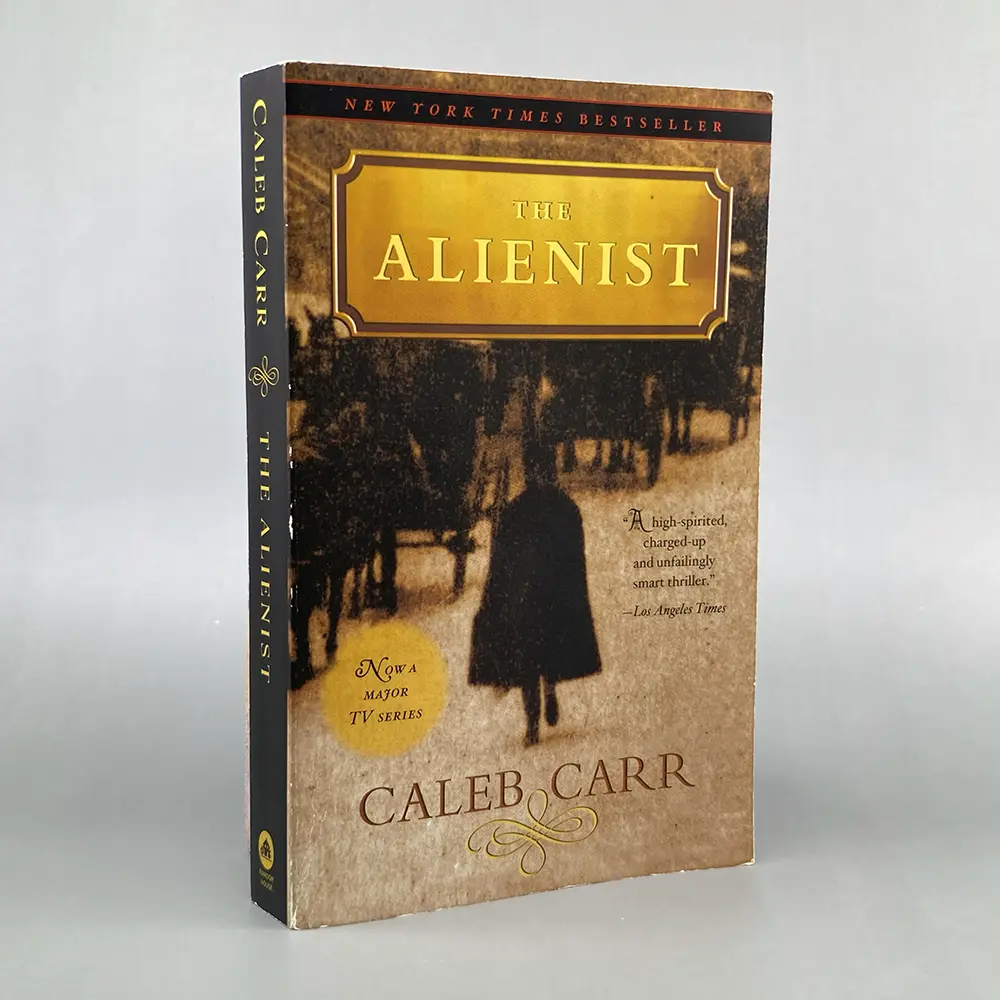
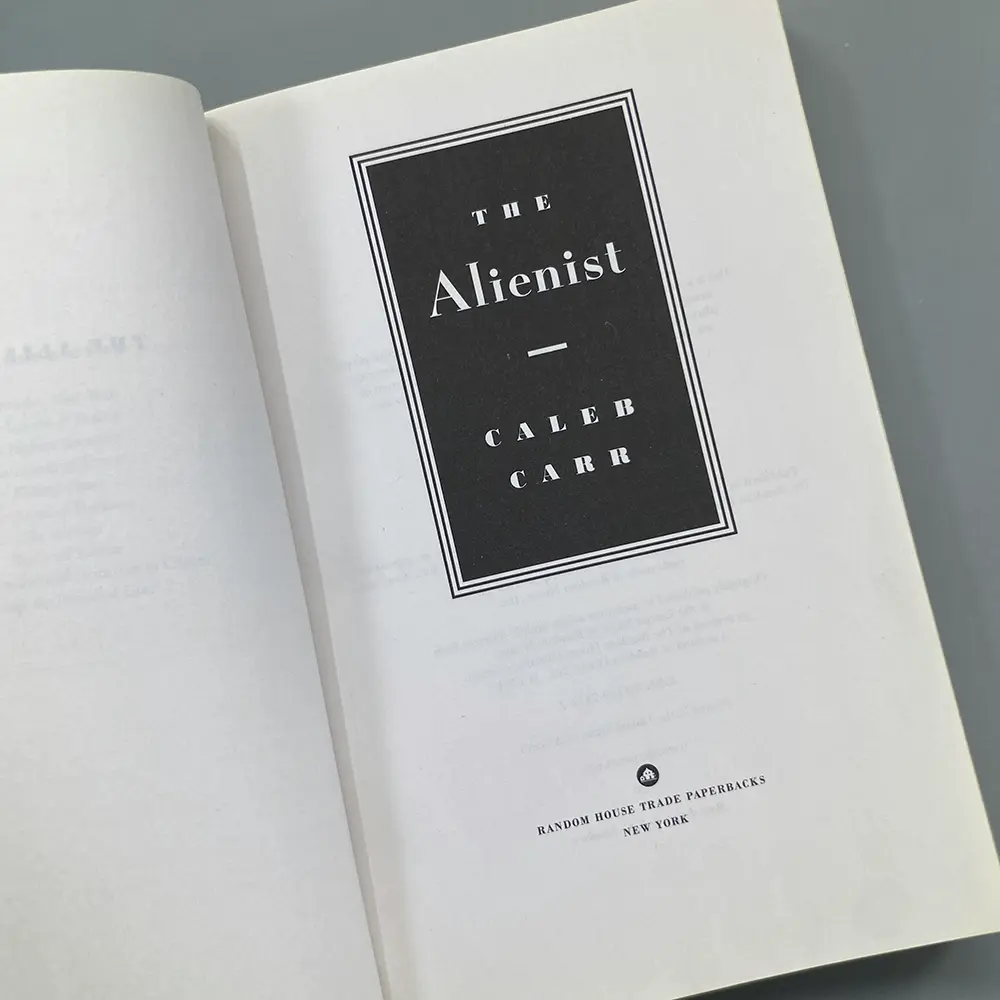
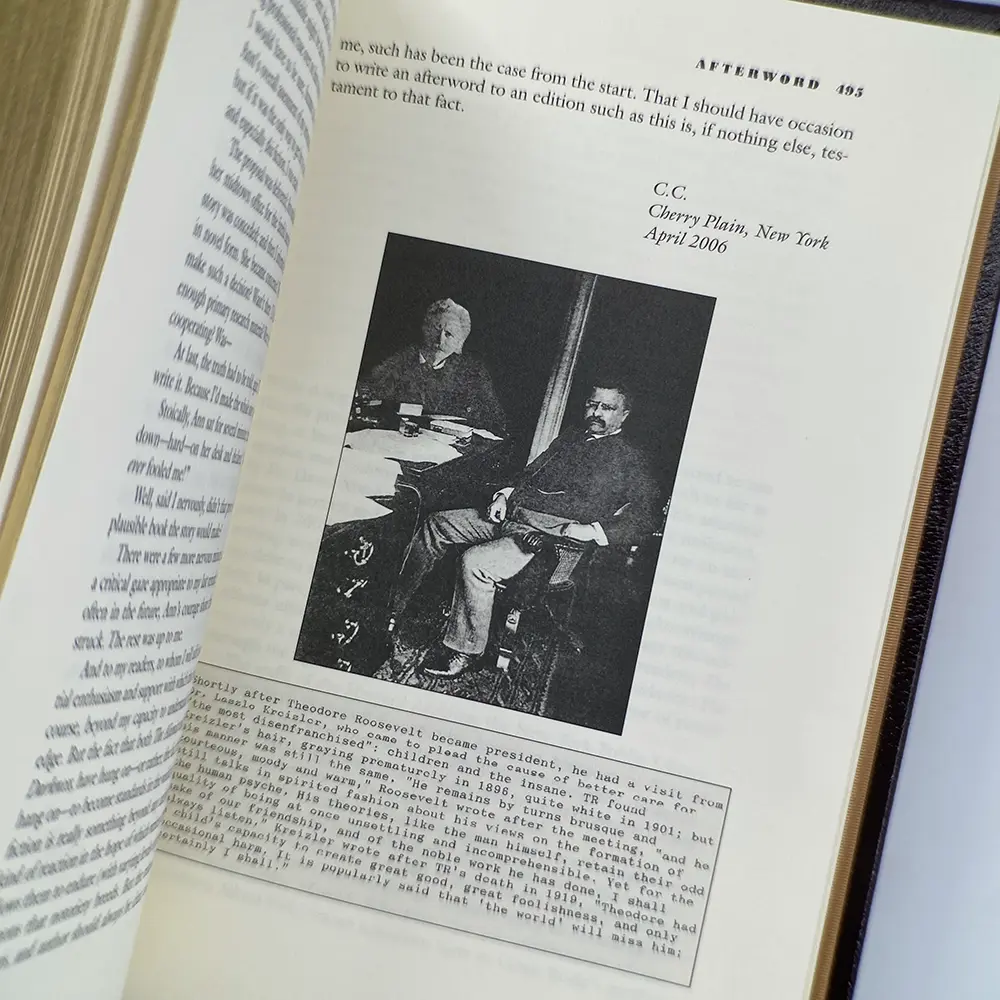
Dedicated to “Those Readers Who Made It Possible” and the memory of Dr. David Abrahamsen — a forensic psychiatrist whose influence was crucial in the development of the novel — this edition featured an updated version of the classic cover along with a special afterword in which Caleb shared the story of The Alienist’s inspiration and creation. It even includes a false visual of Dr. Kreizler (really, composer Edvard Grieg) sitting with Theodore Roosevelt, a “photograph” that was created by Caleb with the intent to fool his agent and editor into believing the story was a true one! The 2006 edition is a truly special one. (Unfortunately, my original 2006 edition was damaged when lent to a friend, so these images are of a later trade paperback that is identical in all respects except for the addition of the TV series banner on the cover.)

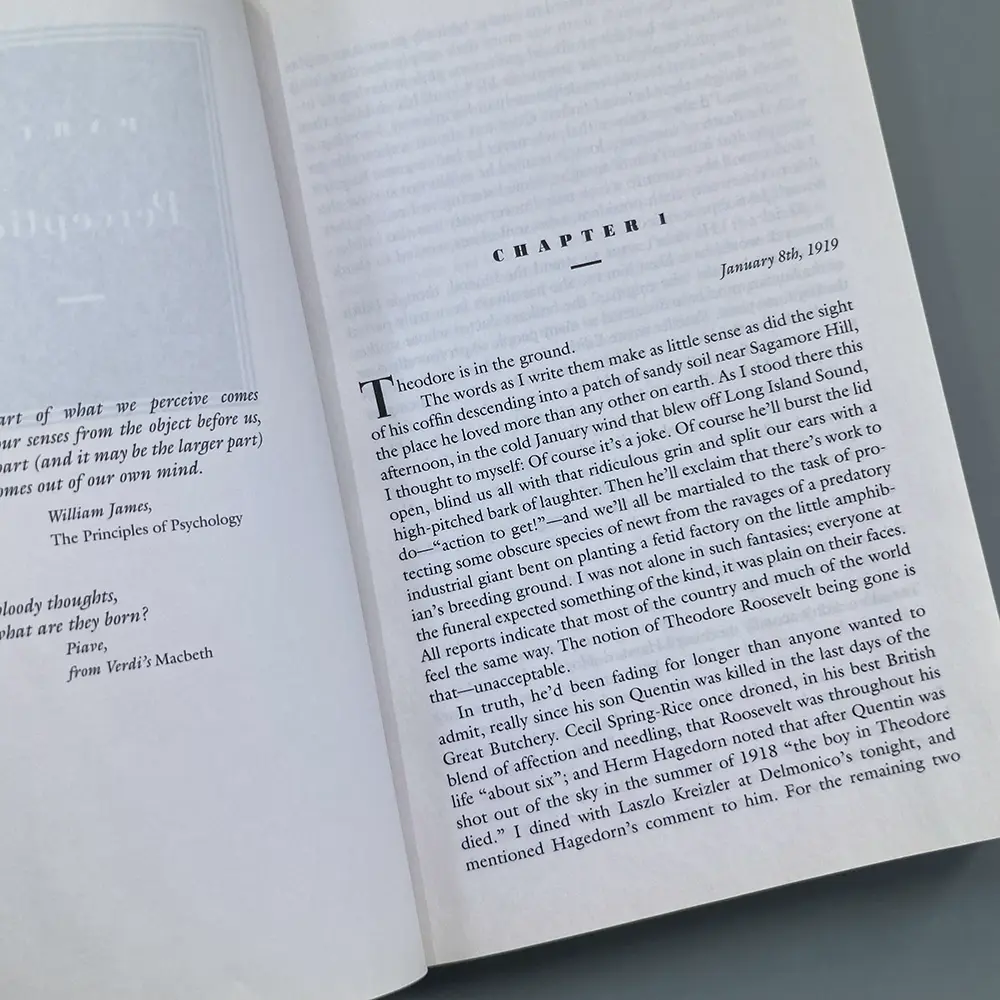
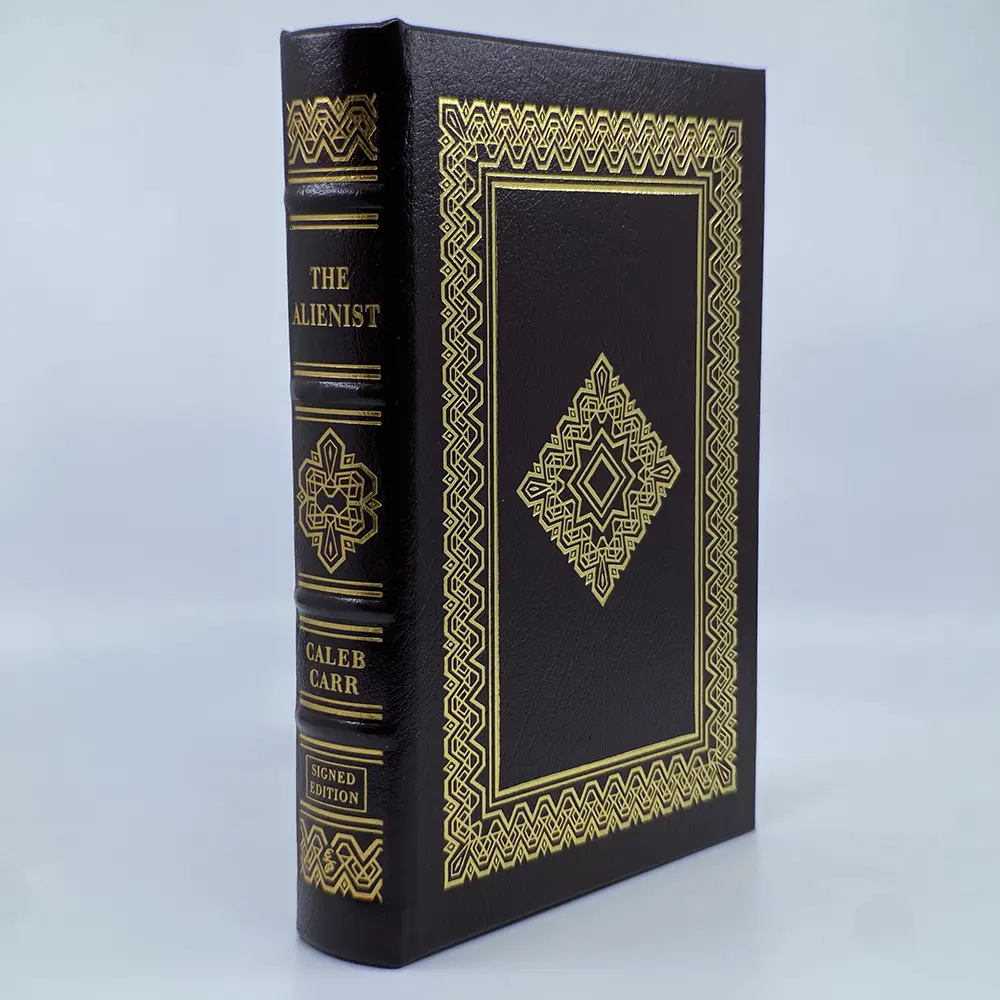
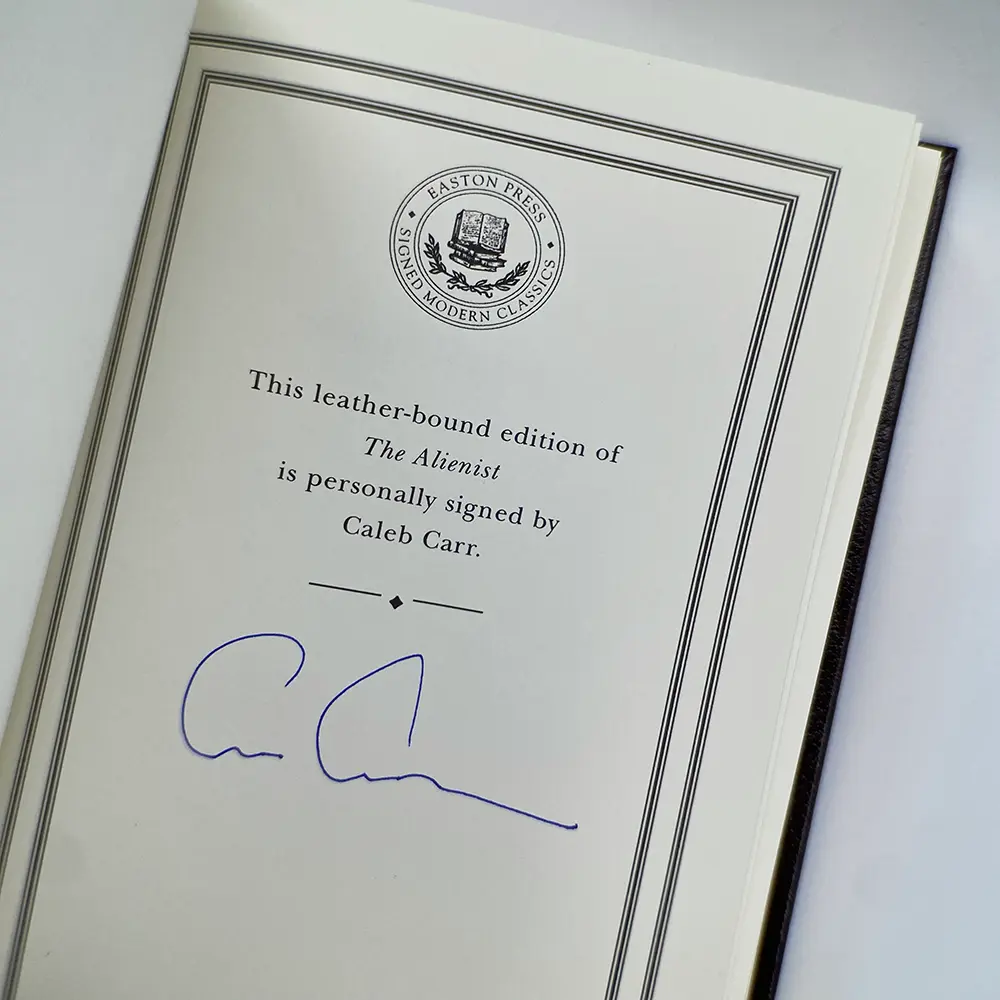
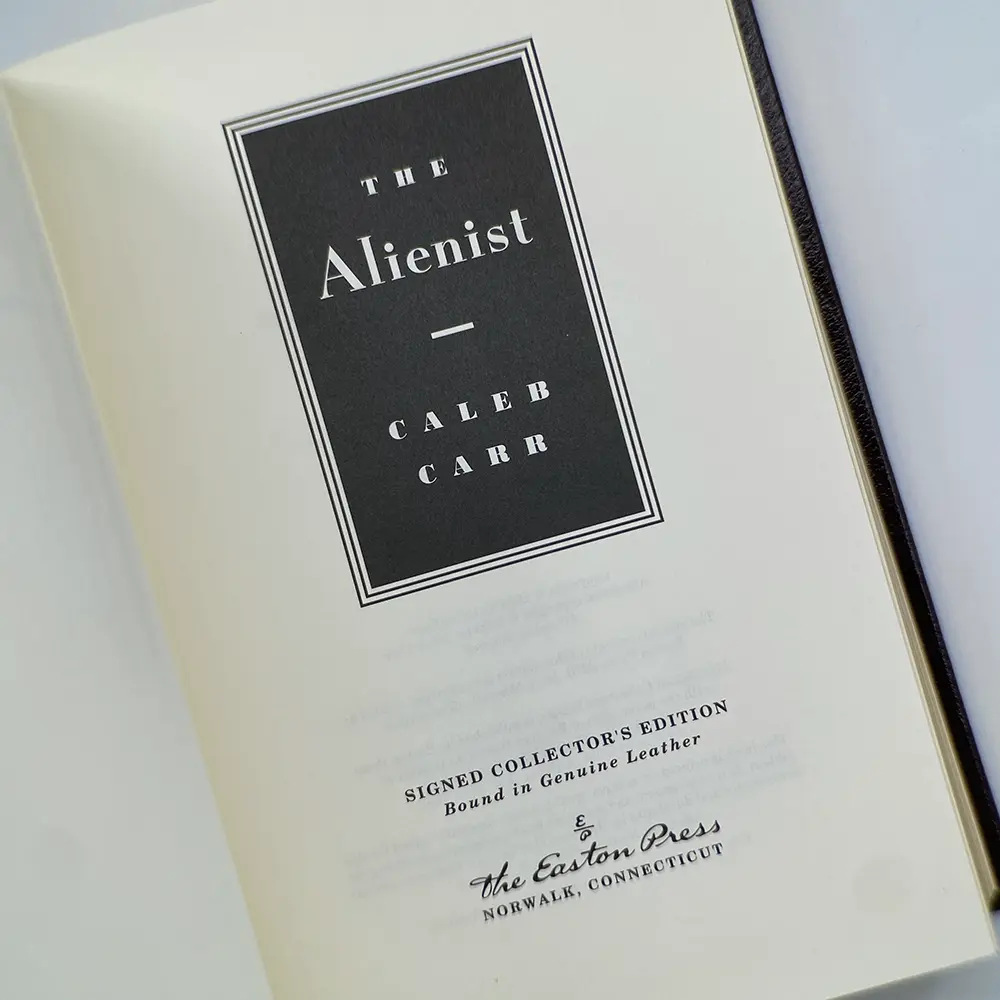
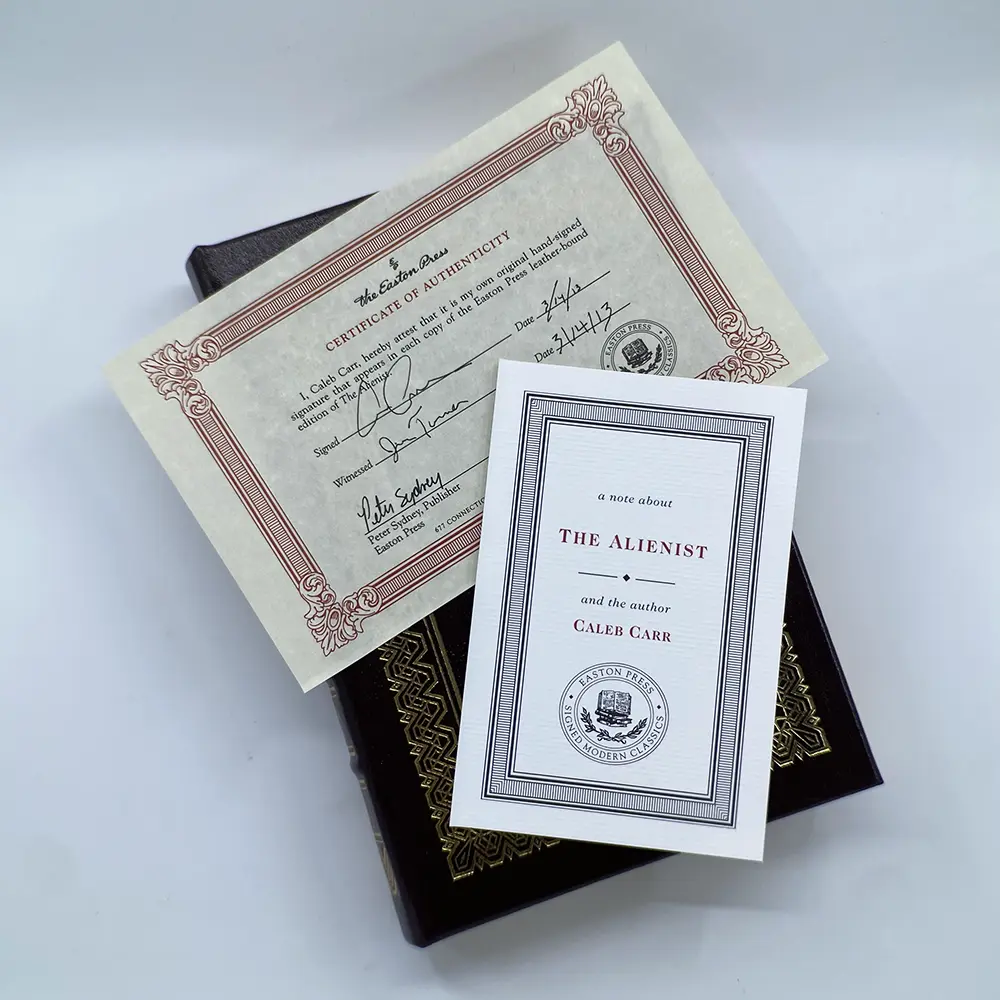
Of course, The Alienist’s enduring appeal over the past thirty years has resulted in other special editions being released. Easton Press, who specialize in fine leather-bound editions, released a stunning special edition in 2013 as part of their Signed Modern Classics collection. Like the original Franklin Library edition, this special edition also featured the new afterword written for the 2006 trade paperback and was accented in 22 karat gold ornamentation.

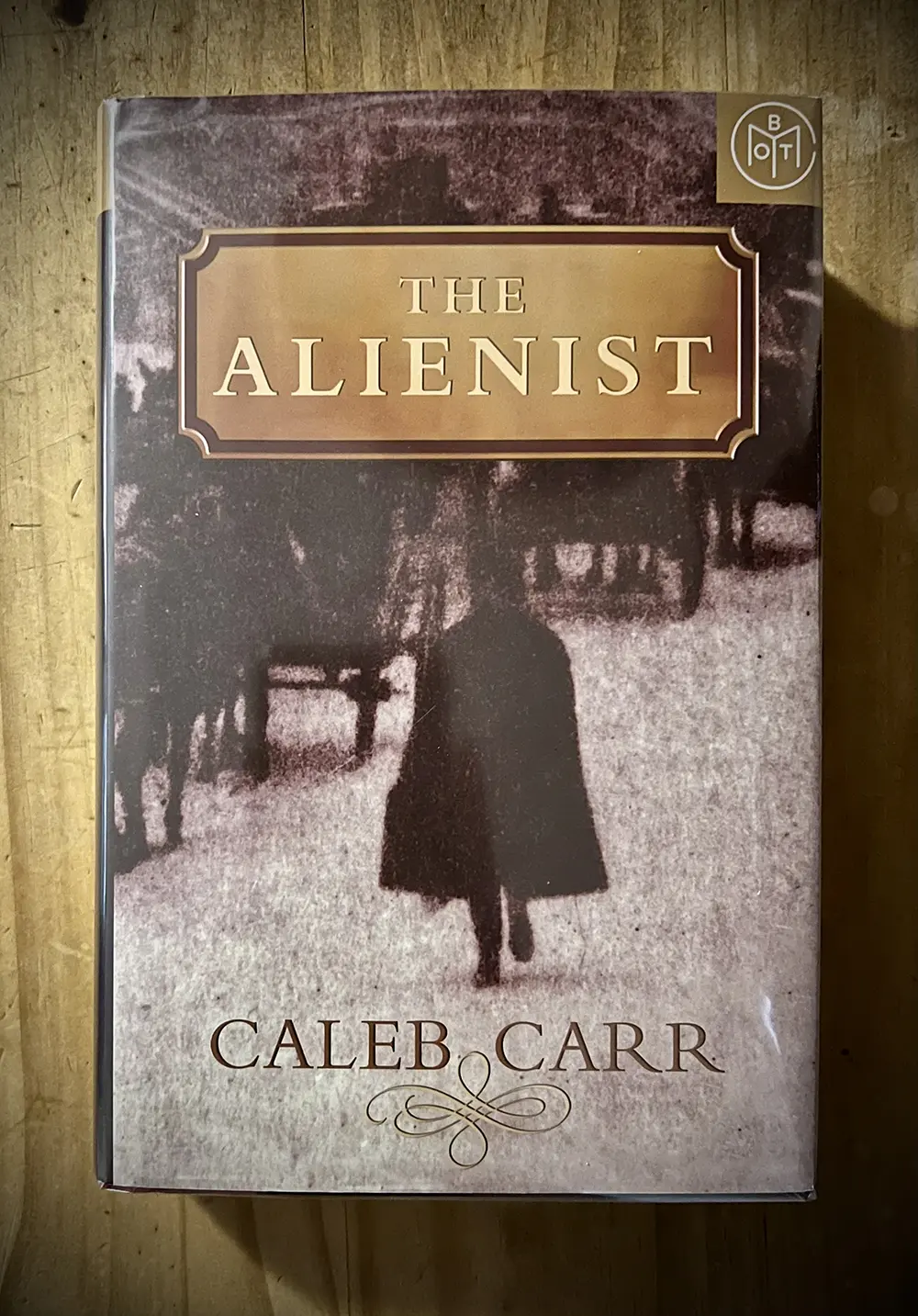
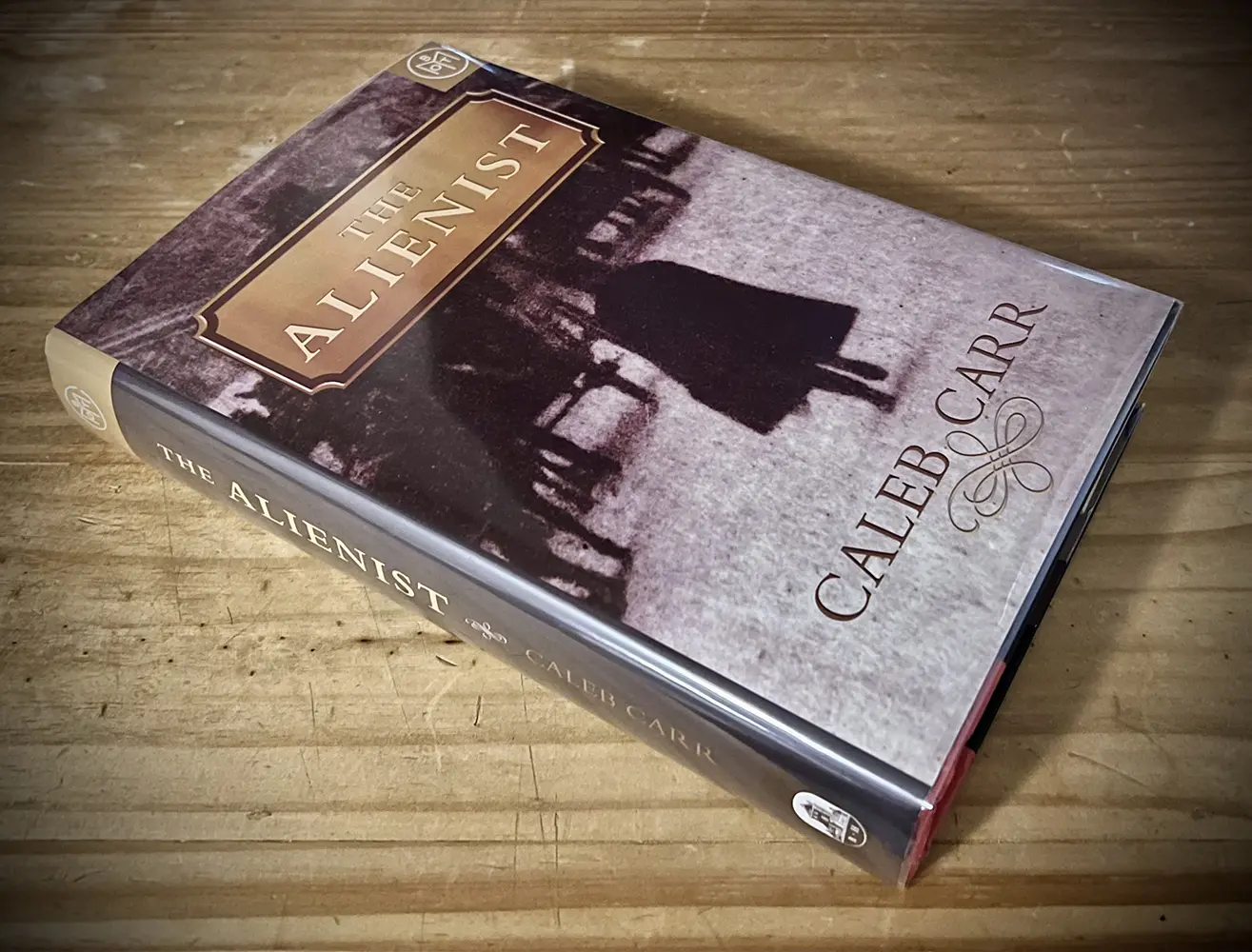
Finally, the new afterword was also included in a special limited edition hardback released in collaboration with Book of the Month in 2017. Presumably intended to spark renewed interest in the novel following the announcement of the continuation of the series (that unfortunately did not come to pass) along with the TV series release in 2018, this lovely edition features the same updated classic cover design that was used on the 2006 trade paperback. Thanks once again to Steve Rogers for sharing these photos.


And that is all for the first and special editions of The Alienist. In the next installment of this celebration series, we share the story of the novel’s journey to the screen and will feature a very special copy of a rare early script that was used to drum up interest in the movie back when it was first shopped in Hollywood. You can continue reading here.

Interview from the CBS Archives

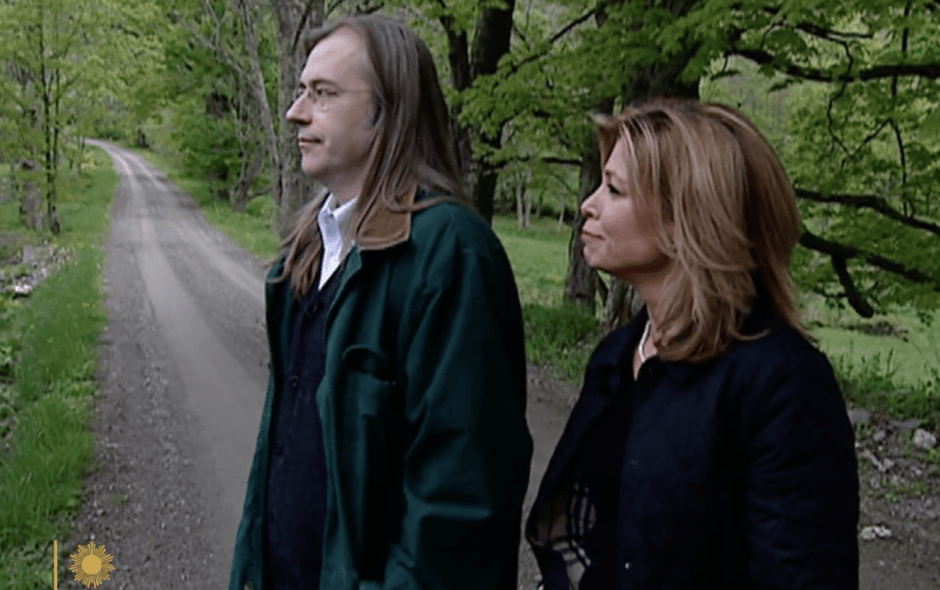
Following Caleb Carr’s passing last week, CBS released an interview from their archives that originally aired on CBS Sunday Morning after the release of The Italian Secretary in 2005. Providing a rare glimpse into his life on Misery Mountain, in the interview Caleb discusses a diverse array of topics ranging from taking on the challenge of a Sherlock tale commissioned by the Doyle estate, the building of his house, his childhood, his passion for military history, and even his work on the opera Merlin.

At this sad time, I hope it will comfort Caleb’s loyal readership to see this footage where he is happy and in his element.

Remembering Caleb Carr (1955-2024)

It is with great sadness that 17th Street acknowledges the passing of Caleb Carr, who died on Thursday, May 23, at the age of 68. According to The New York Times, he died at his home in Cherry Plain, NY. He had been fighting a difficult battle with cancer.

Although best known for his Alienist novels, Caleb’s career was long and varied. Beginning with America Invulnerable: The Quest for Absolute Security from 1812 to Star Wars in 1989 (co-written with friend and mentor, James Chace), Caleb wrote extensively about military history and national security. His most prominent non-fiction works included a biography of Frederick Townsend Ward, The Devil Soldier: The American Soldier of Fortune Who Became a God in China, and an examination of the history of terrorism, The Lessons of Terror: A History of Warfare Against Civilians. In addition, Caleb was the editor of Random House’s Modern Library War Series and was a contributing editor to MHQ: The Quarterly Journal of Military History. In the mid-2000s, he also spent a number of years teaching military history studies at Bard College as a Visiting Professor.

Outside of academia, Caleb spent a number of years working in the film industry and theatre whilst freelancing in the 1980s. His work in the film industry continued into the 1990s, and he was involved with several TV mini series and films as a presenter, executive producer, and writer. Most notably, he wrote the TV movies Bad Attitudes in 1991 and The Warlord: Battle for the Galaxy in 1998, and was credited as a co-writer for Exorcist: The Beginning and Dominion: Prequel to the Exorcist in 2004 and 2005, respectively. Testifying to his versatility, Caleb started working as a librettist with friend and composer Ezequiel Viñao in the 1990s on Merlin, an opera based on the Arthurian legends, and he even tried his hand at politics: he ran as a Democrat for the Rensselaer County Legislature in 2005, but was unsuccessful.

Despite these varying areas of interest, it was through fiction that Caleb’s talents shone brightest. Although he described his first novel Casing the Promised Land as “roman à clef nonsense,” his subsequent works were enormously successful. In 1994, The Alienist spent six months on The New York Times bestseller list, won the 1995 Anthony Award for Best First Novel, and was nominated for the 1995 Bram Stoker Best Novel Award. Its sequel, The Angel of Darkness, was similarly well-received when it was published in 1997 and outsold its predecessor. In 2000, Caleb made an unanticipated venture into sci-fi with a serial for Time magazine, Killing Time, which was later published in book form, before returning to his roots in historical fiction with The Italian Secretary: A Further Adventure of Sherlock Holmes, which the Doyle estate commissioned in 2005. After taking a break for several years, Caleb then returned to fiction in 2012 with his Dark Age saga, The Legend of Broken, and surprised fans four years later with Surrender, New York, a contemporary thriller set in upstate New York with strong ties to the Alienist novels.

In addition to Surrender, the mid-2010s heralded a second exciting announcement for Caleb’s loyal readership: Mulholland Books would be publishing the long-anticipated continuation of the Alienist series. The continuation was set to comprise two novels, but due to delays and significant illness, the plans were unfortunately not able to come to fruition. Instead, Caleb’s last book, My Beloved Monster: Masha, the Half-wild Rescue Cat Who Rescued Me, was released in April of 2024. A deeply personal work, the memoir is a love story documenting his life and shared bond with his feline companion, Masha.


As the owner of 17th Street, I did not want to leave this moment unmarked on a personal level. Although Caleb was a deeply private person, he was always supportive of 17th Street and I sincerely valued his generosity and kindness. While I am sure that his many loyal readers will indeed be sorry that he was unable to complete the Alienist series as planned, I know that in the last years of his life, he didn’t feel that he had more than one book left–and he wanted that book to be for Masha. I am only grateful that he lived to see the outpouring of support and praise My Beloved Monster received on its publication last month. I will miss his friendship deeply.

17th Street will remain active and I will be spending the second half of 2024 remembering Caleb’s works, including The Alienist which was published thirty years ago in 1994. I hope you will join me in continuing to show your support for an author who endured much, but whose works have made an enormous difference for the better in so many people’s lives.

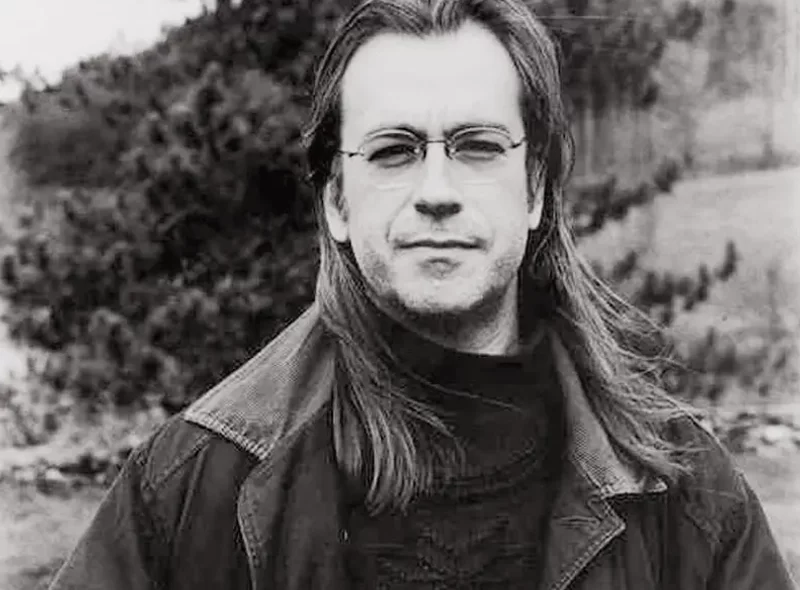
Photo Credit: William von Hartz